
Understanding Debt Consolidation Options for Credit Card Debt
If you’re grappling with credit card debt, debt consolidation might be a viable option to help you manage your financial obligations. However, comparing different debt consolidation options can feel overwhelming. This article outlines how to evaluate various methods, their pros and cons, and the steps to take in order to find the right fit for your situation.
What is Debt Consolidation?
Debt consolidation is the process of combining multiple debts into a single loan, ideally with more favorable terms. This can simplify your payments and potentially lower your interest rates. However, it’s crucial to understand that debt consolidation is not the same as debt settlement or bankruptcy. Debt settlement involves negotiating with creditors to pay less than what you owe, while bankruptcy is a legal process that can eliminate debts but has long-lasting effects on your credit.
Types of Debt Consolidation Options
Before diving into comparisons, let’s look at the most common types of debt consolidation options:
- Debt Consolidation Loans: These are personal loans taken out to pay off existing debts. They typically have fixed interest rates and set repayment terms.
- Balance Transfer Credit Cards: These cards allow you to transfer existing credit card balances to a new card with a lower interest rate, often for an introductory period.
- Home Equity Loans or Lines of Credit: If you own a home, you may be able to borrow against its equity to pay off credit card debt.
- Debt Management Plans (DMPs): Offered by credit counseling agencies, DMPs consolidate payments but do not consolidate debt into a new loan. Instead, the agency negotiates lower interest rates on your behalf.
Comparing Debt Consolidation Options
To effectively compare debt consolidation options, consider the following criteria:
1. Interest Rates
Look for options with lower interest rates than what you’re currently paying on your credit cards. A lower rate can save you money over time. For example, if you have a credit card with a 20% interest rate and can secure a consolidation loan at 10%, you’ll pay less in interest.
2. Fees
Be aware of any fees associated with each option. Some loans may have origination fees, while balance transfer cards often come with transfer fees. Calculate these costs to understand the total expense of each option.
3. Loan Terms
Consider the repayment timeframe. Shorter terms may mean higher monthly payments but less interest paid over the life of the loan. Conversely, longer terms may lower your monthly payments but increase the total interest paid.
4. Impact on Credit Score
Check how each option could affect your credit score. Debt consolidation loans can initially lower your score due to a hard inquiry, but they might help improve it over time by reducing your credit utilization ratio. Balance transfer cards can have a similar effect, particularly if you manage payments responsibly.
5. Flexibility and Control
Evaluate how much control you have over payments and terms. A personal loan may provide more predictable payments compared to a balance transfer card that could revert to a higher interest rate after a promotional period.
6. Support and Guidance
If you opt for a DMP, consider the level of support provided by the credit counseling agency. Some agencies offer budgeting assistance and financial education, which could be beneficial in the long run.
Pros and Cons of Each Option
Each debt consolidation option has its advantages and disadvantages. Here’s a quick breakdown:
Debt Consolidation Loans
- Pros: Fixed interest rates, predictable payments, potential for lower interest.
- Cons: May require good credit for the best rates, additional debt if not managed well.
Balance Transfer Credit Cards
- Pros: Potential for 0% interest for a promotional period, can simplify payments.
- Cons: High-interest rates after the promotional period, fees may apply.
Home Equity Loans or Lines of Credit
- Pros: Generally lower interest rates, possible tax benefits.
- Cons: Risk of losing your home if you cannot make payments, closing costs may apply.
Debt Management Plans
- Pros: Lower interest rates, professional guidance, can help with budgeting.
- Cons: Fees for the service, may impact your credit score initially.
Next Steps for Exploring Debt Consolidation
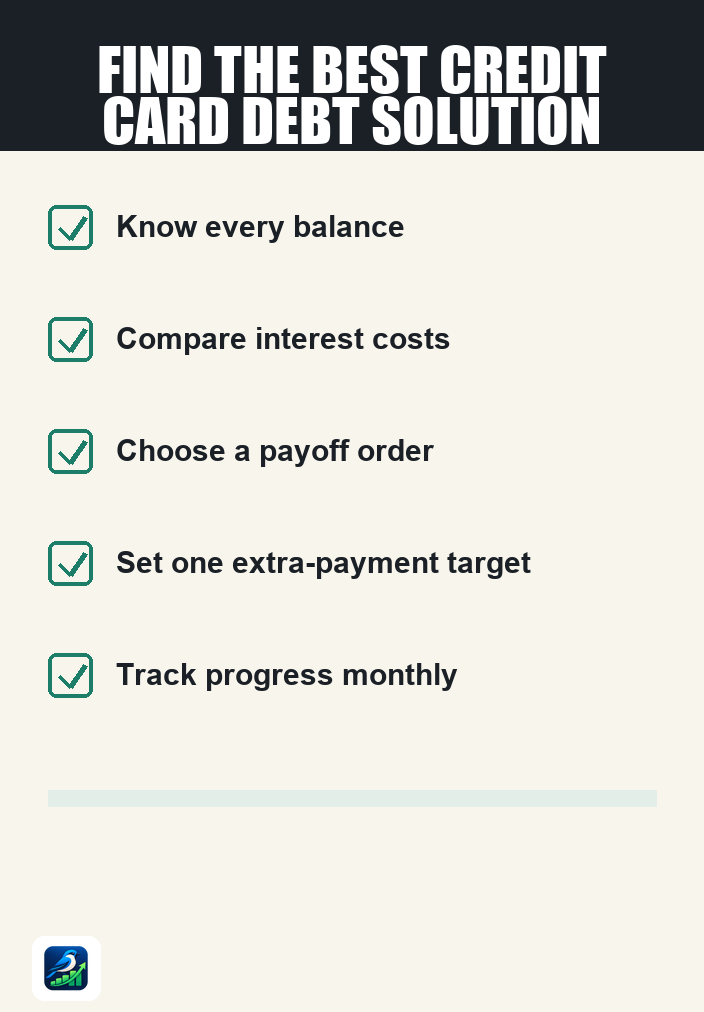
Now that you have a clear understanding of the debt consolidation options available, here are some practical next steps:
- Assess Your Debt: Make a list of all your debts, including balances, interest rates, and monthly payments.
- Research Options: Investigate the types of consolidation options available to you and gather information on interest rates, fees, and terms.
- Calculate Costs: Use online calculators or spreadsheets to estimate the total costs involved in each consolidation option.
- Consult Professionals: Consider speaking with a financial advisor or credit counselor to help you navigate your options and understand the implications.
- Make a Decision: Choose the option that aligns best with your financial goals and comfort level.
By taking a systematic approach to comparing debt consolidation options, you can make an informed decision that suits your financial situation. Remember, the goal is to simplify your debt management while working towards a more stable financial future.



















