
Understanding Debt Relief Eligibility on a Tight Budget
If you’re struggling with consumer debt and living on a tight budget, you might be wondering what your options are for relief. The good news is that there are various programs and strategies available to help you manage your debt. However, not every option will be suitable for everyone, and understanding your eligibility for different types of debt relief is crucial. This article will guide you through the key aspects of debt relief and what to consider based on your financial situation.
Key Types of Debt Relief Options
Before diving into eligibility criteria, it’s essential to understand the major types of debt relief. Each option has its unique features, benefits, and drawbacks.
- Debt Consolidation: This involves combining multiple debts into a single loan with potentially lower interest rates. It can make monthly payments more manageable.
- Debt Management Plans (DMPs): Offered by credit counseling agencies, DMPs involve negotiating with creditors to lower interest rates and create a structured payment plan.
- Debt Settlement: This is when you negotiate with creditors to pay a lump sum that is less than the total amount owed. It can significantly reduce debt, but it can also negatively impact your credit score.
- Bankruptcy: As a legal process, bankruptcy can eliminate or reorganize debts but comes with long-term consequences for your credit and finances.
Assessing Your Financial Situation
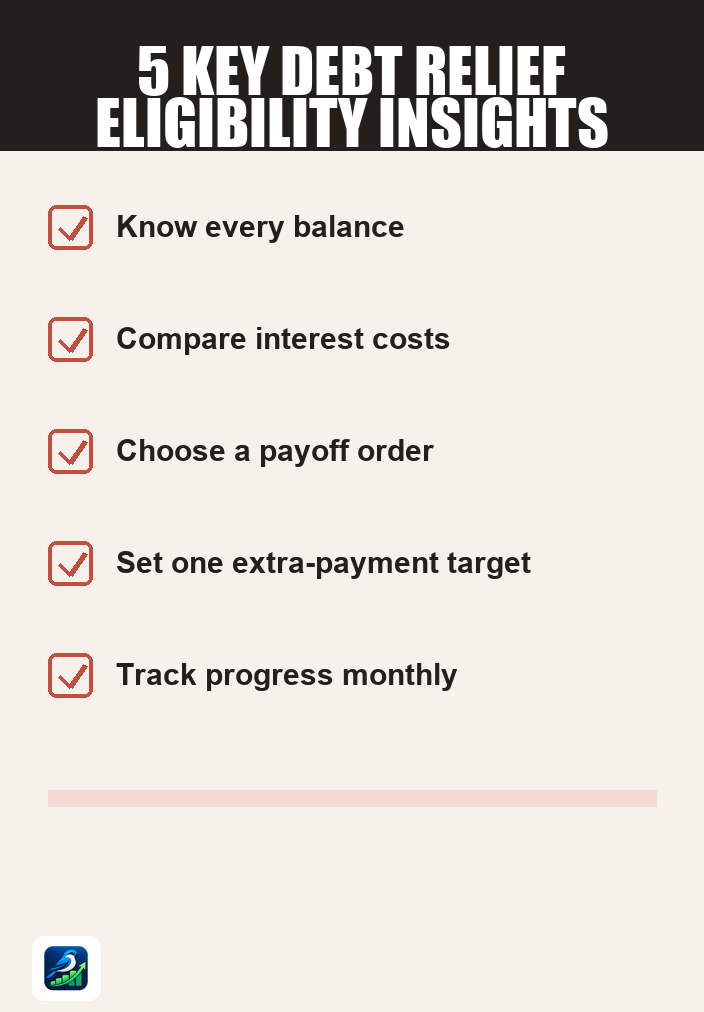
Before pursuing any debt relief option, take a close look at your financial situation. Here are a few steps to help you assess your eligibility:
- Calculate Your Total Debt: Sum up all your debts, including credit cards, loans, and any other liabilities.
- Review Your Monthly Budget: Analyze your income and expenses to see how much you can afford to allocate toward debt repayment.
- Check Your Credit Score: Knowing your credit score can help you understand which debt relief options might be available to you.
Eligibility for Debt Consolidation
Debt consolidation can be an appealing option for those on a tight budget, as it simplifies payments and may lower interest rates. However, eligibility often depends on:
- Credit Score: Lenders typically look for a decent credit score. If your score is low, you may need a co-signer or a secured loan.
- Debt-to-Income Ratio: A lower ratio (total monthly debt payments compared to income) is preferred. Lenders want to ensure you can afford the new loan.
- Type of Debt: Not all debts are eligible for consolidation. For example, federal student loans may have specific consolidation programs.
Eligibility for Debt Management Plans
Debt management plans can be a good fit if you’re struggling to keep track of multiple payments. Here’s how to determine if DMPs might work for you:
- Minimum Debt Amount: Many credit counseling agencies require a minimum amount of unsecured debt to qualify, often around $3,000.
- Willingness to Work with Counselors: You must be willing to collaborate with a credit counselor to develop a tailored plan.
- Ability to Pay: You should demonstrate an ability to make monthly payments toward the DMP.
Eligibility for Debt Settlement
Debt settlement can be tempting due to its potential for significant reduction of total debt, but it carries risks. Here’s what to consider:
- Amount of Debt: Typically, creditors may only consider settling if you owe a substantial amount, often at least $7,500.
- Financial Hardship: You will need to demonstrate that you are experiencing financial hardship, which may be documented through income statements or other financial records.
- Impact on Credit Score: Understand that settling debts may negatively affect your credit score, so weigh this against potential benefits.
Eligibility for Bankruptcy
Bankruptcy is generally seen as a last resort. Here are some factors to consider if you’re thinking about this route:
- Type of Bankruptcy: There are different types (Chapter 7, Chapter 13), each with its requirements regarding income and debt limits.
- Means Test: To qualify for Chapter 7 bankruptcy, you must pass a means test that evaluates your income against the median income of your state.
- Credit Counseling Requirement: You must complete a credit counseling session before filing for bankruptcy.
Weighing the Pros and Cons
Each debt relief option comes with its advantages and drawbacks. Here’s a quick overview to help you weigh your choices:
- Debt Consolidation: Pros include simplified payments and potential lower rates. Cons might involve fees and the risk of accumulating more debt.
- Debt Management Plans: Pros include reduced interest rates and structured payments. However, they require a commitment and can take several years to complete.
- Debt Settlement: Pros include potential savings on what you owe. Cons include a negative hit to your credit and possible tax implications on forgiven debt.
- Bankruptcy: Pros include a fresh financial start. Cons are long-term impacts on credit and potential loss of assets.
Next Steps
Understanding your debt relief options is crucial when you’re on a tight budget. Start by assessing your financial situation, including your total debt, budget, and credit score. Once you have a clear picture, research the different options, weigh their pros and cons, and consider reaching out to a financial advisor or credit counselor for personalized guidance.
Remember, while debt relief can provide a path to financial recovery, each option comes with its own set of responsibilities and potential repercussions. Take your time to make informed decisions that align with your financial goals.



















