
Understanding Debt Settlement: Who Can Benefit?
Debt settlement is a viable option for some individuals struggling with overwhelming consumer debt. However, it’s essential to understand that debt settlement is not a one-size-fits-all solution. In this article, we will explore who might benefit from debt settlement, the nuances of the process, and what alternatives exist.
What is Debt Settlement?
Debt settlement refers to negotiating with creditors to resolve debt for less than what is owed. Typically, a debtor or a debt settlement company proposes a lump-sum payment to creditors, often for a lower amount than the total debt. This can be appealing for those facing significant financial difficulties. However, it’s crucial to recognize that debt settlement can negatively impact credit scores and may have tax implications.
Who Might Benefit from Debt Settlement?
Not everyone is suited for debt settlement. Here are some scenarios where it might be beneficial:
1. Individuals Facing Financial Hardship
If you are experiencing significant financial distress—such as job loss, medical bills, or unexpected expenses—debt settlement may provide relief. Those unable to meet minimum payments on their debts might find negotiating a settlement an attractive option. If your financial situation doesn’t show signs of improvement, and you’re unable to pay off your debts, consider this route.
2. Those with Unsecured Debt
Debt settlement is generally more applicable to unsecured debts, such as credit card debt, personal loans, or medical bills. Secured debts, like mortgages or car loans, are tied to collateral. If you default, creditors can seize these assets, making settlement less likely. If most of your debt is unsecured, you may be a suitable candidate for this strategy.
3. Individuals Open to Negotiation
People who are comfortable negotiating and communicating with creditors may find success in debt settlement. The process often involves persistent back-and-forth discussions, and being able to advocate for oneself can facilitate better settlements. If you are not comfortable negotiating, consider seeking assistance from a qualified professional.
4. Those with Significant Debt
Debt settlement might be more beneficial for individuals with substantial debt levels. If you owe a considerable amount—typically several thousand dollars—settlement could result in significant savings compared to paying off the full amount. However, it’s essential to weigh these savings against potential damage to your credit score.
The Trade-offs of Debt Settlement
While debt settlement can be a helpful solution, it comes with significant trade-offs. Understanding these drawbacks is crucial to making an informed decision.
Impact on Credit Score
Engaging in debt settlement can negatively affect your credit score. Creditors may report settled debts as “settled for less than owed,” which can be seen as a red flag by future lenders. This impact can make it challenging to secure credit in the future, and it may take time to rebuild your credit history.
Tax Implications
Another consideration is the potential tax consequences. The IRS may consider forgiven debt as taxable income. If your creditor agrees to settle your debt for less than what you owe, the forgiven amount may be subject to taxation, leaving you with unexpected tax liabilities. Consulting a tax professional can help clarify your specific situation.
Fees and Costs
If you choose to work with a debt settlement company, be aware of the fees they may charge. These fees can vary widely and may be based on the amount of debt you are attempting to settle. It’s essential to conduct thorough research and understand all associated costs before proceeding with any service.
Alternatives to Debt Settlement
Before deciding on debt settlement, consider other options that might be more suitable for your financial situation:
1. Debt Consolidation
Debt consolidation involves combining multiple debts into a single loan, often with a lower interest rate. This can simplify payments and potentially reduce interest costs. However, it requires qualifying for a new loan and may not be an option for those with poor credit.
2. Debt Management Plans
Working with a credit counseling agency to set up a debt management plan (DMP) can help you pay off debts over time. Under a DMP, you make a single monthly payment to the agency, which then distributes the funds to your creditors. This option typically doesn’t harm your credit as much as settlement.
3. Bankruptcy
While bankruptcy is a more drastic measure, it can provide a fresh start. It’s suitable for those overwhelmed by debt who cannot see a way out. However, it also carries severe long-term consequences for credit and should be considered only after exploring other options.
Next Steps: Evaluating Your Options
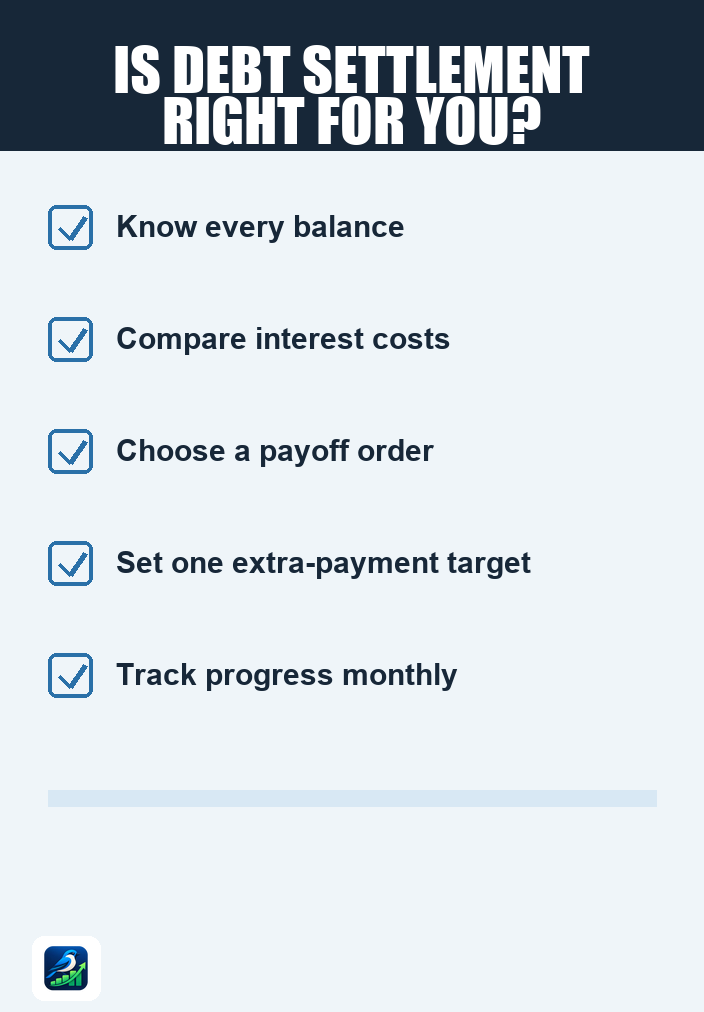
Before proceeding with debt settlement, take the time to evaluate your financial situation thoroughly. Here are some practical steps:
- Assess Your Debts: List all your debts, including amounts, interest rates, and minimum payments.
- Check Your Financial Health: Understand your income, expenses, and overall financial picture to determine what you can realistically afford.
- Research Alternatives: Look into debt consolidation, management plans, or bankruptcy as potential solutions.
- Consult Professionals: Consider speaking with a financial advisor or credit counselor to get personalized insights.
- Understand the Process: If you opt for debt settlement, familiarize yourself with how it works, including potential fees and negotiation strategies.
Debt settlement can provide a path to relief for some, but it’s essential to weigh the benefits against the potential consequences. By understanding your options and seeking professional advice, you can make informed decisions that align with your financial goals.



















