
Understanding Your Options for Debt Relief
Navigating the world of debt relief can feel overwhelming. With numerous options available, it’s essential to understand what each entails and how they may impact your financial situation. This article breaks down the most common forms of debt relief, their benefits, drawbacks, and what you should consider before making a decision.
Debt Consolidation: Merging Your Debts
Debt consolidation involves combining multiple debts into a single loan. The goal is to simplify payments and possibly secure a lower interest rate. Here’s how it typically works:
- Loan Types: You might opt for a personal loan, a home equity loan, or a balance transfer credit card to consolidate your debts.
- Payment Structure: You’ll make one monthly payment instead of several, which can make managing your finances easier.
Benefits of Debt Consolidation
- Simplified Payments: One payment means fewer due dates to remember.
- Potentially Lower Interest Rates: If you qualify for a lower rate, you could save money.
Drawbacks of Debt Consolidation
- Extended Repayment Period: You may end up paying more in interest over time if you extend the loan term.
- Risk of Accumulating More Debt: If you don’t change your spending habits, you might find yourself in a similar position again.
Debt Management Plans: Structured Support
Debt management plans (DMPs) are designed for individuals struggling to manage their debts. These plans often involve working with a credit counseling agency to negotiate lower interest rates and consolidate payments.
How Debt Management Works
In a DMP, you deposit a fixed amount monthly with the counseling agency, which then pays your creditors on your behalf. This can lead to lower monthly payments and reduced interest rates.
Benefits of Debt Management Plans
- Professional Guidance: Credit counselors can provide tailored advice and help you create a realistic budget.
- Potentially Lower Payments: Some creditors may agree to reduce interest rates or fees.
Drawbacks of Debt Management Plans
- Fees: Some agencies charge setup or monthly fees, which could add to your financial burden.
- Impact on Credit: Enrolling in a DMP may affect your credit score, as accounts may be closed during the process.
Debt Settlement: Negotiating Your Debts
Debt settlement involves negotiating with creditors to settle your debts for less than what you owe. This option can lead to significant savings, but it’s not without risks.
How Debt Settlement Works
Typically, you stop making payments to your creditors and instead save money in a dedicated account. Once you have enough saved, you negotiate with creditors to settle for a lower amount.
Benefits of Debt Settlement
- Reduced Debt Amount: You may be able to pay less than you originally owed.
- Faster Resolution: Debt settlement can often lead to quicker debt relief compared to other methods.
Drawbacks of Debt Settlement
- Credit Score Impact: This method can significantly hurt your credit score, as it involves missing payments.
- Tax Consequences: The IRS may consider forgiven debt as taxable income.
Bankruptcy: A Last Resort
Bankruptcy is a legal process that can help you eliminate or reorganize your debts. While it can provide a fresh start, it comes with long-term consequences.
Types of Bankruptcy
- Chapter 7: This allows for the liquidation of non-exempt assets to pay off debts.
- Chapter 13: This involves a repayment plan that allows you to keep your assets while repaying your debts over time.
Benefits of Bankruptcy
- Legal Protection: Bankruptcy provides a legal shield against creditors and collections.
- Debt Discharge: Certain debts may be completely wiped out, offering a fresh start.
Drawbacks of Bankruptcy
- Long-Term Impact on Credit: Bankruptcy remains on your credit report for up to ten years.
- Asset Loss: Depending on the type of bankruptcy, you may lose valuable assets.
Making the Right Choice for You
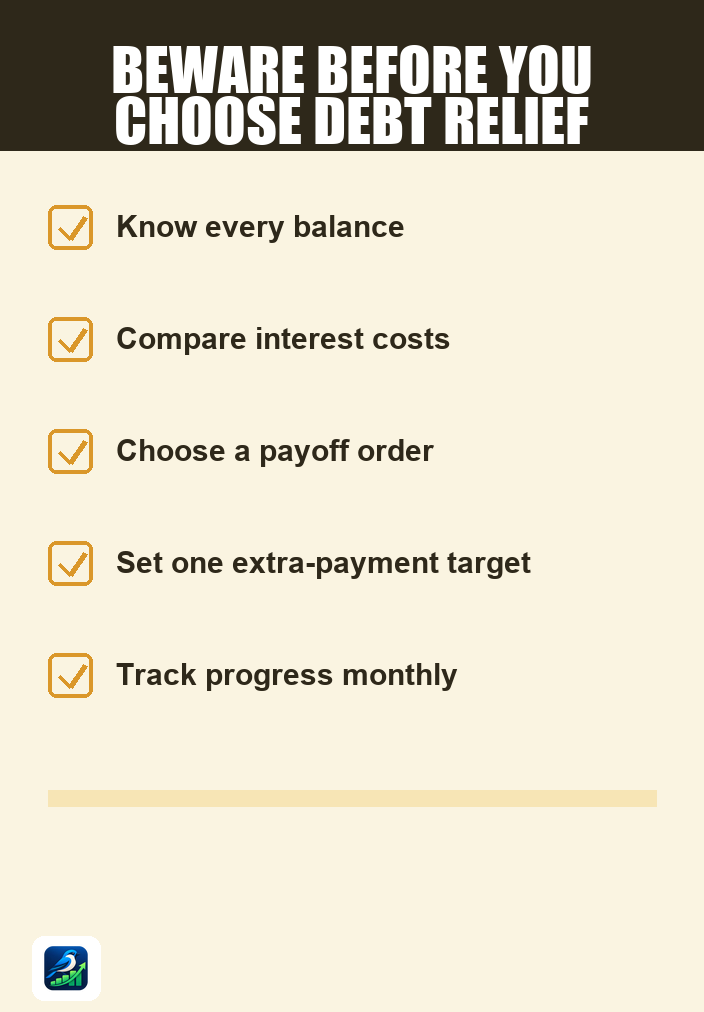
Choosing the right debt relief option depends on your unique financial situation. Here are a few steps to help guide your decision:
- Assess Your Debt: List all your debts, including amounts, interest rates, and monthly payments.
- Evaluate Your Budget: Determine how much you can afford to pay monthly toward your debt.
- Research Options: Understand the pros and cons of each debt relief method.
- Consult Professionals: Consider speaking with a financial advisor or credit counselor for tailored advice.
Next Steps: Taking Control of Your Debt
Once you’ve assessed your situation and considered your options, take action. Create a plan, set realistic goals, and stay committed to your financial health. Remember, the journey to financial stability is a process, and every step counts toward a brighter future.



















