
Understanding the Avalanche Method for Debt Payoff
The Avalanche Method is a strategic approach to paying off debt that prioritizes high-interest debts first. This method can help you reduce the overall interest you’ll pay over time, ultimately leading to faster debt elimination. The beauty of the Avalanche Method is that it can be done without requiring you to stretch your budget. Instead of making drastic lifestyle changes, you can create a structured plan that fits your current financial situation.
How the Avalanche Method Works
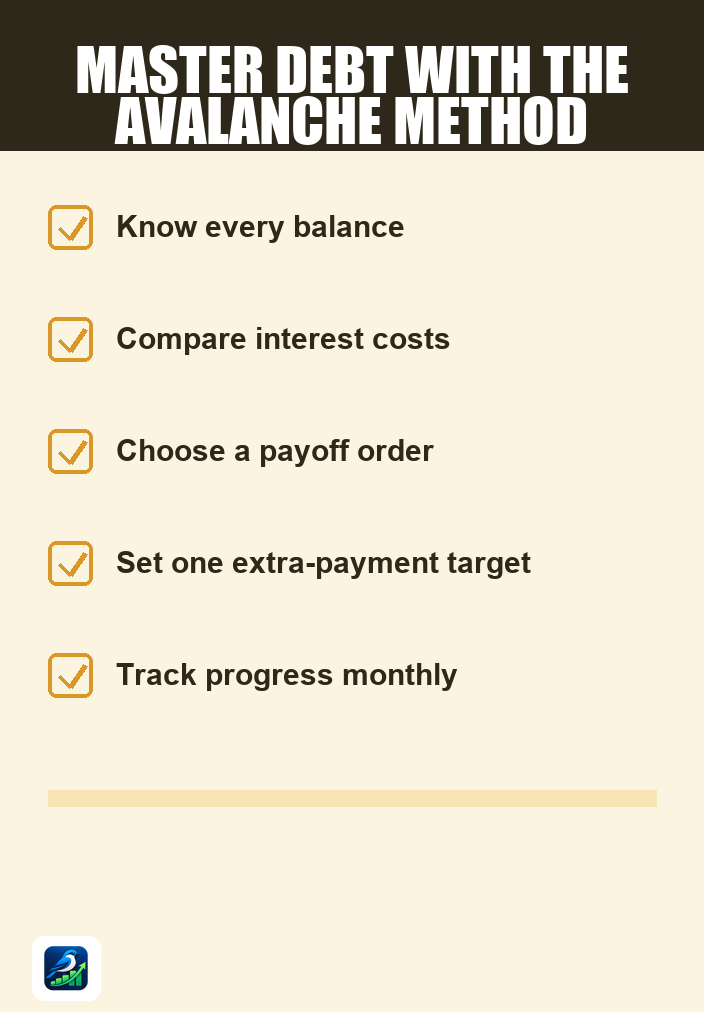
At its core, the Avalanche Method involves the following steps:
- List all your debts along with their interest rates.
- Identify the minimum payment required for each debt.
- Focus any extra money on the debt with the highest interest rate while maintaining minimum payments on others.
- Once the highest-interest debt is paid off, move to the next highest interest debt, repeating the process.
This method helps you save money on interest payments, allowing you to pay off your debts more efficiently.
Steps to Implement the Avalanche Method
1. Gather Your Debt Information
The first step is to get a clear picture of what you owe. List all your debts, including:
- Credit cards
- Personal loans
- Student loans
- Car loans
For each debt, note the total amount owed, the interest rate, and the minimum monthly payment. This will help you prioritize which debts to tackle first.
2. Create a Budget
Before you start throwing extra money at your debt, it’s essential to develop a budget that accounts for all your income and expenses. This will help you identify how much extra money you can allocate toward debt repayment each month. Consider the following:
- Track your monthly income.
- List all necessary expenses, including housing, food, and transportation.
- Identify discretionary spending that can be reduced or eliminated.
By adjusting your budget, you can free up funds to put toward your highest-interest debt.
3. Prioritize Your Debts
Once you have your debts listed and your budget set, it’s time to prioritize. Focus on the debt with the highest interest rate. This is where your extra payment will go. For example, if you have:
- Credit Card A: $3,000 at 20% interest
- Credit Card B: $2,000 at 15% interest
- Personal Loan: $5,000 at 10% interest
Your focus will be on Credit Card A, as it has the highest interest rate.
4. Make Extra Payments
With your budget in place, start making extra payments towards the highest-interest debt. If you can find an extra $100 a month to allocate, apply that amount to Credit Card A while continuing to make minimum payments on Credit Card B and the Personal Loan.
5. Repeat the Process
Once you pay off Credit Card A, redirect the total payment amount you were making on that debt to the next highest interest rate debt—Credit Card B. This allows your payments to snowball, enabling you to pay off remaining debts faster.
Managing Your Budget While Paying Off Debt
Many people worry that paying off debt will require drastic changes to their lifestyle or budget. However, the Avalanche Method can be implemented without significant sacrifices. Here are some practical tips:
- Automate Payments: Set up automatic payments for your minimum debts to avoid late fees.
- Use Windfalls Wisely: Allocate any unexpected income, such as tax refunds or bonuses, to your highest-interest debt.
- Monitor Your Progress: Regularly review your budget and debt repayment progress to stay motivated and adjust your strategy as needed.
Considerations and Tradeoffs
While the Avalanche Method can be effective, it’s essential to understand its limitations and tradeoffs:
- Not for Everyone: If you find it challenging to stay motivated without quick wins, consider the Snowball Method, which focuses on paying off the smallest debts first.
- Potential for Accumulating More Debt: Be cautious about accumulating new debt while trying to pay off existing debt. Avoid using credit cards until your current debts are manageable.
- Professional Guidance: If your debt situation is complex or overwhelming, consider speaking with a financial advisor or credit counselor for tailored strategies.
Next Steps to Take Control of Your Debt
Paying off debt using the Avalanche Method is a powerful strategy that can help you regain control of your finances without straining your budget. Here’s how to get started:
- Gather all your debts and create a comprehensive list.
- Develop a realistic budget that includes discretionary spending cuts.
- Prioritize debts by interest rate and start making extra payments.
- Monitor your progress and adjust your budget as necessary.
Remember, paying off debt is a journey that requires patience and persistence. By following these steps, you’re taking a proactive approach toward financial freedom.



















