
Understanding Balance Transfers vs. Consolidation Loans
When it comes to managing debt, two popular strategies often come up: balance transfers and consolidation loans. Both methods can potentially help you streamline payments and reduce interest costs, but they operate differently and come with their own sets of pros and cons. This article will break down these options, helping you weigh costs, benefits, and considerations to find the right fit for your financial situation.
What is a Balance Transfer?
A balance transfer involves moving debt from one or more credit cards to a new credit card that typically offers a lower interest rate, often an introductory 0% APR for a limited time. This can be a useful strategy for managing high-interest credit card debt.
Benefits of Balance Transfers
- Lower Interest Rates: The primary advantage is the potential for significantly lower interest rates, especially during an introductory period.
- Simplified Payments: Consolidating multiple credit card balances into one can make it easier to keep track of payments.
- Potential Savings: If you pay off the balance before the introductory period ends, you can save on interest costs.
Drawbacks of Balance Transfers
- Fees: Many balance transfer cards come with a fee, often around 3-5% of the transferred amount.
- Time Limitations: Introductory rates usually last between 6 to 18 months. If you don’t pay off the balance within this period, the rate may increase significantly.
- Credit Score Impact: Opening a new credit card can temporarily lower your credit score due to hard inquiries and changes in your credit utilization ratio.
What is a Consolidation Loan?
A consolidation loan involves taking out a new loan to pay off multiple debts. This can be a personal loan, a home equity loan, or a debt consolidation loan specifically designed for this purpose.
Benefits of Consolidation Loans
- Fixed Interest Rates: Many consolidation loans offer fixed interest rates, providing predictability in monthly payments.
- Longer Payment Terms: These loans often come with longer repayment periods, which can lower your monthly payment.
- Single Monthly Payment: Like balance transfers, consolidation loans simplify your finances by consolidating multiple payments into one.
Drawbacks of Consolidation Loans
- Potential for Higher Costs: Depending on the terms, you may end up paying more in interest over a longer repayment period.
- Fees: Some loans come with origination fees that can add to your overall cost.
- Risk of Accumulating More Debt: If not managed wisely, you may find yourself accumulating new debt while still paying off the consolidation loan.
Cost Breakdown Checklist
When comparing balance transfers and consolidation loans, it’s essential to create a cost breakdown checklist to evaluate which option might be more beneficial for your specific financial situation. Here’s a practical approach:
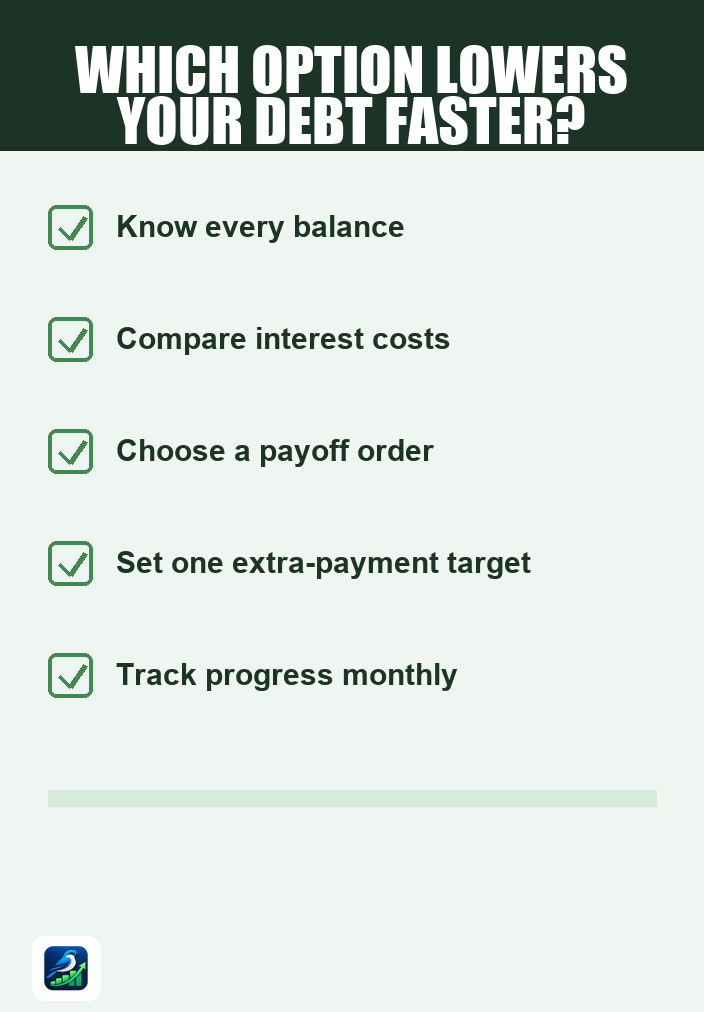
1. Assess Your Current Debt
Start by listing all your existing debts, including balances, interest rates, and monthly payments. This gives you a clear picture of what you’re working with.
2. Calculate Potential Costs of a Balance Transfer
- Transfer Fees: Calculate the transfer fee (typically a percentage of the balance) and add it to your total debt to see the new balance.
- Interest Savings: Estimate how much interest you would save during the introductory period compared to what you would pay on your current cards.
- Post-Introductory Rate: Consider what the interest rate will be after the introductory period and estimate potential future costs.
3. Calculate Potential Costs of a Consolidation Loan
- Loan Amount: This should cover all your debts, so ensure you know the total amount needed.
- Interest Rate: Assess the interest rate for the consolidation loan and how it compares to your current rates.
- Loan Term: Consider how the length of the loan impacts your monthly payments and total interest paid.
- Fees: Include any origination fees or closing costs associated with the loan.
4. Consider Your Financial Habits
Reflect on your spending habits and ability to manage credit. If you tend to carry a balance, a balance transfer may not be the best long-term solution if you cannot pay off the debt before the new rate kicks in. Similarly, if you struggle with managing monthly payments, a consolidation loan with a fixed rate may provide more stability.
Making the Right Choice for Your Situation
Ultimately, the decision between a balance transfer and a consolidation loan depends on your specific circumstances and financial goals. Here are some practical steps to help you make the right choice:
- Review Your Budget: Ensure you have a clear understanding of your budget and what you can afford in terms of monthly payments.
- Research Options: Look at multiple balance transfer credit cards and consolidation loan offers to find the best terms.
- Seek Professional Guidance: If you’re uncertain, consider speaking with a financial advisor or a credit counselor. They can provide tailored advice based on your financial situation.
Next Steps
After gathering all necessary information, take the time to weigh the options carefully. Make a list of pros and cons for each choice, and consider potential future financial impacts. Whether you choose a balance transfer or a consolidation loan, ensure that you have a plan in place to avoid accumulating additional debt. Take control of your finances today by understanding your options and making informed decisions.



















