
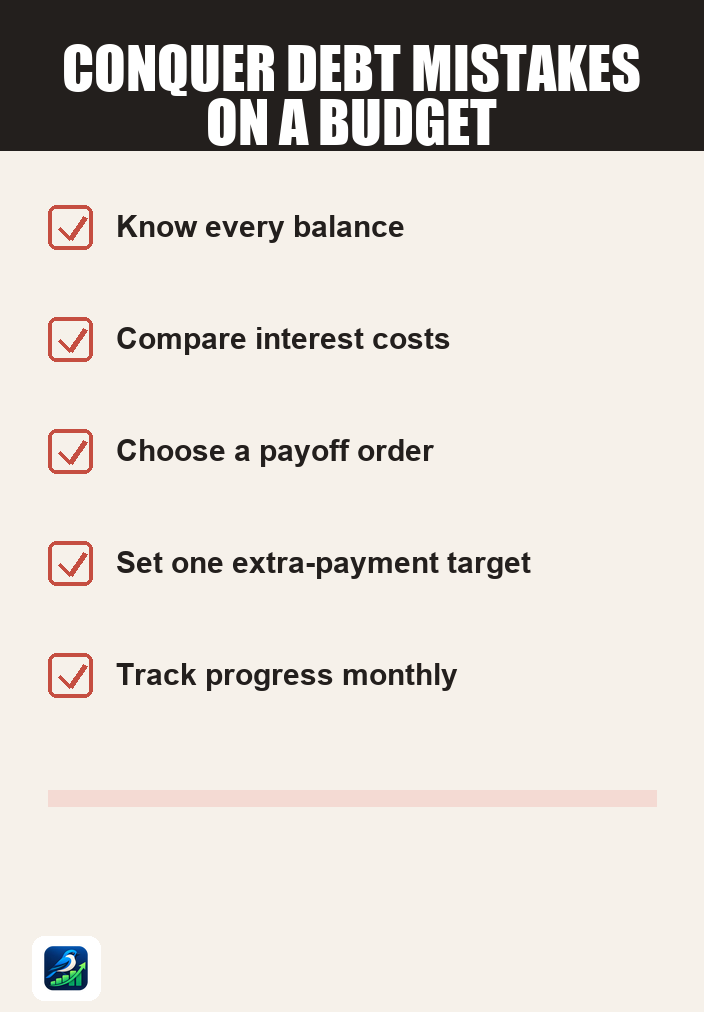
Understanding the Landscape of Debt Payoff on a Budget
Managing debt can feel overwhelming, especially when you’re on a tight budget. The key to successfully navigating your way out of debt lies in understanding the common pitfalls that can derail your efforts. By recognizing these mistakes, you can take proactive steps to avoid them and put yourself on a clearer path to financial freedom.
Common Debt Payoff Mistakes to Avoid
1. Ignoring the Importance of a Budget
Many people dive into debt repayment without a clear financial plan. This can lead to overspending in other areas and can even result in accruing more debt. A budget isn’t just a tool for tracking expenses; it’s a roadmap for your financial journey.
- Create a detailed budget: List all your income sources and monthly expenses. Be honest about your spending habits.
- Identify discretionary spending: Look for areas where you can cut back, such as dining out or entertainment. Allocating these funds toward debt repayment can make a big difference.
2. Focusing Solely on Minimum Payments
While making minimum payments can keep you from falling behind, it often prolongs your debt journey and increases the total interest paid. Consider these strategies:
- Prioritize high-interest debt: If you have multiple debts, focus on paying down those with the highest interest rates first. This will help you save money in the long run.
- Make additional payments: Whenever possible, pay more than the minimum. Even a small extra payment can reduce your debt faster.
3. Not Exploring Debt Consolidation Options
Debt consolidation can simplify your payments and potentially lower your interest rates. However, it’s crucial to understand the trade-offs involved:
- Types of consolidation: You can consolidate through personal loans, balance transfers, or even home equity loans. Each has its pros and cons.
- Beware of fees: Some consolidation options might come with fees that negate any savings you might expect. Always read the fine print.
4. Relying on Debt Settlement Without Understanding the Consequences
Debt settlement involves negotiating with creditors to pay less than what you owe. While it may seem appealing, it’s not suitable for everyone. Here are some considerations:
- Impact on credit score: Settling debts can significantly lower your credit score, affecting your ability to obtain future credit.
- Potential tax implications: The IRS may consider forgiven debt as taxable income, so you could face unexpected tax bills.
5. Neglecting to Communicate with Creditors
Many people avoid contacting their creditors out of fear or embarrassment. However, open communication can often lead to better solutions:
- Requesting lower payments: Some creditors may offer hardship programs that allow for reduced payments during tough times.
- Inquiring about interest rate reductions: It never hurts to ask if they can lower your interest rate, especially if you have a good payment history.
6. Using Credit Cards for Everyday Expenses
When you’re trying to pay off debt, relying on credit cards for everyday purchases can create a cycle of debt that is hard to break. Here’s how to avoid this mistake:
- Use cash or debit: Stick to cash or your debit card for regular purchases to prevent accumulating additional debt.
- Establish an emergency fund: Even a modest emergency fund can help you avoid using credit cards for unexpected expenses.
7. Failing to Track Progress
Without tracking your progress, it’s easy to lose motivation and direction. Keeping an eye on your debt repayment can provide a boost in morale:
- Set milestones: Break your overall debt into smaller, manageable goals. Celebrate when you reach each milestone.
- Use tools: Consider using apps or spreadsheets to track your payments and remaining balances.
Finding the Right Path Forward
As you work to pay off debt on a tight budget, it’s essential to remain flexible and adaptable. Adjust your strategies as needed and stay informed about your options. Here are a few practical next steps to consider:
- Assess your current financial situation: Take a close look at your income, expenses, and debt to understand where you stand.
- Create or adjust your budget: Make necessary adjustments to your budget to allocate more funds toward debt repayment.
- Consider consulting a financial professional: If you’re feeling overwhelmed, a financial advisor or credit counselor can help you explore your options.
- Stay committed: Remember that paying off debt is a marathon, not a sprint. Stay focused on your goals and adapt as necessary.
Making informed choices about debt repayment can empower you to take control of your financial future. By avoiding common mistakes and adopting a thoughtful approach, you can work toward a debt-free life, even on a tight budget.



















