
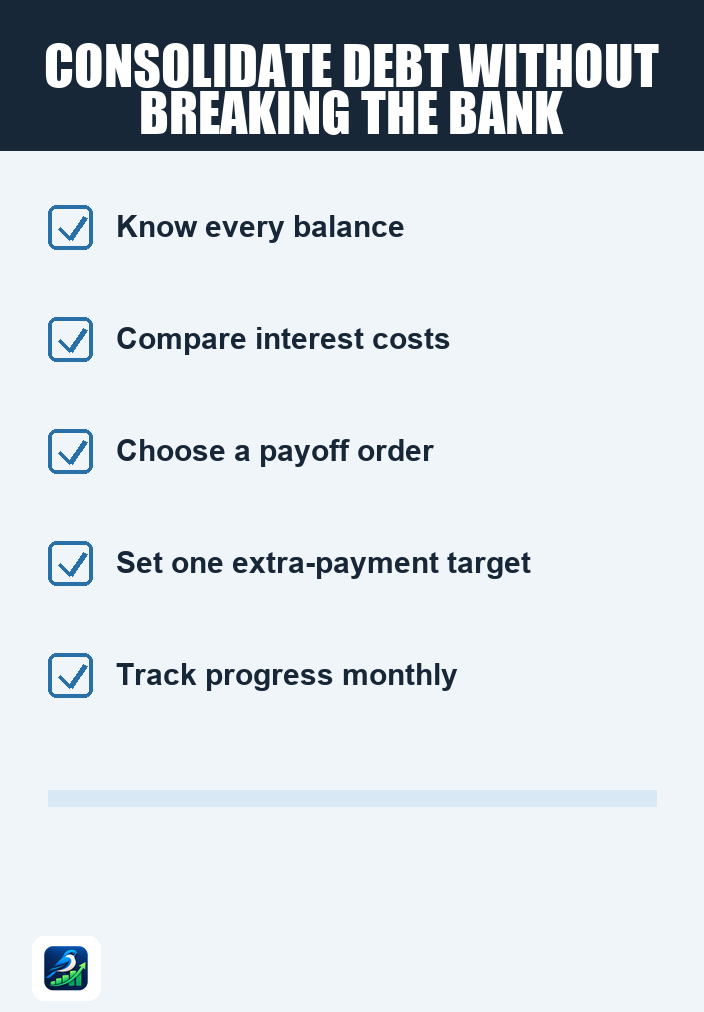
Understanding Personal Loans for Debt Consolidation
Debt consolidation can be a useful strategy for managing multiple debts by combining them into a single loan with a potentially lower interest rate. For many adults navigating financial stress, finding an affordable personal loan for debt consolidation on a tight budget is essential. In this article, we’ll explore your options, trade-offs, and practical steps to help you make informed decisions.
What is Debt Consolidation?
Debt consolidation involves taking out a new loan to pay off existing debts. This can simplify payments and may lower your overall interest rate. However, it’s crucial to understand that debt consolidation is different from debt management or debt settlement:
- Debt Management: Involves working with a credit counseling agency to create a repayment plan without taking out a new loan.
- Debt Settlement: Involves negotiating with creditors to reduce the total amount owed, often leading to a lump-sum payment.
- Bankruptcy: A legal process that can discharge debts, but has significant long-term consequences for your credit and financial future.
Finding Affordable Personal Loans
When seeking a personal loan for debt consolidation, affordability is key. Here are several strategies to help you find options that fit within your budget:
1. Assess Your Financial Situation
Before applying for a loan, take a comprehensive look at your finances. Consider the following:
- Your total debt amount
- Your monthly income and expenses
- Your credit score, which affects loan eligibility and interest rates
Creating a detailed budget can provide clarity on how much you can afford to borrow and repay each month.
2. Shop Around for Rates
Not all lenders offer the same terms. Take the time to compare offers from various financial institutions. Online comparison tools can help you evaluate interest rates, fees, and repayment terms side-by-side. Look for loans with:
- No origination fees
- Flexible repayment terms
- Fixed interest rates
Even a small difference in interest rates can significantly affect the total amount you’ll repay over time.
3. Consider Credit Unions and Community Banks
Credit unions and local community banks often offer lower interest rates and more flexible terms compared to larger banks. If you’re a member of a credit union, check their loan offerings. You may find more favorable conditions than those available through traditional lenders.
4. Understand Your Loan Options
When exploring personal loans, it’s essential to understand the different types available:
- Secured Loans: These require collateral (like a car or savings account) and may offer lower rates. However, you risk losing your collateral if you default.
- Unsecured Loans: These don’t require collateral but typically have higher interest rates. Your credit score plays a significant role in determining the rate.
Evaluate which type of loan aligns with your risk tolerance and financial situation.
5. Prequalify for Loans
Many lenders allow you to prequalify for a loan, which provides an estimate of the loan amount, interest rate, and terms without a hard credit inquiry. This step is beneficial as it allows you to gauge your options without affecting your credit score.
Evaluating Loan Offers
Once you’ve received loan offers, take the time to analyze them carefully. Here are important factors to consider:
- Interest Rates: Compare the annual percentage rates (APRs) to assess the true cost of the loan, including fees.
- Loan Terms: Look at the repayment period. A longer term may result in lower monthly payments but could increase the total interest paid.
- Monthly Payments: Ensure that the monthly payment fits within your budget. A loan may seem appealing, but if the payments are unmanageable, it could lead to further financial stress.
Alternative Debt Relief Options
If personal loans for debt consolidation don’t seem suitable, consider these alternatives:
- Debt Management Plans: Work with a credit counselor who can negotiate with creditors on your behalf, often leading to lower interest rates without taking out a new loan.
- Balance Transfer Credit Cards: If you have good credit, you might qualify for a credit card that offers a 0% introductory APR on balance transfers. This can help you pay down debt without accruing interest for a certain period.
- Debt Settlement: If you’re struggling to make payments, negotiating a settlement with creditors may be an option, though it can impact your credit score.
Next Steps
Finding an affordable personal loan for debt consolidation on a tight budget requires careful planning and consideration. Start by assessing your financial situation, shopping around for the best rates, and understanding the different loan options available to you. Remember to compare offers thoroughly and explore alternatives if necessary.
Taking these steps can help you make informed decisions about managing your debt. If you’re unsure about your options or face complicated financial situations, seeking professional guidance may be beneficial. With the right approach, you can take control of your finances and work towards a more stable financial future.



















