
Understanding the Cost of Prioritizing Debt Repayment Over Savings
When navigating financial challenges, many individuals focus intensely on paying off their debts. This is certainly a commendable goal, but it can sometimes lead to an oversight: the importance of saving. While it may seem logical to throw all available funds at debt repayment, neglecting to build savings can result in greater financial strain down the road. Let’s explore why paying off debt without saving can cost you more in the long run.
The Importance of an Emergency Fund
One of the primary reasons to save while paying off debt is to establish an emergency fund. Life is unpredictable; expenses can arise unexpectedly, such as car repairs, medical bills, or job loss. An emergency fund acts as a financial buffer that can prevent you from resorting to high-interest loans or credit cards when sudden expenses occur.
Example of an Emergency Fund in Action
Imagine you are aggressively paying off a credit card debt with every extra dollar you earn. One day, your car breaks down, and the repair costs $1,000. Without savings, you might rely on a credit card to cover this expense. Not only does this add to your debt, but it also increases your financial stress and could potentially set back your progress on debt repayment.
Opportunity Costs of Ignoring Savings
When you focus solely on debt repayment, you may miss out on opportunities that could enhance your financial situation. This includes the ability to invest in your education, take on a side business, or even contribute to retirement accounts. These opportunities can yield returns that help you build wealth over time.
Investing vs. Paying Off Debt
Consider a scenario where you have both debt and the chance to invest in a skill or asset that could increase your earning potential. If you choose to prioritize debt repayment exclusively, you might delay your ability to earn more money. In contrast, investing in education or a side hustle could lead to higher income, enabling you to pay off debt more effectively in the long run.
Psychological Impact of Debt and Savings
The psychological burden of debt can be heavy. By neglecting savings, you might find yourself in a cycle of stress and anxiety. On the other hand, having savings—even a small amount—can provide peace of mind. This financial stability can improve your overall well-being and make it easier to manage debt effectively.
Creating a Balanced Approach
Striking a balance between debt repayment and saving is essential. Here’s a practical approach to achieve this:
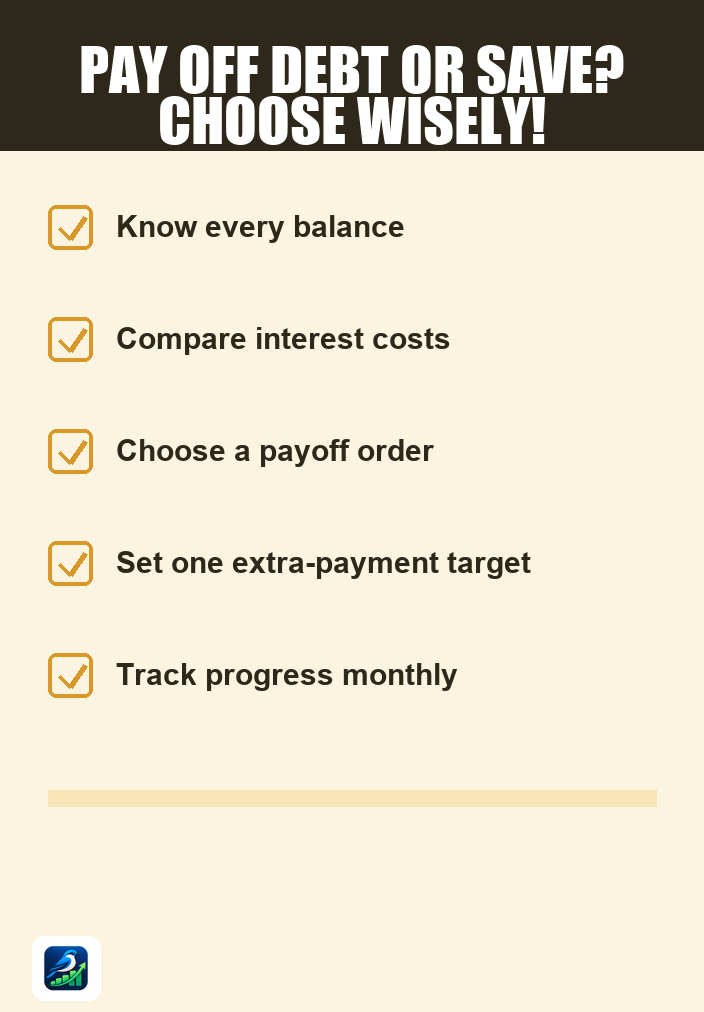
- Assess Your Debt: List all your debts, including interest rates and minimum payments. This will help you identify which debts to tackle first.
- Establish an Emergency Fund: Aim for at least $500 to $1,000 initially as a safety net. This can prevent you from accumulating more debt during emergencies.
- Prioritize Payments: Use the debt snowball or avalanche method to pay down debt while contributing a small percentage of your income to savings.
- Review Regularly: Reassess your budget and financial goals every few months. Adjust your debt repayment strategy and savings contributions as necessary.
Considerations for Different Debt Types
Not all debts are created equal, and understanding the nature of your debts can guide your approach to paying them off while saving. Here’s a breakdown of common debt types:
- Secured Debt: This includes mortgages and auto loans. Missing payments can result in the loss of the asset. It’s crucial to keep up with these payments while still saving.
- Unsecured Debt: Credit card debt and personal loans fall into this category. While these can have high-interest rates, they may not be as urgent to pay off if you have higher-priority secured debts.
- Student Loans: Depending on your situation, these may have flexible repayment options. Understanding these can help you balance repayment and savings.
Debt Management Strategies
If you’re feeling overwhelmed by both debt and the need to save, consider the following strategies:
- Debt Consolidation: This involves combining multiple debts into a single loan, often with a lower interest rate. It can simplify payments but does not reduce the total debt owed.
- Debt Management Plans: Working with a credit counseling agency can help you create a structured plan to manage your debts while allowing for savings.
- Debt Settlement: This involves negotiating with creditors to pay less than the total owed. While it can provide immediate relief, it can also have long-term credit implications.
- Bankruptcy: This is a last resort option that can provide relief from debts but comes with significant long-term consequences for your credit score.
Next Steps for a Balanced Financial Strategy
In summary, while paying off debt is important, neglecting savings can create a cycle of financial strain. Consider establishing an emergency fund, balancing debt repayment with savings, and exploring various debt management strategies. This approach not only helps you manage current debts but also prepares you for future financial challenges.
Take a moment to assess your financial situation. Create a budget that includes both debt repayment and savings contributions. Regularly review and adjust your plans to ensure you are on track to achieve a more secure financial future.



















