
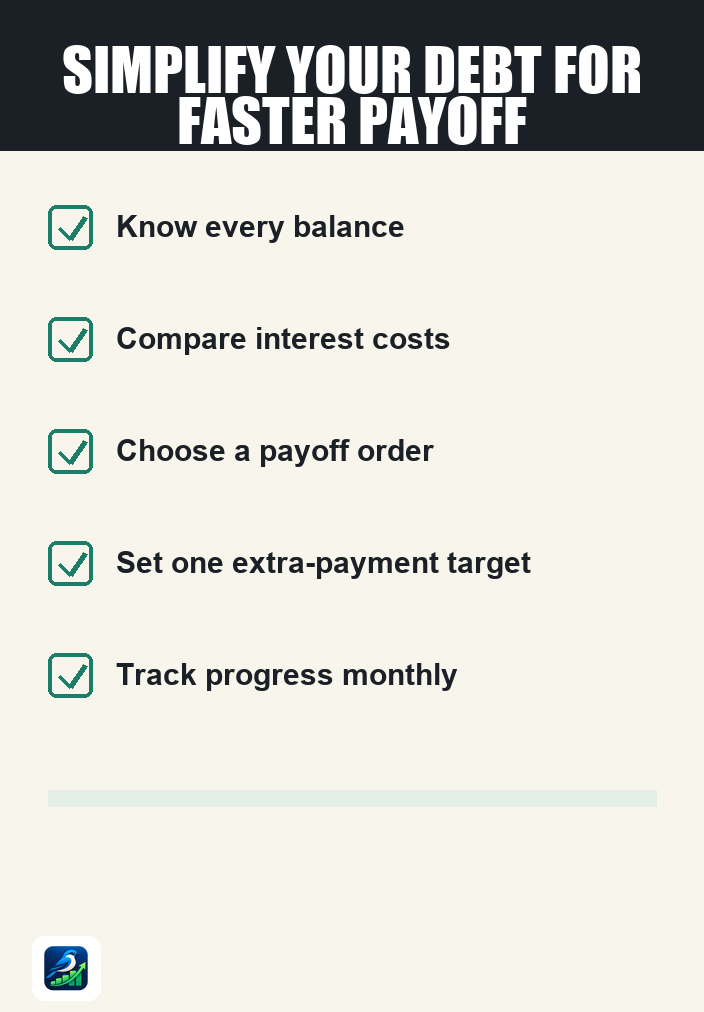
Understanding Your Debts: The First Step to Organization
Before diving into strategies for organizing your debts, it’s essential to get a clear picture of what you’re dealing with. Start by listing all your debts, including credit cards, personal loans, student loans, and any other outstanding obligations. For each debt, note the balance, interest rate, monthly payment, and due date.
Creating a Debt Inventory
A debt inventory provides a visual representation of what you owe. This can help you identify patterns, prioritize payments, and make informed decisions moving forward. Here’s how to create one:
- List All Debts: Include every debt you have, no matter how small.
- Detail Each Debt: For every entry, write down the following:
- Creditor name
- Total balance
- Interest rate
- Minimum monthly payment
- Payment due date
- Organize by Priority: Consider factors like interest rates and payment amounts to prioritize which debts to focus on first.
Strategies for Organizing Your Debts
With your debt inventory in hand, you can explore various strategies for organizing and paying off your debts more effectively. Here are some options to consider:
1. The Debt Snowball Method
This method prioritizes paying off your smallest debts first. The idea is to build momentum as you eliminate smaller balances, which can motivate you to tackle larger debts. Here’s how to implement it:
- Organize your debts from smallest to largest.
- Make minimum payments on all debts except for the smallest one.
- Put any extra money toward the smallest debt until it’s paid off.
- Once paid off, move to the next smallest debt, repeating the process.
2. The Debt Avalanche Method
Alternatively, the debt avalanche method focuses on paying off debts with the highest interest rates first. This strategy can save you more money in interest over time. Here’s how to apply it:
- List your debts from highest to lowest interest rate.
- Make minimum payments on all debts except for the one with the highest interest rate.
- Put any extra funds toward the highest interest debt until it’s eliminated.
- Continue down the list until all debts are paid off.
3. Debt Consolidation
Debt consolidation involves combining multiple debts into a single loan, often with a lower interest rate. This can simplify payments and potentially reduce your monthly payment amount. However, be aware of the drawbacks:
- You may incur fees when consolidating.
- Consolidation can extend the repayment period, leading to more interest paid over time.
- If not managed well, it can lead to accumulating more debt.
4. Debt Management Plans
Working with a credit counseling agency can help you create a debt management plan (DMP). A DMP consolidates your debts into a single monthly payment made to the agency, which then pays your creditors. Some pros and cons include:
- Pros:
- Lower interest rates may be negotiated.
- Streamlined payments.
- Cons:
- You may need to close existing credit accounts.
- It can take several years to complete the plan.
5. Debt Settlement
Debt settlement involves negotiating with creditors to pay less than what you owe. While this can reduce your overall debt, it comes with significant risks:
- It may negatively impact your credit score.
- Creditors may not agree to settle.
- There could be tax implications for forgiven debt.
6. Budgeting for Debt Repayment
Regardless of the method you choose, establishing a budget is crucial for managing your debt repayment. A simple budgeting approach includes:
- Track your income and expenses to identify areas to cut back.
- Allocate a portion of your income to debt repayment each month.
- Set specific goals for paying off individual debts.
Choosing the Right Strategy for You
When deciding which strategy to implement, consider these factors:
- Your financial situation and income stability.
- The total amount of debt versus your ability to manage payments.
- Your motivation and comfort level with various methods.
Remember that what works for one person may not work for another, so evaluate your circumstances carefully. It’s also wise to consult with a financial professional if you have questions or need guidance specific to your situation.
Taking Action: Next Steps
Now that you have a better understanding of how to organize and manage your debts, here are some practical next steps:
- Complete your debt inventory and prioritize your debts.
- Choose a debt repayment strategy that aligns with your goals and situation.
- Create a detailed budget that allocates funds towards your debt payments.
- Consider seeking professional advice if you feel overwhelmed.
By taking proactive steps to organize your debts, you can gain control over your financial situation and work towards a debt-free future.



















