
Understanding Debt Relief Options Based on Your Eligibility
Debt can feel overwhelming, and many adults are seeking pathways to regain control of their finances. Fortunately, there are various debt relief options available, and your eligibility for these options will influence which route is best for you. In this article, we’ll explore realistic debt relief options tailored to different eligibility criteria, helping you make informed decisions about managing your debts.
Identifying Your Financial Situation
Before diving into specific options, it’s essential to assess your financial situation. Take stock of your debts, income, and overall financial health. Start by answering these questions:
- What types of debt do you have (credit cards, medical bills, student loans, etc.)?
- What is the total amount of your debt?
- What is your monthly income and essential expenses?
- Are you currently making payments on your debts, or are you behind?
Understanding your financial landscape will help you identify which debt relief options are feasible based on your circumstances.
Debt Consolidation: Combining Your Debts
Debt consolidation involves combining multiple debts into a single loan or payment plan, potentially lowering your monthly payments or interest rates. Here’s what you need to know:
Eligibility Criteria
To qualify for debt consolidation, consider the following:
- You generally need a steady income to secure a consolidation loan.
- Your credit score may affect your ability to get favorable terms.
- You should have enough debt to make consolidation worthwhile.
How It Works
With debt consolidation, you can take out a personal loan or use a balance transfer credit card to pay off existing debts. For example, if you have three credit cards with high-interest rates, you might take out a personal loan at a lower rate to pay them off. This leaves you with one monthly payment instead of three.
Trade-offs
While debt consolidation can simplify payments, it’s crucial to consider its drawbacks:
- If you consolidate but continue to accumulate debt, you may end up in a worse situation.
- There may be fees associated with obtaining a consolidation loan.
- Your credit score could be affected if you close old accounts.
Debt Management Plans: Structured Repayment
A debt management plan (DMP) is a structured repayment plan offered by credit counseling agencies. It allows you to pay off your debts over a more extended period with potentially lower interest rates.
Eligibility Criteria
To be eligible for a DMP, you typically need:
- To demonstrate a genuine financial hardship.
- To be able to commit to regular monthly payments.
How It Works
In a DMP, a credit counselor negotiates with your creditors to reduce interest rates or waive fees. You then make a single monthly payment to the counseling agency, which distributes the funds to your creditors. This can be beneficial for those struggling to manage multiple payments.
Trade-offs
While a DMP can provide relief, it’s not without challenges:
- It may require you to close credit accounts, which can impact your credit score.
- You’ll need to commit to a strict budget and avoid new debt.
- It may take several years to pay off your debts fully.
Debt Settlement: Negotiating Your Debt
Debt settlement involves negotiating with creditors to pay a lump sum that is less than the total owed. This option can be appealing but comes with important considerations.
Eligibility Criteria
Factors to consider for debt settlement include:
- Your level of debt should be significant enough to warrant negotiation.
- You must be behind on payments or in financial distress.
- A willingness to negotiate with creditors or work with a debt settlement company.
How It Works
In this process, you or a settlement company will negotiate with creditors to accept a lower amount as full payment. For example, if you owe $10,000, you might negotiate to settle for $6,000. However, you usually need to save money for a lump-sum payment, which can take time.
Trade-offs
Debt settlement carries risks and potential drawbacks:
- Settling a debt can severely impact your credit score.
- Your creditors may refuse to negotiate, leading to further financial complications.
- Tax implications may arise, as forgiven debt can be considered taxable income.
Bankruptcy: A Fresh Start
Bankruptcy is a legal process that can provide relief from overwhelming debt, but it’s a significant decision with long-term consequences.
Eligibility Criteria
To qualify for bankruptcy, you’ll need to consider:
- Your total debt amount and type of debt.
- Your income relative to the median income in your state.
- Whether you’ve filed for bankruptcy in the past several years.
How It Works
Bankruptcy can discharge certain debts, allowing you to start fresh. For example, Chapter 7 bankruptcy can eliminate unsecured debts like credit card balances, while Chapter 13 involves creating a repayment plan based on your income.
Trade-offs
While bankruptcy can provide relief, it’s important to weigh the drawbacks:
- It will have a lasting impact on your credit score.
- Some debts may not be dischargeable (like student loans or taxes).
- You may have to liquidate assets to pay creditors.
Next Steps
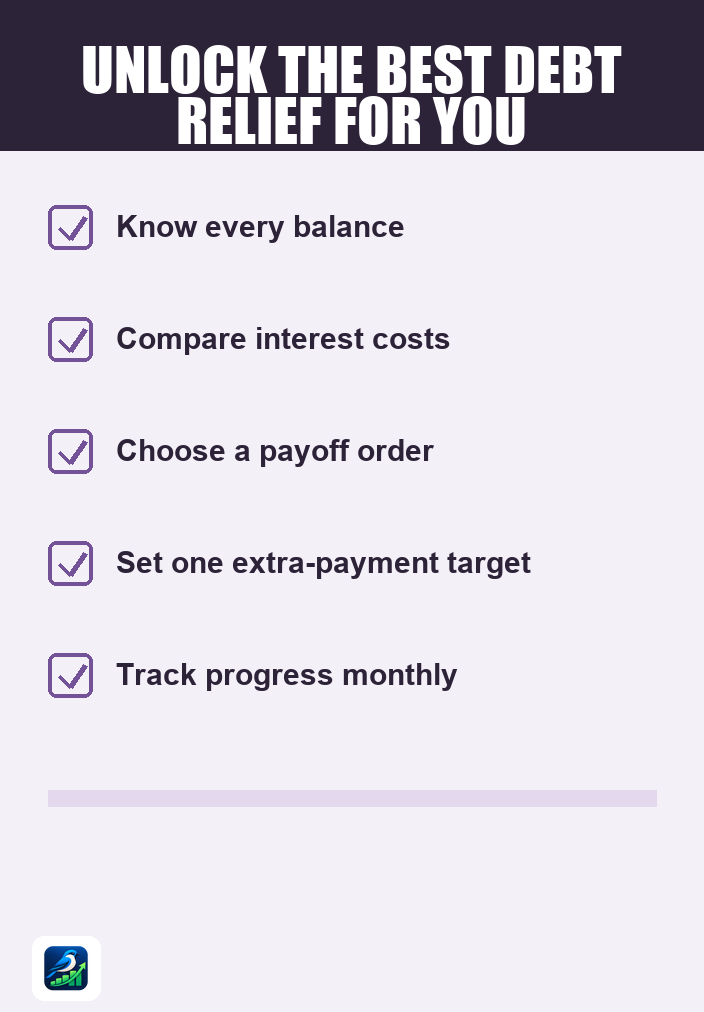
Finding the right debt relief option requires careful consideration of your financial situation and eligibility criteria. Here’s how to move forward:
- Assess your debts and determine your total financial picture.
- Research each option thoroughly, considering both benefits and drawbacks.
- Consult with a financial advisor or credit counselor for personalized guidance.
- Make an informed decision based on your unique situation and goals.
Remember, there’s no one-size-fits-all solution, but understanding your options can empower you to take control of your financial future.



















