
Understanding Debt Consolidation Through Personal Loans
Debt consolidation is often touted as a solution for those feeling overwhelmed by multiple debts. The primary idea is to combine various debts into a single loan with a potentially lower interest rate or more manageable payment terms. While this approach can be beneficial for some, the common process of using personal loans for debt consolidation might not be as flawless as it seems. Let’s explore the nuances of this method and why it may fall short for you.
The Flaws in the Common Debt Consolidation Process
At first glance, consolidating debt through a personal loan can appear straightforward. You take out a loan large enough to pay off your existing debts, leaving you with just one monthly payment. However, this process can be flawed for several reasons:
- Higher Interest Rates: Many individuals assume that a personal loan will always have a lower interest rate than their existing debts. However, if you have poor credit, the rate on a personal loan might be higher than the rates on your current debts.
- Fees and Costs: Personal loans can come with origination fees or other costs that can negate potential savings. It’s important to understand the total cost of the loan.
- Shorter Repayment Terms: Personal loans often have shorter repayment periods. While this can decrease the amount of interest paid over time, it can lead to higher monthly payments that strain your budget.
- Potential for Increased Debt: After consolidating debts, some individuals may continue to use their credit cards, leading to a cycle of accumulating more debt.
Evaluating Your Debt Consolidation Options
Before jumping into a personal loan for debt consolidation, it’s crucial to evaluate your options thoroughly. Here are a few alternatives to consider:
1. Balance Transfer Credit Cards
Many credit cards offer promotional 0% APR on balance transfers for a specified period. This can be a viable option if you have a plan to pay off the balance before the promotional rate expires. Be mindful of any transfer fees and the interest rate that kicks in afterward.
2. Debt Management Plans
Working with a credit counseling agency can help you create a debt management plan (DMP). This plan consolidates your debts into one monthly payment through the agency, which negotiates lower interest rates with your creditors. However, this process can take longer to see results and may require you to close your credit accounts.
3. Home Equity Loans or Lines of Credit
If you own a home, you might consider a home equity loan or a home equity line of credit (HELOC). These options often come with lower interest rates, but they do put your home at risk if you cannot repay the loan.
4. Debt Settlement
Though it may not be suitable for everyone, debt settlement involves negotiating with creditors to pay a reduced amount. This can impact your credit score significantly and may have tax implications, so it’s essential to understand the consequences fully.
The Importance of Understanding Your Financial Situation
Before pursuing any method of debt consolidation, take the time to assess your financial situation thoroughly. Consider the following:
- Credit Score: Your credit score will influence the interest rates available to you. Check your credit report for errors and address any issues before applying for a personal loan.
- Debt-to-Income Ratio: This ratio measures your monthly debt payments against your income. A high ratio may limit your loan options or result in higher interest rates.
- Monthly Budget: Understand what you can realistically afford to pay each month. A loan with lower interest may not be beneficial if the monthly payments exceed your budget.
Steps to Take Before Consolidating Debt
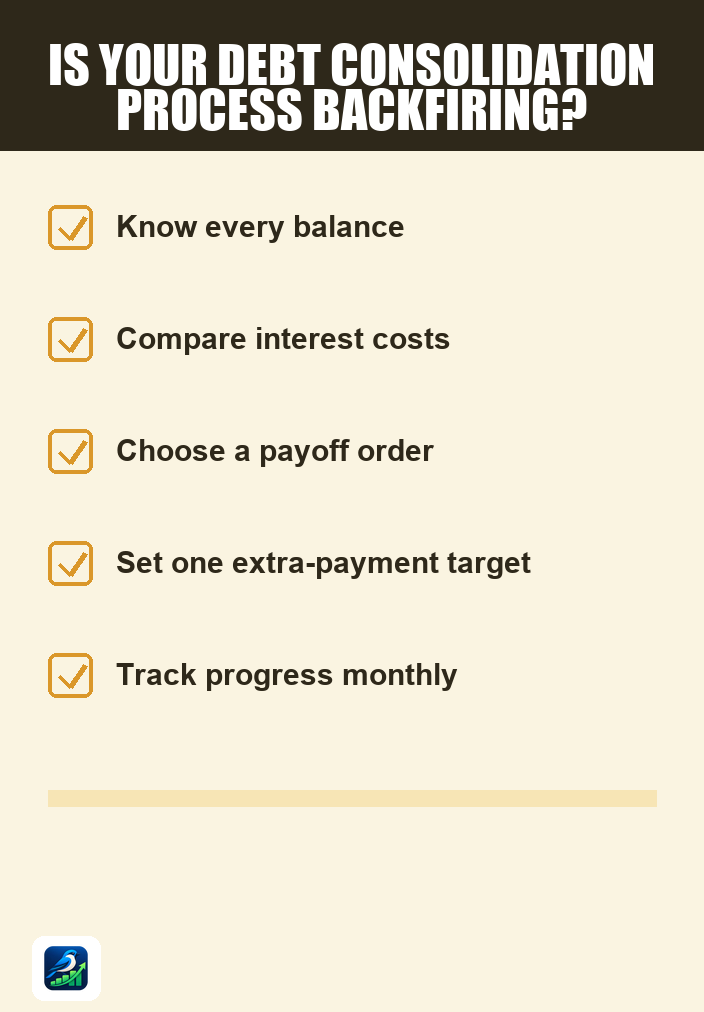
Here are some practical steps to consider before diving into debt consolidation:
- Research Options: Look into various debt consolidation options, including personal loans, balance transfers, and other methods. Compare interest rates, fees, and repayment terms.
- Create a Plan: Develop a detailed plan that outlines how you intend to repay the consolidated debt. Include a budget to track your expenses and ensure you can meet your monthly obligations.
- Consult Professionals: If you’re unsure about your options, consider consulting with a financial advisor or credit counselor. They can provide personalized guidance based on your unique situation.
- Monitor Your Progress: After consolidating your debts, keep an eye on your credit report and financial situation. Look for improvements or areas that might still need attention.
Recognizing the Limitations of Debt Consolidation
Debt consolidation is not a one-size-fits-all solution. For some, it can lead to financial relief, while for others, it can be a temporary fix that doesn’t address the underlying issues of spending habits or financial management. It’s vital to recognize the limitations of this approach:
- Behavioral Changes Required: Simply consolidating debt doesn’t change spending habits. A commitment to addressing the root causes of debt is necessary.
- Temporary Relief: If you do not manage your finances post-consolidation, you may find yourself in a similar situation down the line.
- Impact on Credit Score: Depending on the method of consolidation, your credit score may be affected negatively in the short term.
Next Steps for Your Debt Management Journey
Embarking on the journey of debt consolidation requires careful consideration and planning. Start by evaluating your current financial situation, exploring various options, and understanding the potential pitfalls. Remember, the goal is not just to consolidate your debts but to build a sustainable financial future.
Take the first step today: assess your debts, create a budget, and explore all available options. A proactive approach can lead to more informed decisions and pave the way for a healthier financial future.



















