
Understanding Interest Cost Comparisons
When you’re managing consumer debt, understanding the cost of interest is crucial to making informed financial decisions. Evaluating interest cost comparisons can help you determine whether consolidating debt, managing it, or exploring other options is the best path forward. This article will guide you through the evaluation process, explain your options, and help you make smarter choices regarding your debt.
Why Interest Cost Comparisons Matter
Interest rates can significantly affect your overall debt repayment. When comparing different debt options, knowing how much interest you’ll pay over time can help you avoid costly mistakes and choose the most beneficial path. Whether you’re looking at credit cards, personal loans, or other forms of debt, understanding the total cost of interest is a key factor.
Steps to Evaluate Interest Costs
1. Gather Information
Start by collecting all relevant information about your current debts, including:
- Outstanding balances
- Interest rates (APR)
- Minimum monthly payments
- Any fees associated with the debt
Having this information organized will make it easier to compare your options later.
2. Calculate Total Interest Costs
To evaluate your current debt situation, calculate the total interest costs for each debt. You can use the following formula:
Total Interest = Outstanding Balance × Interest Rate × Time Period
For example, if you have a $5,000 credit card debt with a 20% APR and plan to pay it off in three years, your total interest cost would be:
Total Interest = $5,000 × 0.20 × 3 = $3,000
This calculation will give you a clearer picture of how much you’re ultimately paying for borrowing the money.
3. Compare Different Debt Options
When evaluating different options, it’s important to compare the total interest costs and any fees associated with each option:
- Debt Consolidation: This involves combining multiple debts into a single loan, often at a lower interest rate. Calculate the total interest you would pay under this new loan versus your current debts.
- Debt Management Plans: These plans typically involve a third party negotiating lower interest rates with creditors. Evaluate the interest savings from the negotiated rates compared to your existing debts.
- Debt Settlement: This option involves negotiating with creditors to pay less than what you owe. While it may reduce your total debt, consider the potential interest costs associated with not paying the full amount.
- Bankruptcy: In some cases, bankruptcy may be an option. However, it’s crucial to understand the long-term financial implications, including the impact on your credit score and future borrowing ability.
Understanding Trade-offs in Debt Options
Each debt solution comes with its own set of trade-offs. Understanding these can help you make a more informed choice:
- Debt Consolidation: While it can simplify payments, if you don’t change your spending habits, you may end up with more debt.
- Debt Management Plans: These plans can help reduce interest rates, but they often require you to close credit accounts, which may impact your credit utilization ratio.
- Debt Settlement: This can lead to tax consequences, as forgiven debt may be considered taxable income. Additionally, settlements can severely impact your credit score.
- Bankruptcy: While it may provide immediate relief, bankruptcy can stay on your credit report for several years, affecting your ability to borrow in the future.
Real-Life Examples of Interest Cost Evaluation
To better illustrate the evaluation process, let’s consider a few scenarios:
Scenario 1: Credit Card Debt
Imagine you have two credit cards:
- Card A: $3,000 balance at 18% APR
- Card B: $4,000 balance at 24% APR
Calculating the total interest costs for both cards if paid over three years:
- Card A: $3,000 × 0.18 × 3 = $1,620
- Card B: $4,000 × 0.24 × 3 = $2,880
In this case, focusing on paying off Card B first might save you more in interest payments.
Scenario 2: Consolidation Loan
Now, consider you qualify for a consolidation loan at 10% APR:
- New Loan Amount: $7,000 (total of both cards)
- Total Interest over three years: $7,000 × 0.10 × 3 = $2,100
Comparatively, consolidating may save you money in interest compared to keeping both cards.
Calculating Your Own Interest Cost Comparisons
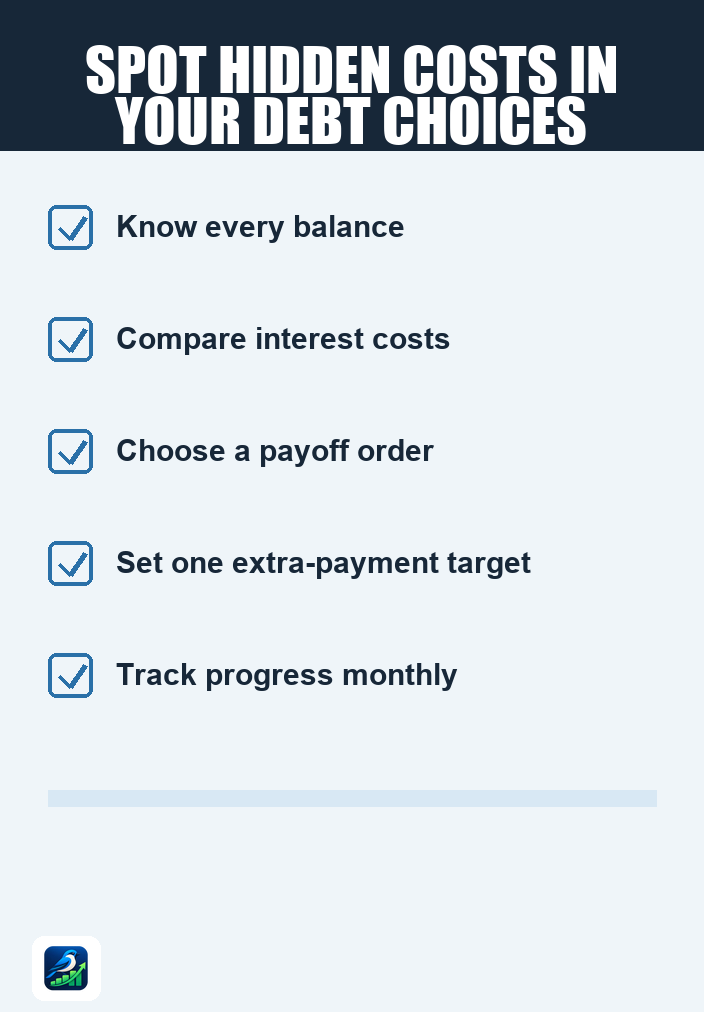
To perform your own evaluations, follow these steps:
- List all your debts and their corresponding interest rates.
- Calculate the total interest for each debt using the formula provided.
- Compare the total interest costs across different debt solutions.
- Consider the trade-offs associated with each option.
- Make an informed decision based on your findings.
Next Steps for Smarter Debt Management
Evaluating interest cost comparisons is a vital step in managing your debt effectively. Once you have a clearer understanding of your options, consider the following next steps:
- Review your budget to identify areas where you can reduce spending.
- Explore options for consolidating your debt if it makes financial sense.
- Consult with a financial advisor or credit counseling service for personalized guidance.
- Stay informed about your credit report and scores to understand their impact on future borrowing.
By taking these steps, you can make more informed decisions and work towards a healthier financial future.



















