
Understanding Debt Consolidation: Personal Loans vs. Credit Card Balance Transfers
Debt consolidation is a strategy many individuals consider when seeking to manage their consumer debt. At its core, it involves combining multiple debts into a single payment, often with the aim of simplifying finances and potentially lowering interest rates. Two popular methods for achieving this are personal loans and credit card balance transfers. Each option has its pros and cons, and understanding these can help you make an informed decision.
What is Debt Consolidation?
Before diving into the comparisons, it’s essential to clarify what debt consolidation entails. Debt consolidation specifically refers to the process of combining multiple debts into one debt. This can help streamline payments and may offer better terms than existing debts.
It’s important to distinguish debt consolidation from related terms:
- Debt Management: This typically involves working with a credit counseling agency to create a plan to pay off debts over time.
- Debt Settlement: This is negotiating with creditors to reduce the total amount owed, often resulting in a lump-sum payment for less than the full debt.
- Bankruptcy: A legal process where individuals can eliminate or repay debts under court supervision.
Comparing Personal Loans and Credit Card Balance Transfers
When considering debt consolidation, the two most common methods are personal loans and credit card balance transfers. Let’s break down the features, advantages, and disadvantages of both options.
Personal Loans
Personal loans are typically unsecured loans provided by banks, credit unions, or online lenders. They allow borrowers to receive a lump sum of money for a fixed term, which they repay in monthly installments.
Advantages of Personal Loans
- Fixed Payments: Personal loans usually have fixed monthly payments, making budgeting easier.
- Potential Lower Interest Rates: Depending on your credit score, you may qualify for a lower interest rate than on your current debts.
- Single Monthly Payment: Consolidating multiple debts into one loan simplifies your financial obligations.
Disadvantages of Personal Loans
- Fees: Some lenders charge origination fees or prepayment penalties that could add to your costs.
- Credit Requirements: Your credit score plays a significant role in your ability to qualify for a personal loan and the interest rate offered.
- Longer Repayment Terms: While monthly payments may be lower, longer terms can mean more interest paid over time.
Credit Card Balance Transfers
Credit card balance transfers involve transferring existing credit card debt to a new credit card that offers a promotional interest rate, often 0% for an introductory period.
Advantages of Balance Transfers
- 0% Introductory Rates: Many cards offer 0% APR for a specific period, allowing you to pay down debt without accruing interest.
- Flexible Repayment Options: You can often pay more than the minimum during the promotional period to reduce your debt faster.
- No Fixed Payment Schedule: If you can manage your payments well, you have some flexibility compared to fixed loan payments.
Disadvantages of Balance Transfers
- Transfer Fees: Many cards charge a fee for transferring a balance, typically a percentage of the amount transferred.
- End of Promotional Rate: After the introductory period ends, the interest rate can increase significantly, leading to higher costs if the debt isn’t paid off.
- Risk of New Debt: If you continue to use existing credit cards while paying off the balance transfer, you could end up with more debt.
Key Considerations in Choosing Between Options
When deciding between personal loans and credit card balance transfers, consider the following factors:
- Your Credit Score: Your credit history will affect your eligibility and the rates you receive for both options.
- Debt Amount: If you have a large amount of debt, a personal loan may be more beneficial, while smaller amounts might be easier to manage with a balance transfer.
- Timeframe for Repayment: Consider how long you will need to pay off the debt. If you can pay off the debt within the promotional period, a balance transfer may save you money.
- Discipline: Evaluate your ability to avoid accruing new debt on credit cards once you consolidate.
Next Steps: Making an Informed Decision
Choosing between personal loans and credit card balance transfers for debt consolidation is a significant decision that can affect your financial future. Here are some practical next steps:
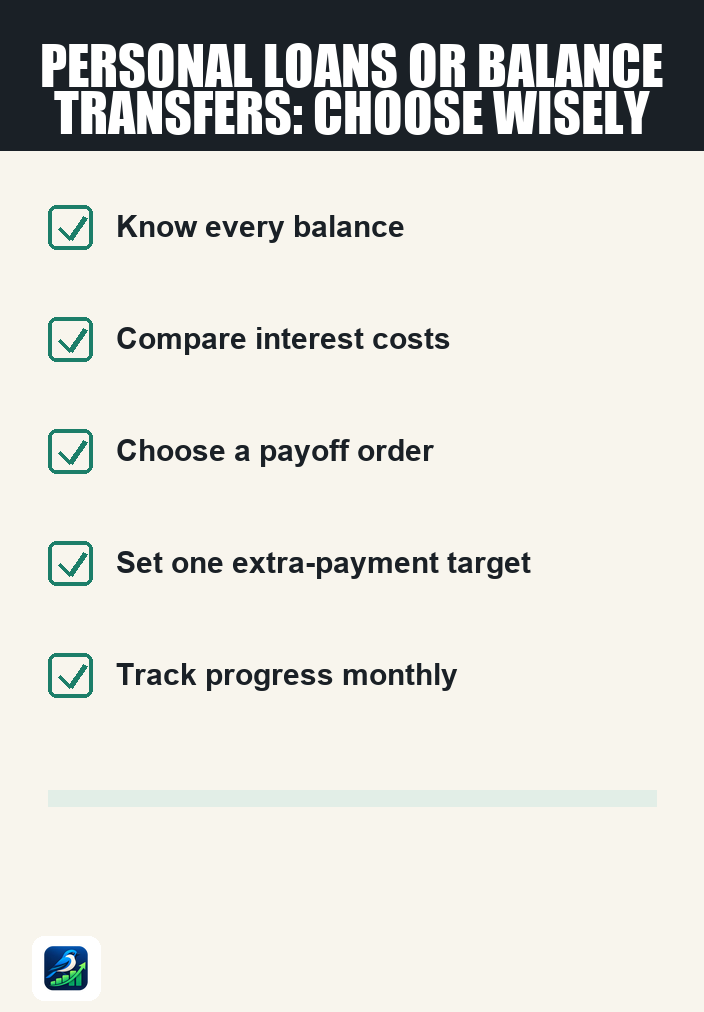
- Assess Your Debt: Take a detailed look at your current debts, including interest rates, balances, and payment terms.
- Check Your Credit Score: Understanding your credit profile can help you determine which options are available to you.
- Research Options: Compare personal loan offers and credit card balance transfer options, focusing on interest rates, fees, and terms.
- Calculate Total Costs: Use a debt repayment calculator to estimate how much you could save with each option.
- Seek Professional Advice: If you’re uncertain, consider consulting with a financial advisor or credit counseling service for personalized guidance.
Ultimately, the right choice depends on your unique financial situation, goals, and discipline. Take your time to explore your options, weigh the pros and cons, and make an informed decision that aligns with your financial objectives.



















