
Understanding Debt Relief Scams
Debt relief can seem like a lifeline when you’re struggling to manage your financial obligations. However, the debt relief industry is fraught with scams that prey on vulnerable individuals seeking help. Recognizing these scams is crucial to protecting your hard-earned money while navigating your debt situation.
Common Characteristics of Debt Relief Scams
Several telltale signs can help you identify potential frauds in the debt relief space. Here are key characteristics to watch for:
- Upfront Fees: Legitimate debt relief companies typically do not charge substantial fees before providing services. If a company asks for payment before they’ve settled any debt, it’s a red flag.
- Guaranteed Results: Be wary of organizations that promise specific outcomes, such as a guaranteed reduction in debt or an increase in your credit score. No one can assure these results.
- Pressure Tactics: Scammers often create a false sense of urgency, pushing you to make quick decisions without sufficient time for consideration.
- Vague Information: If a company is not transparent about their services, fees, or the debt relief process, it’s best to stay away. Clear and detailed information is a hallmark of reputable companies.
- Unlicensed or Unregistered: Many states require debt relief organizations to be licensed or registered. If a company is not compliant, it may be a scam.
Types of Debt Relief Options
Understanding the different types of debt relief can help you make informed decisions and recognize scams more readily. Here’s a breakdown:
Debt Consolidation
This involves combining multiple debts into a single loan, often with a lower interest rate. While it can simplify payments, it doesn’t reduce the total amount owed. Scams may promise lower payments without explaining the terms or risks involved.
Debt Management Plans
These plans involve working with a credit counseling agency to create a structured repayment plan. Reputable agencies will explain the fees and terms upfront. Be cautious if an agency suggests a plan without a thorough assessment of your financial situation.
Debt Settlement
Debt settlement involves negotiating with creditors to pay a reduced amount. While this can be a legitimate option, it comes with risks, including potential tax implications and damage to your credit score. Be wary of companies that promise significant settlements without a clear understanding of the risks involved.
Bankruptcy
Filing for bankruptcy can provide relief from debt but has long-term consequences for your credit. This option should be considered carefully and often requires professional guidance. Avoid any service that suggests bankruptcy as the first or only solution without a thorough evaluation of your situation.
Evaluating Debt Relief Companies
When considering a debt relief company, conduct thorough research. Here are steps to guide you:
- Check Credentials: Look for certifications or memberships in professional organizations, which can indicate a commitment to ethical practices.
- Read Reviews: Look for customer reviews and testimonials. However, be cautious, as some reviews can be manipulated or faked.
- Request Information: Ask for detailed information about the services offered, fees, and the process. Legitimate companies will be transparent.
- Consult with a Trusted Advisor: If unsure, seek advice from a financial advisor or a non-profit credit counseling service. They can provide an unbiased assessment of your options.
- Understand the Contract: Before signing, thoroughly read and understand the contract. Pay attention to the terms and conditions, including fees and cancellation policies.
Recognizing Red Flags
While evaluating potential debt relief options, be on the lookout for red flags that indicate a company may not be trustworthy:
- Too Good to Be True Offers: If it sounds too good to be true, it probably is. Be skeptical of claims that seem unrealistic.
- Lack of Contact Information: A reputable company should provide clear contact information, including a physical address. If they only provide a P.O. box or refuse to share details, it’s a warning sign.
- Non-Responsive Communication: If a company is slow to respond or evasive when answering your questions, it may indicate they are not legitimate.
Practical Steps to Protect Yourself
Here are some actionable steps you can take to safeguard yourself from debt relief scams:
- Educate Yourself: Familiarize yourself with different debt relief options and their implications. Knowledge is your best defense against scams.
- Verify Information: Cross-check any claims made by a company with reputable sources, including consumer protection agencies or financial advisors.
- Trust Your Instincts: If something feels off about a company or offer, listen to your gut. It’s better to walk away than risk your financial security.
- Keep Records: Document all communications and agreements, including names, dates, and details of conversations. This can be invaluable if you need to report a scam.
- Report Suspicious Activity: If you suspect a scam, report it to the Federal Trade Commission (FTC) or your state’s consumer protection office.
Next Steps for Managing Your Debt
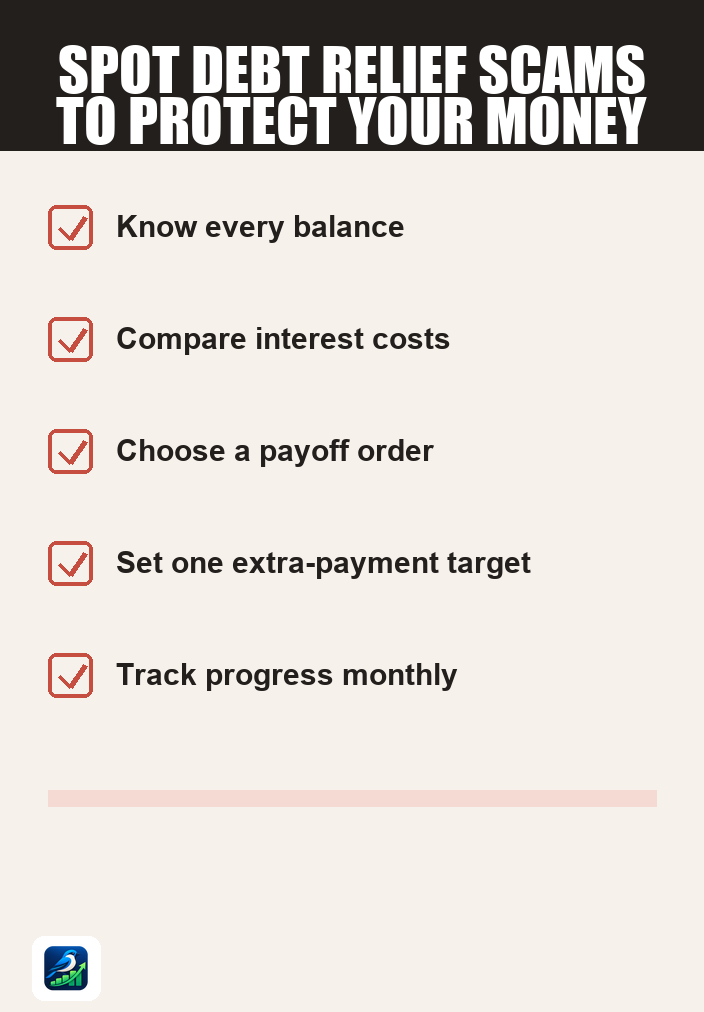
Recognizing debt relief scams is critical, but it’s just one part of managing your financial situation. Here are some next steps:
- Assess your debt situation: List all debts, interest rates, and monthly payments.
- Explore legitimate options: Research reputable credit counseling agencies or non-profit organizations to find guidance tailored to your needs.
- Set a budget: Create a monthly budget to help manage your expenses and prioritize debt payments.
- Seek professional advice: Consult with a financial advisor or certified credit counselor for tailored guidance.
By taking these steps and remaining vigilant, you can effectively manage your debt while steering clear of scams that could jeopardize your financial future.



















