
Understanding Minimum Payment Payoff Estimates
When facing consumer debt, many individuals turn to minimum payment estimates to gauge how long it will take to pay off their balances. While this may seem like a straightforward approach, it’s easy to overlook essential factors that can lead to miscalculations and misunderstandings. Here, we’ll explore common mistakes in minimum payment estimates and provide practical advice on how to avoid them.
Common Mistakes in Estimating Minimum Payment Payoff
Understanding the nuances of minimum payments is crucial. Here are some of the most prevalent mistakes people make:
- Ignoring Interest Rates: Many assume that their payments will lower the balance evenly. However, interest accrues on the remaining balance, and if your interest rate is high, a significant portion of your payment may go toward interest rather than principal.
- Not Considering Fees: Additional fees, such as late payment fees or annual fees, can increase your balance and extend the payoff timeline.
- Rounding Down Payments: Some people estimate payments by rounding down to the nearest dollar, which can lead to underestimating the time required to pay off debts.
- Overlooking Variable Rates: For those with variable interest rates, payments can fluctuate, complicating payoff estimates.
- Assuming Minimum Payments are Adequate: Many believe that making just the minimum payment is enough to pay off debts. In reality, this approach can lead to prolonged debt burdens.
Key Factors to Consider in Payoff Estimates
To create a more accurate estimate of your minimum payment payoff, consider the following factors:
1. Interest Rate Calculation
Understanding how interest is calculated on your debt is critical. Most credit cards, for instance, charge interest monthly based on the annual percentage rate (APR). To find your monthly interest rate, divide the APR by 12. If you have a balance of $1,000 with a 15% APR, your monthly interest would be $12.50. This means if you only pay the minimum, a good portion of your payment may go toward interest rather than reducing the principal.
2. Payment Allocation
When making a payment, creditors typically allocate it first to fees and interest, then to the principal. Therefore, if your payment is lower than the interest accrued, you might actually increase your total balance over time. Make sure to review your payment allocation to see how much is truly being applied to your debt.
3. Fees and Charges
Annual fees, late fees, and other charges can add up over time. It’s essential to factor these into your calculations. For example, if you’re regularly incurring a $35 late fee, that amounts to $420 a year, which can significantly extend your payoff timeline if you’re only making minimum payments.
4. Variable Interest Rates
Be aware of how variable interest rates work. If your lender adjusts rates based on market conditions, your payment estimates may become inaccurate. Regularly check your statements for any changes and adjust your estimates accordingly.
5. Lifestyle Changes and Income Fluctuations
Your ability to make payments can change due to various factors, including job loss or unexpected expenses. Planning for these scenarios can help prevent falling behind on payments.
Steps to Improve Your Payoff Estimates
Now that you understand common mistakes and key factors, here are some actionable steps to improve your estimated payoff time:
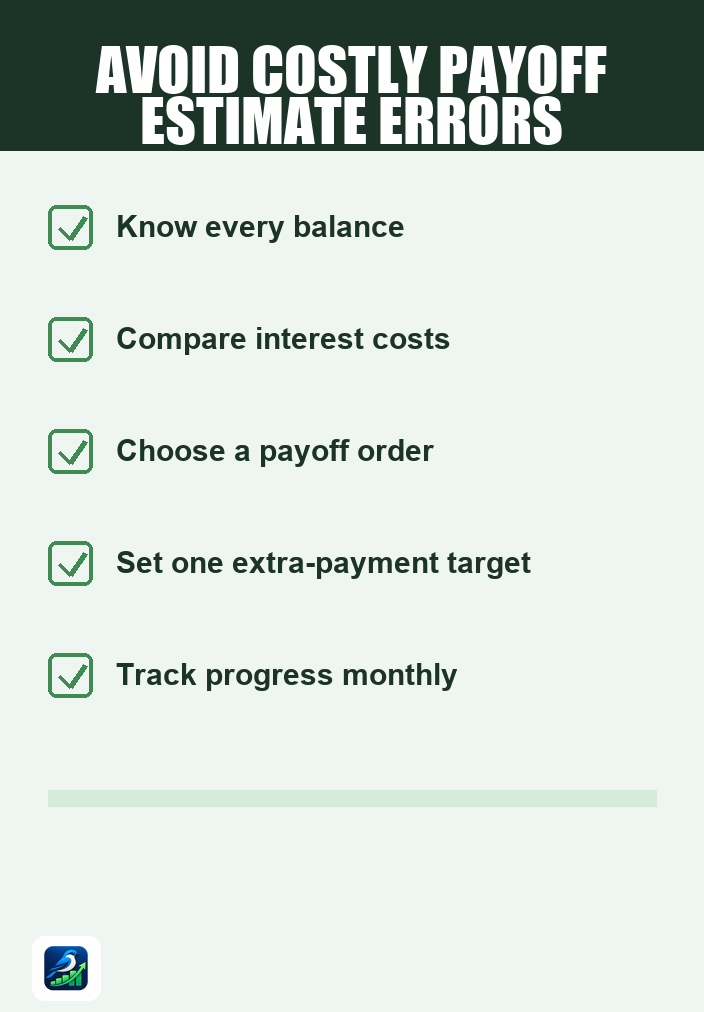
- Calculate Your Total Debt: List all your debts, including balances, interest rates, and minimum payments. This will give you a clear picture of your overall financial situation.
- Use Online Calculators: Many websites offer debt payoff calculators that can help you visualize how long it will take to pay off your debts based on your payments.
- Consider Paying More than the Minimum: Even a small increase in your monthly payment can significantly reduce the time it takes to pay off your debt. If you can manage it, aim to pay at least a little more than the minimum payment.
- Negotiate Lower Interest Rates: Contact your creditors to see if they can offer a lower interest rate. This can make a substantial difference in your total repayment amount.
- Explore Debt Consolidation Options: If you have multiple debts, consolidating them into one loan with a lower interest rate might make payments more manageable. However, be aware of potential drawbacks, like extending the repayment term.
Understanding Your Options
When it comes to managing debt, several strategies exist, each with its pros and cons:
- Debt Consolidation: This involves taking out a new loan to pay off existing debts. While it can simplify payments, it may lead to paying more in interest if not managed properly.
- Debt Management Plans: These are structured repayment plans developed with the help of a credit counseling agency. They can help negotiate lower interest rates but may involve fees.
- Debt Settlement: This involves negotiating with creditors to pay less than what you owe. While it can lead to reduced payments, it can also negatively impact your credit score and may not be suitable for everyone.
- Bankruptcy: This is a legal process for individuals unable to repay debts. It can provide relief but also has long-term effects on your credit report.
Next Steps for Managing Your Debt
Understanding the complexities of minimum payment payoff estimates is vital for effectively managing your consumer debt. Start by assessing your current financial situation, making accurate calculations based on interest rates and fees, and exploring options for increasing your payments. Remember, it’s essential to keep informed and consider all available alternatives to find what works best for you. If you’re unsure about the best path forward, seeking advice from a financial professional can provide tailored guidance.



















