
Understanding the Choice Between Debt Relief and Minimum Payments
When facing consumer debt, you may find yourself at a crossroads: should you stick with the minimum payments or explore debt relief options? This decision can significantly impact your financial future. In this article, we’ll break down what you need to know about choosing debt relief over simply making minimum payments, including the various options available and the trade-offs involved.
The Basics: Minimum Payments vs. Debt Relief
Minimum payments are the lowest amount you can pay on your credit card or loan without incurring penalties. While this approach may seem manageable in the short term, it often leads to prolonged debt and higher interest costs. On the other hand, debt relief encompasses various strategies aimed at reducing your overall debt load, which can include debt consolidation, debt management, or debt settlement.
Why Consider Debt Relief?
There are several reasons why individuals might opt for debt relief over making minimum payments:
- Interest Savings: Debt relief strategies can often reduce the total amount owed, saving you money on interest over time.
- Faster Debt Resolution: Debt relief can provide a more structured and expedited route to becoming debt-free.
- Less Financial Stress: Managing one consolidated payment may simplify your finances and reduce anxiety.
Types of Debt Relief Options
Understanding the different types of debt relief can help you make an informed decision:
1. Debt Consolidation
This involves combining multiple debts into a single loan with a lower interest rate. You’ll typically take out a new loan to pay off existing debts, which can ease monthly payments and simplify your financial picture.
Pros:
- Potentially lower monthly payments.
- Single payment to manage.
- Can improve your credit score if managed well.
Cons:
- May require collateral, such as your home.
- Fees may be involved.
- If you continue to accrue debt, you may end up in a worse financial situation.
2. Debt Management Plans (DMP)
A debt management plan involves working with a credit counseling agency to lower interest rates and create a manageable payment plan. You’ll make a single monthly payment to the agency, which then distributes the funds to your creditors.
Pros:
- Lower interest rates and fees.
- Structured repayment timeline.
- Access to financial education and support.
Cons:
- May take several years to complete.
- Requires a commitment to stop using credit cards.
- Could impact your credit score during the process.
3. Debt Settlement
Debt settlement involves negotiating with creditors to settle your debt for less than you owe. This option is often pursued when debts are significantly overdue and may require an upfront payment.
Pros:
- Potentially reduce the total debt owed.
- Can resolve debts more quickly than traditional repayment.
Cons:
- Could severely impact your credit score.
- Creditors may not agree to settle.
- May involve fees from debt settlement companies.
4. Bankruptcy
Bankruptcy is a legal process that can help eliminate or restructure debt. It’s often seen as a last resort due to its long-lasting effects on your credit history.
Pros:
- Can provide a fresh start and discharge most debts.
- Immediate relief from creditor actions.
Cons:
- Severe impact on credit score for years.
- Not all debts may be discharged (e.g., student loans, taxes).
- Potential loss of assets depending on the type of bankruptcy filed.
Evaluating Your Situation
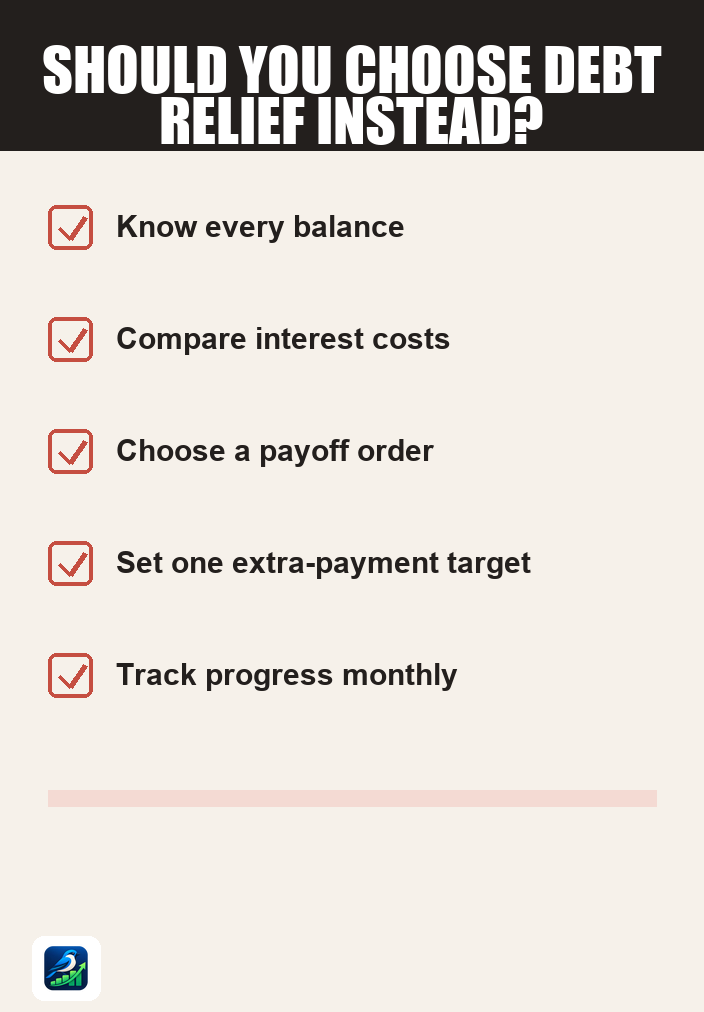
Choosing between debt relief and minimum payments requires a careful assessment of your financial situation. Here are some steps to help you evaluate:
- Calculate Your Total Debt: Add up all your debts, including credit cards, loans, and any outstanding bills.
- Assess Your Income and Expenses: Create a budget to understand how much money you have left each month after essential expenses.
- Consider Your Credit Score: Check your credit report to see how your current debt load is affecting your score.
- Identify Your Goals: Determine whether you want to pay off debt quickly, reduce interest rates, or simply simplify payments.
- Research Your Options: Explore the different debt relief options available and weigh their pros and cons against your financial goals.
Next Steps
After evaluating your situation, it’s crucial to take informed action. Start by reaching out to reputable credit counseling agencies to discuss your options. If you consider debt relief, make sure to read the fine print and understand any fees or commitments involved. Remember, each option has its trade-offs, and what works for one person may not work for another.
Ultimately, the path you choose should align with your financial goals and ensure a sustainable approach to managing your debt.



















