
Understanding Debt Consolidation Payments
Navigating the landscape of debt can be overwhelming, especially when you’re considering debt consolidation. While consolidating your debts into a single payment can simplify your financial life, it’s crucial to ask the right questions and compare your options effectively. Here, we’ll guide you through essential considerations to make informed choices regarding debt consolidation payments.
What is Debt Consolidation?
Debt consolidation involves combining multiple debts into one loan or payment plan. This can be done through various means, such as personal loans, balance transfer credit cards, or home equity loans. The primary goal is to reduce the number of payments you make each month, potentially lowering your interest rate and simplifying your financial management.
Key Comparison Questions to Ask
When considering debt consolidation, you should evaluate several factors. Here are some key questions to guide your decision-making process:
1. What are the Interest Rates?
Compare the interest rates of your current debts with the rate of the consolidation option. A lower interest rate can save you money over time, but be cautious of introductory rates that may increase after a promotional period.
2. What are the Fees Involved?
Look out for any fees associated with the consolidation process. These might include:
- Loan origination fees
- Balance transfer fees
- Closing costs for home equity loans
- Monthly service fees
Calculate how these fees impact the overall cost of the consolidation.
3. What is the Loan Term?
The length of time you will be paying off the consolidation loan is another crucial factor. A longer term may result in lower monthly payments but could mean more interest paid over the life of the loan. Conversely, a shorter term may lead to higher monthly payments but less overall interest.
4. Will My Credit Score Be Affected?
Understand how debt consolidation might impact your credit score. For instance, applying for a new loan can cause a temporary dip in your score due to a hard inquiry. However, reducing your overall debt utilization can improve your score in the long run.
5. What Happens If I Default?
Consider the consequences of missed payments on your consolidation loan. Some options may have more lenient repayment plans than others. Know the implications of defaulting, including potential legal actions or damage to your credit score.
Debt Consolidation vs. Other Options
Debt consolidation isn’t the only route you can take. It’s essential to understand how it compares to other debt relief options:
Debt Management Plans
Debt management plans (DMPs) involve working with a credit counseling agency to create a structured plan for paying off your debts. DMPs often come with lower interest rates and waived fees, but they may require you to close existing credit accounts, which can impact your credit utilization rate.
Debt Settlement
Debt settlement involves negotiating with creditors to pay a lump sum that is less than what you owe. This can have a significant impact on your credit score and is not suitable for everyone. It may also lead to tax consequences, as forgiven debt can be considered taxable income.
Bankruptcy
Bankruptcy is a legal process for individuals who cannot repay their debts. While it can provide significant relief, it also has long-term consequences on your credit report. Always consider this option as a last resort and consult with a qualified professional.
Evaluating Your Financial Situation
Before moving forward with debt consolidation, take a comprehensive look at your financial situation. Consider the following:
- Current income and expenses: Create a budget to see where your money is going.
- Debt-to-income ratio: Calculate your debt-to-income ratio to assess your ability to take on new debt.
- Emergency savings: Ensure you have a safety net to cover unexpected expenses, which can prevent future debt.
Next Steps for Debt Consolidation
Once you’ve done your research and asked the right questions, follow these practical steps:
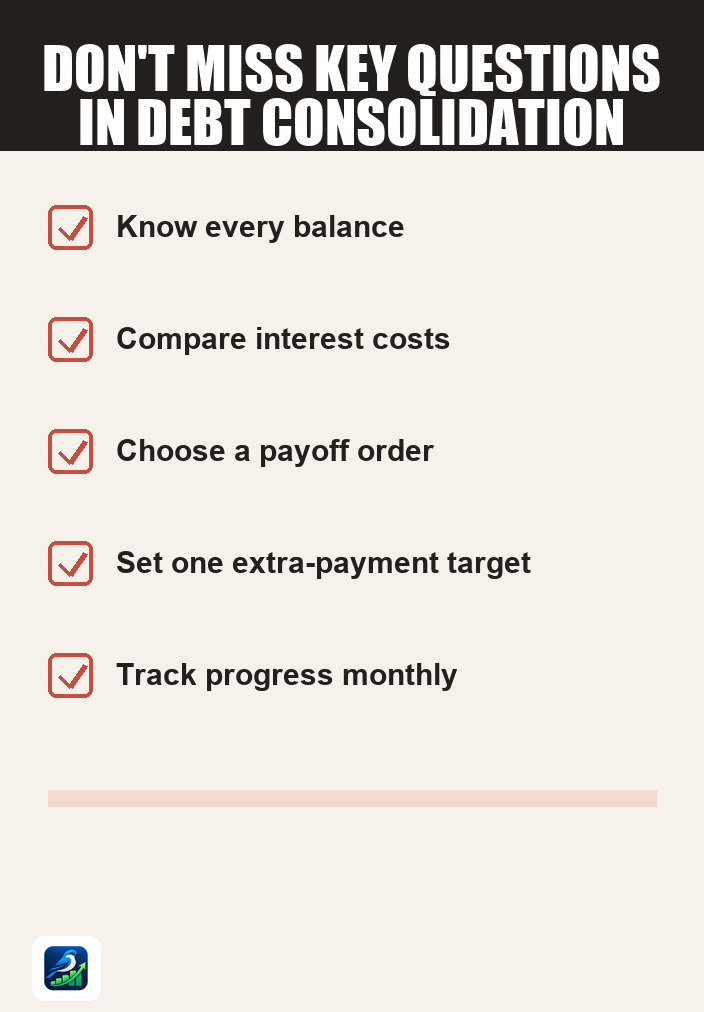
- Gather all your current debt information, including balances, interest rates, and payment terms.
- Shop around for consolidation options, comparing interest rates, fees, and loan terms.
- Consult with a financial advisor or a credit counselor to discuss your situation and get personalized insights.
- Read the fine print carefully before agreeing to any consolidation terms.
- Create a budget that includes your new consolidated payment plan to ensure you stay on track.
Debt consolidation can be a useful tool for managing debt, but it’s essential to approach it with caution. By asking the right questions and thoroughly evaluating your options, you can navigate the process with greater confidence and clarity.



















