
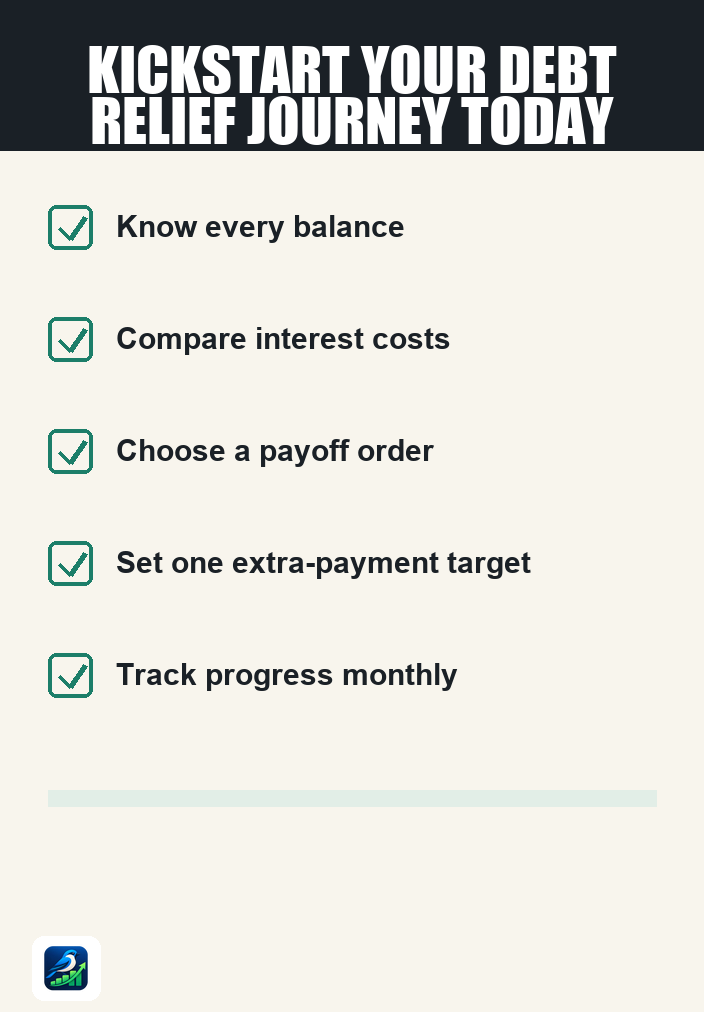
What is Debt Relief and Why is it Important?
Debt relief refers to strategies or programs designed to help individuals manage and reduce their debt. For those struggling with consumer debt, understanding the options available can be crucial to regaining financial stability. This article aims to break down the basics of debt relief and minimum payments, providing a practical checklist for beginners to navigate their financial situation.
Understanding Minimum Payments
Minimum payments are the lowest amount you can pay on a debt account, usually calculated as a percentage of the total balance. For credit cards, this often includes interest and fees, and making only the minimum payment can prolong your debt and increase the total amount paid over time.
Why Minimum Payments Can Be Problematic
While paying the minimum can help avoid late fees, it often leads to a cycle of debt. Here’s why:
- Interest Accumulation: Paying only the minimum means that a larger portion of your payment goes toward interest rather than reducing your principal balance.
- Longer Repayment Period: You’ll be in debt for a longer period, which can lead to a larger total repayment.
- Credit Utilization: High balances relative to your credit limit can negatively impact your credit score.
Debt Relief Options Explained
When it comes to managing debt, there are several options available, each with its own pros and cons. Here’s a closer look:
1. Debt Consolidation
This option involves combining multiple debts into a single loan, often with a lower interest rate. It can simplify payments but doesn’t necessarily reduce the total amount owed.
- Pros: Simplifies payments, may lower monthly payments.
- Cons: May extend the repayment period, doesn’t reduce debt amount.
2. Debt Management Plans (DMP)
DMPs are structured repayment plans set up through a credit counseling agency. They negotiate with creditors to lower interest rates and create a repayment schedule.
- Pros: Can lower interest rates, helps establish a budget.
- Cons: Requires commitment, may affect credit score initially.
3. Debt Settlement
This involves negotiating with creditors to settle debts for less than what is owed. While it can reduce the total debt, it comes with risks.
- Pros: Can significantly reduce total debt.
- Cons: Can damage credit score, may incur fees, and not all creditors will agree to settle.
4. Bankruptcy
Bankruptcy is a legal process that can eliminate or reorganize debt. It’s often a last resort and has severe long-term consequences.
- Pros: Can provide a fresh start, stops creditor harassment.
- Cons: Stains credit report for years, may require asset liquidation.
Preparation Checklist for Beginners
Before embarking on any debt relief journey, it’s essential to prepare adequately. Here’s a practical checklist to help you get started:
1. Assess Your Financial Situation
- Gather all financial statements, including debts, income, and expenses.
- Calculate your total debt and categorize it (e.g., credit cards, loans, medical bills).
2. Create a Budget
- Document monthly income and expenses.
- Identify areas where you can cut back to free up money for debt repayment.
3. Research Debt Relief Options
- Learn about different options like consolidation, management, settlement, and bankruptcy.
- Consider the pros and cons of each option in relation to your specific situation.
4. Consult with Professionals
- If necessary, seek advice from a credit counseling agency or a financial advisor.
- Be cautious of scams; verify credentials before working with any service.
5. Develop a Repayment Plan
- Choose a debt relief option that aligns with your goals and risk tolerance.
- Set a timeline for repayment and monitor progress regularly.
Important Considerations
As you explore debt relief options, keep the following in mind:
- Understand that not all options are suitable for everyone; choose what best fits your financial situation.
- Be wary of promises that seem too good to be true—there are no guaranteed outcomes in debt relief.
- Always read the fine print and understand the terms of any agreements you enter into.
Next Steps
Taking control of your debt situation can be overwhelming, but with the right preparation and knowledge, it’s possible to find a path to financial stability. Start by assessing your financial situation and exploring the options that best fit your needs. Remember, seeking professional guidance can be a valuable step in making informed decisions.



















