
Understanding Debt Consolidation Offers
Debt consolidation can be a useful strategy for managing multiple debts, but beginners often make mistakes when comparing various offers. It’s essential to understand your options and evaluate them carefully. This guide will help you navigate the landscape of debt consolidation, avoiding common pitfalls and making informed decisions.
Common Mistakes When Comparing Offers
1. Not Understanding the Types of Debt Consolidation
Before diving into offers, it’s crucial to understand the different types of debt consolidation:
- Debt Consolidation Loans: These are personal loans taken out to pay off existing debts. You’ll have one monthly payment, ideally with a lower interest rate than your current debts.
- Balance Transfer Credit Cards: These allow you to transfer high-interest credit card balances to a new card with a lower interest rate, often 0% for an introductory period.
- Home Equity Loans or Lines of Credit: These options use your home equity as collateral to secure a loan, which can offer lower rates but comes with the risk of losing your home.
- Debt Management Plans: Offered through credit counseling agencies, these plans negotiate lower interest rates with your creditors and consolidate payments into one monthly fee.
Failing to distinguish between these options may lead you to choose a solution that doesn’t fit your financial situation.
2. Ignoring the Total Cost of Debt Consolidation
Many people focus on the monthly payment amount without considering the total cost of the debt consolidation loan or plan. Look for:
- Interest Rates: A lower monthly payment might come with a higher interest rate over the life of the loan.
- Fees: Some lenders charge origination fees, balance transfer fees, or annual fees that can significantly increase your total debt.
- Loan Terms: Longer terms may reduce monthly payments but increase the total interest paid over the life of the loan.
Calculate the total cost of each offer, including all fees and interest, to make an informed comparison.
3. Overlooking the Fine Print
It’s easy to skim through the terms and conditions, but doing so can cost you. Pay close attention to:
- Variable vs. Fixed Rates: Some loans may start with a low fixed rate but switch to a variable rate after a certain period, potentially increasing your payments significantly.
- Prepayment Penalties: Some lenders charge fees if you pay off the loan early, which can negate the benefits of consolidating your debt.
- Eligibility Requirements: Ensure you meet all the criteria to avoid wasting time on offers you cannot qualify for.
Reading the fine print can reveal hidden costs and conditions that affect your decision.
4. Failing to Consider Your Credit Score
Your credit score plays a significant role in the offers you receive. A common mistake is not checking your credit score before applying for consolidation. Here’s why it matters:
- Interest Rates: Higher credit scores typically lead to lower interest rates, which can save you money.
- Loan Approval: Some lenders only work with borrowers who have a specific credit score range. Knowing your score can help you target the right lenders.
Consider obtaining a free credit report and assessing your credit health before you begin comparing offers.
5. Not Evaluating the Impact on Your Financial Goals
Debt consolidation should align with your broader financial goals. A common mistake is treating it as a quick fix without considering long-term effects. Ask yourself:
- Will this help me achieve financial stability? Consider whether consolidating your debts will allow you to create a budget and save for future expenses.
- Am I addressing the root cause of my debt? Consolidation can simplify payments but doesn’t solve spending habits or financial planning issues.
Take time to assess how consolidation fits into your overall financial strategy.
6. Not Seeking Professional Advice
Many beginners attempt to navigate the debt consolidation process alone, which can lead to costly mistakes. Consulting a financial advisor or credit counselor can provide valuable insights. Here’s how they can help:
- Personalized Guidance: Professionals can offer tailored advice based on your unique financial situation.
- Debt Management Plans: They can help you explore options like debt management plans, which may be more suitable than consolidation.
- Objective View: An advisor can provide an unbiased perspective, helping you see options you may have overlooked.
While professional guidance may come with a cost, it can also save you money in the long run by helping you avoid poor decisions.
Next Steps for Comparing Debt Consolidation Offers
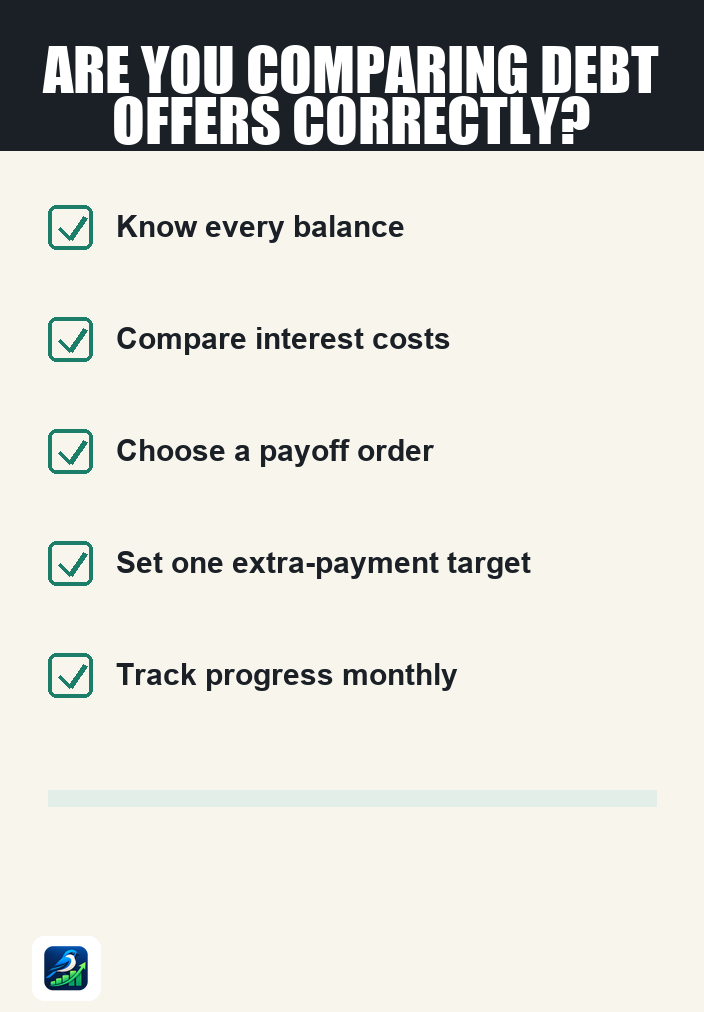
Now that you understand common mistakes, here are some practical steps to take:
- Research Your Options: Familiarize yourself with different types of debt consolidation and what might be best for you.
- Check Your Credit Score: Obtain your credit report and understand where you stand financially.
- Compare Offers Thoroughly: Look beyond monthly payments to total costs, terms, fees, and conditions.
- Read the Fine Print: Pay attention to details that could impact your overall repayment plan.
- Consider Professional Help: Don’t hesitate to seek advice from a financial advisor or credit counselor to ensure you’re making the best decision for your situation.
By taking these steps, you can approach debt consolidation with a clearer understanding and avoid the common pitfalls that many beginners face.



















