
Understanding Debt Consolidation Loans
Debt consolidation loans can provide a clear path to managing multiple debts. They combine several debts into one loan, often with a lower interest rate, making it easier to handle repayments. However, choosing the right debt consolidation option requires careful consideration of your financial situation and long-term goals.
Evaluating Your Current Debt Situation
Before diving into consolidation options, take stock of your current debts. List out all your debts, including:
- Credit card balances
- Personal loans
- Medical bills
- Lines of credit
Make note of the following for each debt:
- Outstanding balance
- Interest rate
- Monthly payment
- Payment due date
This comprehensive overview will help you better understand how much debt you have and the terms associated with each loan, which is crucial in assessing whether consolidation will benefit you.
What is Debt Consolidation?
Debt consolidation involves combining multiple debts into a single loan with the intent of simplifying payments and potentially lowering interest rates. This can be done through various means, including:
- Personal Loans: Unsecured loans that can be used to pay off existing debts.
- Home Equity Loans: Loans secured by the equity in your home, which often have lower interest rates.
- Balance Transfer Credit Cards: Credit cards that offer low or 0% introductory rates for transferring balances from other cards.
While these options can streamline payments, they also come with trade-offs. Understanding these differences can help you make an informed choice.
Weighing the Pros and Cons of Debt Consolidation Loans
Benefits of Debt Consolidation
Some of the main benefits include:
- Simplified Payments: Having just one monthly payment can reduce the risk of missing payments.
- Potential Lower Interest Rates: If you qualify for a lower rate than your current debts, you could save money over time.
- Improved Cash Flow: A longer repayment term may lower monthly payments, freeing up cash for other expenses.
Drawbacks to Consider
However, debt consolidation is not a one-size-fits-all solution. Some drawbacks include:
- Fees and Costs: Some loans may come with origination fees or other costs that can negate savings.
- Risk of Higher Debt: Without changing spending habits, it’s easy to accumulate new debt on top of the consolidated loan.
- Variable Interest Rates: Some loans may have variable rates that could increase over time, leading to higher payments.
Exploring Alternatives to Debt Consolidation
If debt consolidation doesn’t seem like the right fit, consider these alternatives:
- Debt Management Plans: Work with a credit counseling agency to create a plan to pay off debts, often with negotiated lower interest rates.
- Debt Settlement: Negotiating with creditors to settle for a lower amount, but may impact credit scores and is not suitable for everyone.
- Bankruptcy: A legal process to eliminate or restructure debt, which can have long-lasting effects on credit scores and finances.
Each option has its own set of implications, and it’s essential to weigh them against your current circumstances.
Steps to Choose the Right Debt Consolidation Loan
Choosing the right debt consolidation loan involves a systematic approach:
- Assess Your Credit Score: Your credit score plays a significant role in the interest rates you may qualify for. Check your score before applying.
- Research Loan Options: Look into different types of loans to determine what fits your situation best.
- Compare Interest Rates: Gather quotes from multiple lenders to find the most favorable terms. Check for any hidden fees.
- Read the Fine Print: Understand the terms and conditions, including repayment terms and any penalties for early repayment.
- Determine Your Monthly Budget: Ensure that the new payment fits comfortably within your budget to avoid falling back into debt.
Making Informed Decisions
Ultimately, the decision to pursue debt consolidation should be based on a thorough understanding of your financial situation and goals. While it can simplify your payments and potentially save you money, it’s not a guaranteed solution. Consider all options and their implications carefully.
Next Steps for Financial Relief
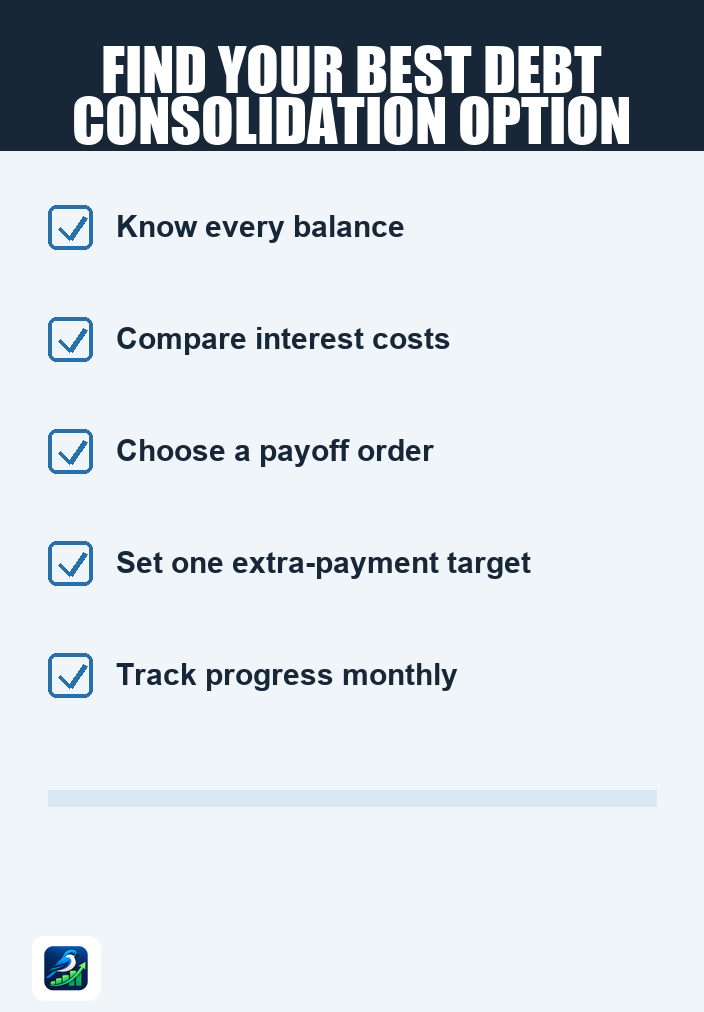
1. Take a detailed inventory of your current debts.
2. Explore different debt consolidation options and alternatives.
3. Consult with a financial professional if needed, especially to understand legal or tax implications.
4. Create a budget that incorporates your potential new payment structure.
In your journey towards financial relief, knowledge is your most valuable asset. Equip yourself with the right information and tools to make the best choice for your financial health.



















