
Understanding the Trade-offs: Hidden Fees vs. Transparent Rates in Consolidation Loans
When considering a debt consolidation loan, many individuals focus primarily on interest rates. However, it’s crucial to also understand the potential hidden fees that can significantly impact the overall cost of your loan. In this article, we will explore the differences between hidden fees and transparent rates, and how they can affect your decision-making process when it comes to debt consolidation.
Defining the Basics: What is Debt Consolidation?
Debt consolidation involves combining multiple debts into a single loan, ideally with a lower interest rate or more favorable terms. This can simplify payments and potentially reduce the total amount paid over time. However, not all consolidation loans are created equal, and understanding the full cost is essential.
The Allure of Low Rates
When shopping for a consolidation loan, you might come across attractive interest rates that tempt you to sign on the dotted line. A lower interest rate can mean lower monthly payments and less interest paid over the life of the loan. However, a low rate can sometimes mask additional costs.
The Importance of Transparent Rates
- Clear Communication: Transparent rates are straightforward and clearly communicated. Borrowers know exactly what they are paying.
- Predictable Payments: When rates are transparent, it’s easier for borrowers to plan their finances and budget for monthly payments.
- Understanding Total Costs: Knowing the exact interest rate helps you calculate the total cost of the loan over its duration.
Hidden Fees: The Costs You Might Overlook
Hidden fees can significantly inflate the cost of a consolidation loan. Here are some common types of fees you might encounter:
- Origination Fees: Many lenders charge a fee to process your loan application, typically expressed as a percentage of the loan amount.
- Prepayment Penalties: Some loans include penalties if you pay off the loan early, which can be a drawback if your financial situation improves.
- Late Payment Fees: If you miss a payment, you may incur fees that add to your overall debt burden.
- Closing Costs: Similar to a mortgage, some consolidation loans may come with closing costs that can add to your initial outlay.
Evaluating the True Cost of a Consolidation Loan
To effectively compare loans, consider creating a comprehensive view of each option’s costs. Here’s how to break it down:
- Identify the Interest Rate: Gather the interest rates from different lenders.
- List All Fees: Document any fees associated with each loan, including origination, closing costs, and any other potential hidden fees.
- Calculate Total Costs: Use this formula: Total Cost = Loan Amount × (1 + Interest Rate) + All Fees. This will give you a clearer picture of what you will ultimately pay.
- Compare Loans: Look at both the total cost and the terms of each loan. Sometimes a slightly higher interest rate can be more favorable overall if the fees are lower.
Making the Choice: Which Matters More?
Ultimately, whether hidden fees or transparent rates matter more depends on your specific financial situation. For those with the ability to manage their payments diligently, a loan with a slightly higher interest rate but fewer hidden fees might be the better choice. Conversely, if you’re confident in your ability to pay off the loan quickly, it may be worth it to go with a lower interest rate, even if it comes with more fees.
Concrete Example
Let’s say you have two loan offers:
- Loan A: $10,000 at a 5% interest rate with a $500 origination fee and no prepayment penalties.
- Loan B: $10,000 at a 4% interest rate with a $1,000 origination fee and a $300 prepayment penalty.
Calculating the total cost for each:
- Loan A: Total Cost = $10,000 × (1 + 0.05) + $500 = $10,500 + $500 = $11,000.
- Loan B: Total Cost = $10,000 × (1 + 0.04) + $1,000 = $10,400 + $1,000 = $11,400.
In this case, Loan A is the better option despite having a higher interest rate because the overall cost is lower.
Exploring Alternatives to Consolidation Loans
While consolidation loans can be a beneficial tool, they are not always the best option for everyone. Here are a few alternatives to consider:
- Debt Management Plans: Working with a credit counseling agency to create a plan to pay off your debts over time.
- Debt Settlement: Negotiating with creditors to settle debts for less than what you owe. This can have significant implications for your credit score.
- Bankruptcy: A legal process for individuals unable to repay debts, which can discharge certain debts but has long-term consequences.
Next Steps: Making an Informed Decision
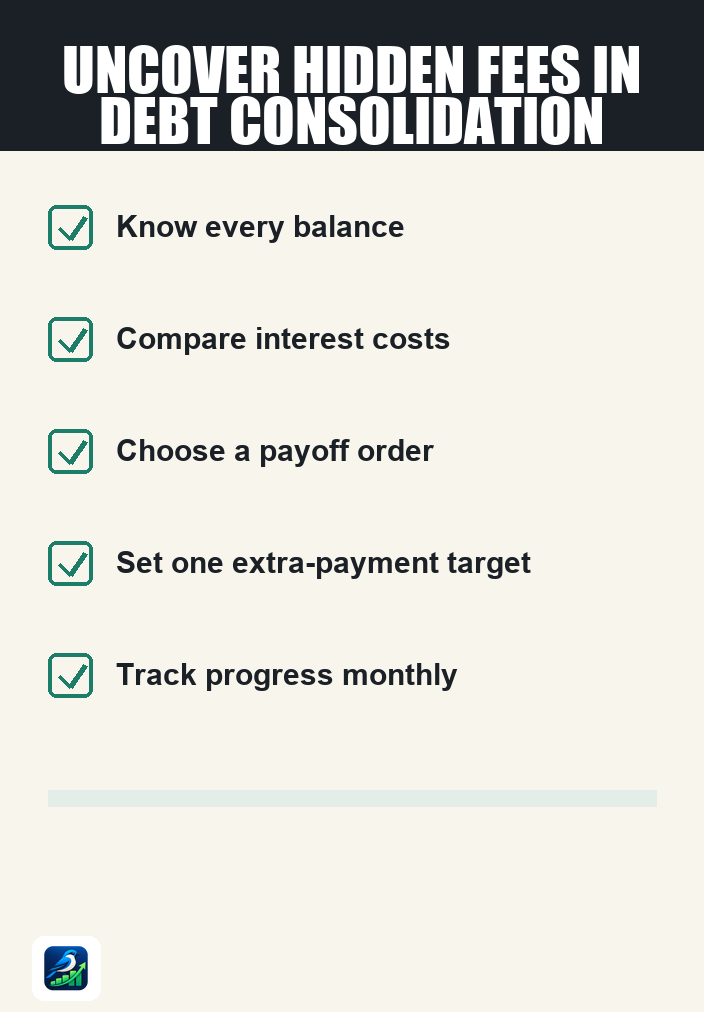
As you navigate your options for debt consolidation, keep the following steps in mind:
- Research multiple lenders to compare interest rates and fees.
- Read the fine print thoroughly to uncover any hidden fees.
- Calculate the total cost of loans to understand your financial commitment.
- Consider alternatives to consolidation if they might be more suitable for your circumstances.
By taking the time to evaluate both transparent rates and hidden fees, you can make a more informed decision that aligns with your financial goals. Remember, it’s not just about securing a loan but understanding the entire cost structure involved.



















