
Understanding the Dilemma: Debt Payments vs. Savings
When faced with financial obligations, many adults find themselves in a common predicament: should they direct their limited funds toward paying down debt or building up savings? This decision can feel overwhelming, especially when both paths seem critical to achieving financial stability. However, understanding the options and tradeoffs can help clarify which route may be more beneficial for your situation.
The Importance of Prioritizing Debt Payments
Before diving into which to prioritize, it’s essential to understand the nature of your debt. Not all debt is created equal, and different types may require different strategies.
Types of Debt
- Secured Debt: This includes loans backed by collateral, such as mortgages and auto loans. Falling behind can risk losing your asset.
- Unsecured Debt: This includes credit cards, personal loans, and medical bills. While these debts don’t have collateral, they can still lead to significant financial consequences if unpaid.
- High-Interest Debt: Credit cards often fall into this category, where interest rates can significantly increase the total amount owed over time.
Prioritizing debt payments is often advised because of the potential consequences of remaining in debt. For example, high-interest credit card debt can quickly spiral out of control, making it difficult to manage finances effectively.
Benefits of Paying Down Debt
Choosing to focus on debt payments can offer several advantages:
- Interest Savings: Paying off high-interest debt can save money in the long run.
- Improved Credit Score: Reducing debt may positively impact your credit utilization ratio, potentially improving your credit score.
- Less Stress: Eliminating debt can lead to a sense of relief and improved mental wellbeing.
The Case for Building Savings
On the other hand, building savings is equally important for several reasons:
- Emergency Fund: Having savings set aside can help you manage unexpected expenses without resorting to more debt.
- Financial Security: Savings can provide a cushion during transitional periods, such as job loss or other financial emergencies.
- Investment Opportunities: Having savings allows you to take advantage of potential investment opportunities that could grow your wealth.
Evaluating Your Financial Situation
To decide whether to focus on debt payments or savings, evaluate your financial situation carefully. Here are some factors to consider:
- Debt Amount: How much do you owe, and what are the interest rates? High-interest debt may warrant immediate attention.
- Monthly Budget: What is your monthly income versus expenses? Determine how much you can allocate to both debt payments and savings.
- Job Stability: If your income is stable, you may feel more comfortable focusing on debt. If uncertain, building savings might be the better option.
Strategies for Balancing Debt and Savings
If you find yourself torn between debt payments and savings, consider these strategies to strike a balance:
The Snowball vs. Avalanche Methods
- Debt Snowball: Focus on paying off your smallest debt first while making minimum payments on others. This method can provide quick wins and motivate you to keep going.
- Debt Avalanche: Prioritize debts with the highest interest rates first. Over time, this method can save you more money on interest.
Establishing a Savings Goal
Setting a specific savings goal can help you prioritize. Aim for an emergency fund that covers three to six months of living expenses. Start small if necessary, contributing a fixed amount each month.
Creating a Hybrid Approach
Consider allocating a percentage of your income to both debt payments and savings. For example, you might choose to put 70% toward debt and 30% into savings, adjusting as your financial situation evolves.
Recognizing the Tradeoffs
While both paths have their merits, it’s important to understand the potential tradeoffs:
- Focusing too heavily on debt payments may leave you vulnerable to unexpected expenses.
- Concentrating solely on savings could result in accruing more debt, particularly if high-interest obligations are ignored.
When to Seek Professional Guidance
If you’re feeling overwhelmed, it may be beneficial to consult with a financial advisor or a credit counselor. They can help you navigate your options and develop a tailored strategy that suits your unique financial landscape.
Next Steps for Your Financial Journey
As you work through your decision between debt payments and savings, consider these practical next steps:
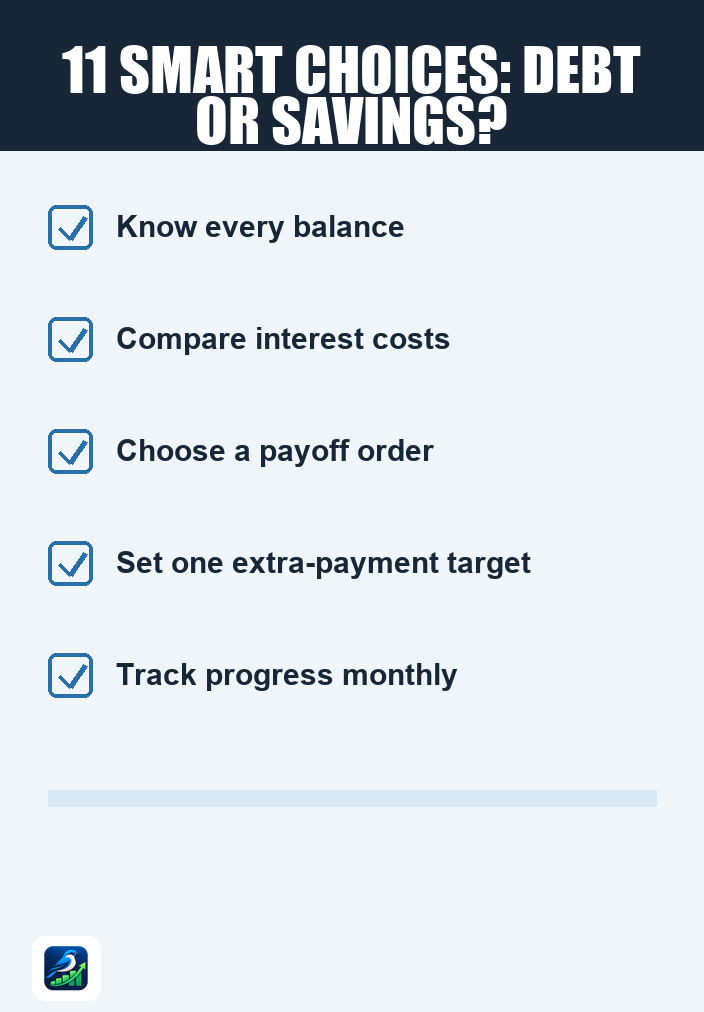
- Assess your total debt and categorize it by type and interest rate.
- Create a detailed budget to understand your monthly income and expenses.
- Set achievable goals for both debt repayment and savings.
- Implement a strategy that allows for both debt reduction and savings growth.
- Revisit your financial plan regularly and adjust as necessary.
Deciding between debt payments and savings is a personal journey that requires careful consideration of your financial situation. By evaluating your options, setting clear goals, and striking a balance, you can pave the way towards a more secure financial future.



















