
Understanding Your Debt Payoff Strategy
Eliminating debt can feel like a monumental task, and it often involves making tough decisions about how to allocate your finances. While you may have the best intentions when it comes to paying off your debts, several common mistakes can hinder your progress. Recognizing these costly payoff mistakes is essential for crafting a more effective strategy. Let’s delve into some of the most prevalent pitfalls and how to avoid them.
Rushing to Pay Off the Smallest Debt First
One strategy many people adopt is the “snowball method,” where you focus on paying off the smallest debts first. While this can provide a psychological boost, it may not always be the most cost-effective approach. Here’s why:
- Higher Interest Rates: If your smallest debt has a high interest rate, you might end up paying more in the long run compared to tackling a larger debt with a lower rate.
- Opportunity Cost: The money you allocate to pay off smaller debts could potentially be used more effectively on larger, high-interest debts, saving you more money in interest payments.
Instead, consider a strategy that focuses on debts with the highest interest rates first, often referred to as the “avalanche method.” This approach can be more efficient in reducing the total interest you pay.
Ignoring the Impact of Interest Rates
Another common mistake is not fully considering how interest rates affect your total debt. For instance, if you have a credit card with a 20% interest rate and a personal loan with a 5% rate, it makes more sense to prioritize the credit card debt despite the loan being larger.
To effectively manage your debt, calculate how much interest you are paying on each debt type. This will allow you to identify which debts are costing you the most money over time. Tools like simple spreadsheets can help you organize these figures for better clarity.
Making Minimum Payments Without a Plan
While making minimum payments can prevent late fees and keep your account in good standing, this method will extend your debt repayment timeline significantly. For many, it feels like an endless cycle. Here’s what to consider:
- Extra Payments: Even small extra payments can significantly reduce the total interest paid and the length of time it takes to pay off the debt.
- Budgeting: Create a realistic budget that allocates funds specifically for debt repayment, beyond just the minimum payments.
Consider setting a specific goal for each month, such as paying an additional percentage of your income toward your debt, rather than simply relying on minimum payments.
Neglecting to Build an Emergency Fund
It might seem counterproductive to save money while simultaneously trying to pay down debt, but having a small emergency fund can actually keep you from accumulating more debt. If an unexpected expense arises, such as a car repair or medical bill, having savings can prevent you from relying on credit cards or loans to cover these costs.
Aim for a modest emergency fund that covers at least one to three months’ worth of expenses. This can provide you with a financial cushion as you work on eliminating your debt.
Overlooking Debt Consolidation Risks
Debt consolidation can be an attractive option for simplifying payments and potentially lowering interest rates. However, it comes with its own set of risks and considerations:
- New Terms: Consolidating debt often means signing up for new terms, which may include fees or a longer repayment period.
- Short-Term Solution: If you do not change your spending habits, you may find yourself in a worse position after consolidation.
Before consolidating, consider whether you have a strategy for managing your spending and a plan to tackle the consolidated debt effectively.
Failing to Communicate with Creditors
Many people hesitate to communicate with their creditors, fearing negative consequences. However, reaching out can sometimes lead to better repayment options or modified payment plans. Here are some actions to take:
- Negotiate Payment Plans: Many creditors are willing to work with you if you’re upfront about your situation. This can include lowering monthly payments or interest rates.
- Ask About Hardship Programs: Some creditors offer programs for those experiencing financial hardship, which can provide temporary relief.
Open communication can make a significant difference in your repayment journey. Don’t be afraid to ask for help.
Not Seeking Professional Guidance When Needed
While self-education is valuable, there are times when seeking professional advice can be beneficial. Consider reaching out to a financial counselor or advisor if you find yourself overwhelmed. They can provide tailored advice and strategies based on your specific situation. Just be mindful to choose a reputable source.
Next Steps for Effective Debt Elimination
Eliminating debt is a journey that requires careful planning and strategic thinking. Here are some practical next steps:
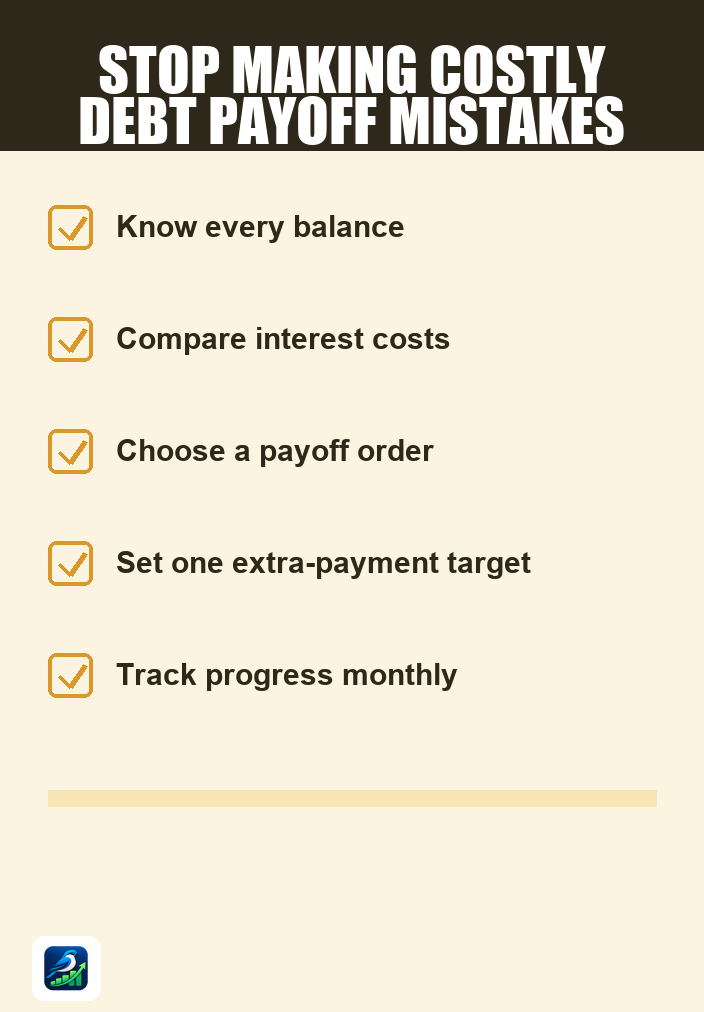
- Assess your current debts and list them by interest rate.
- Choose a payoff strategy that aligns with your financial situation (avalanche vs. snowball).
- Create a budget that accommodates extra payments and an emergency fund.
- Communicate with creditors if you’re struggling to make payments.
- Consider seeking professional advice if needed.
By avoiding these common mistakes and following a structured plan, you can make significant strides toward becoming debt-free.



















