
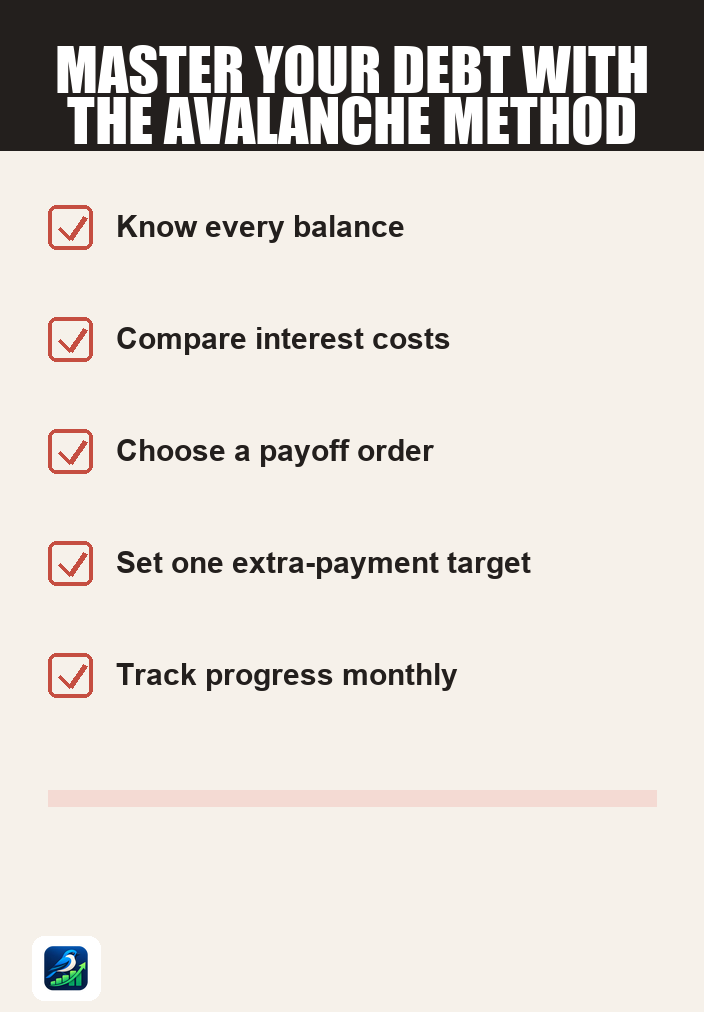
Understanding the Debt Avalanche Method
The Debt Avalanche Method is a popular strategy for paying off debt, particularly effective for those looking to minimize interest payments over time. This method involves focusing on paying off debts with the highest interest rates first while making minimum payments on other debts. By prioritizing high-interest debts, you can save money in the long run and potentially become debt-free more quickly.
How to Prioritize Debts for the Avalanche Method
To effectively use the Debt Avalanche Method, you need to prioritize your debts strategically. Here’s how to do that:
- List All Your Debts: Start by making a comprehensive list of all your debts. Include credit cards, personal loans, student loans, and any other consumer debt.
- Record Interest Rates: Next to each debt, note the interest rate. This step is crucial as it will determine your repayment priority.
- Organize by Interest Rates: Rank your debts from highest interest rate to lowest. This order will guide your repayment strategy.
For example, if you have three debts: a credit card with a 20% interest rate, a personal loan at 15%, and a student loan at 5%, your focus should be on the credit card debt first.
Implementing the Debt Avalanche Strategy
Once you have organized your debts, it’s time to implement the strategy. Here’s a step-by-step approach:
- Make Minimum Payments: Ensure you are making the minimum payments on all your debts. This will keep your accounts in good standing and avoid late fees.
- Allocate Extra Funds: Direct any extra money—whether from a paycheck, a bonus, or savings—toward the debt with the highest interest rate. This can be a crucial step in accelerating your debt payoff.
- Continue the Cycle: Once the highest-interest debt is paid off, move on to the next highest interest rate debt. Apply the same principle: continue making minimum payments on other debts while focusing extra payments on the next one in line.
Evaluating Your Budget for Debt Repayment
Effective prioritization isn’t just about listing debts; it’s also about evaluating your overall financial situation. Here are some steps to assess your budget:
- Track Your Income and Expenses: Use a budgeting tool or app to keep track of your monthly income and expenses. This will help you identify how much extra cash you can allocate to debt repayment.
- Identify Unnecessary Expenses: Look for areas in your budget where you can cut back. This might involve dining out less, canceling subscription services, or finding cheaper alternatives for necessities.
- Establish an Emergency Fund: While it may seem counterintuitive when focusing on debt repayment, having a small emergency fund can prevent you from accumulating more debt in case of unforeseen expenses.
Considerations and Trade-offs
While the Debt Avalanche Method is effective, it’s essential to consider the trade-offs involved:
- Emotional Factors: Some people may find it more motivating to pay off smaller debts quickly (the Debt Snowball Method) rather than focusing on high-interest debts. If this is the case, consider what will keep you motivated.
- Longer Time Frames: Paying off high-interest debts may take longer if you have multiple smaller debts with low-interest rates. Balance the desire for quick wins against overall savings.
- Impact on Credit Score: Closing accounts after paying them off can impact your credit score. Weigh the benefits of being debt-free against potential fluctuations in your credit score.
Other Debt Management Options
While the Debt Avalanche Method is a solid strategy, it’s vital to explore other debt management options. Here are a few alternatives:
- Debt Snowball Method: This method focuses on paying off smaller debts first for quick wins, which can also provide motivation.
- Debt Consolidation: This involves combining multiple debts into a single loan, ideally with a lower interest rate. However, be mindful of potential fees and longer repayment terms.
- Debt Management Plans: Working with a credit counseling agency can help you create a structured repayment plan, often with lower interest rates.
- Debt Settlement: This involves negotiating with creditors to settle for less than what you owe. It can be risky and may impact your credit score.
- Bankruptcy: As a last resort, bankruptcy can provide relief but comes with long-term consequences for your credit and financial future.
Conclusion and Next Steps
The Debt Avalanche Method is a powerful way to prioritize debt repayment, focusing on high-interest debts to save money over time. By listing your debts, tracking your budget, and understanding your financial goals, you can effectively implement this strategy. Remember to consider alternative options and the trade-offs involved in each approach.
As a next step, take some time to assess your current financial situation. Create your debt list, analyze your budget, and decide on an approach that feels right for you. If needed, consult with a financial professional for personalized advice tailored to your situation.



















