
Understanding Lump Sum vs. Monthly Contributions for Debt Payoff
When it comes to paying off debt, especially consumer debt like credit cards or personal loans, two common strategies often emerge: making a lump sum payment or contributing a set amount monthly. Both methods have their advantages and disadvantages, and your individual situation will greatly influence which approach is more effective for you. In this article, we’ll explore these two options, providing insights to help you make an informed decision.
The Basics: Lump Sum Payments
A lump sum payment involves paying a large amount of money all at once to reduce your debt. This could be a portion of your savings, a bonus from work, or funds from a tax refund. The primary advantage of this approach is that it can lead to significant interest savings and a quicker payoff period.
How Lump Sum Payments Work
When you make a lump sum payment, the amount is applied directly to your principal balance. This means:
- Your remaining balance decreases immediately, which can reduce future interest charges.
- If your debt has a high-interest rate, paying a substantial amount upfront can save you a significant amount of money over time.
- Many creditors may allow you to negotiate a lower balance if you can pay a lump sum, especially if your debt is in collections.
Example of Lump Sum Payment
Imagine you have a credit card balance of $5,000 with an interest rate of 20%. If you can pay $2,500 as a lump sum, your new balance would be $2,500. The remaining debt will accrue interest at a lower rate than if you were still managing the full amount.
The Monthly Contributions Approach
On the other hand, monthly contributions involve setting aside a fixed amount each month to pay down your debt. This approach allows for more manageable payments and can fit within a monthly budget.
How Monthly Contributions Work
With monthly contributions, you contribute a consistent amount over time. Here’s what you need to consider:
- This method can help you create a structured plan and avoid the temptation to spend your savings.
- Making regular payments can help build positive financial habits and instill a sense of discipline.
- However, if your interest rate is high, the longer payoff period might end up costing you more in interest.
Example of Monthly Contributions
Suppose you choose to pay $200 a month toward your $5,000 debt with the same 20% interest rate. It will take you longer to pay off the debt compared to making a lump sum payment, and you could end up paying more in interest over time.
Comparing the Two Approaches
Deciding between a lump sum payment and monthly contributions comes down to your financial situation and personal preferences. Here’s a quick comparison:
- Speed: Lump sum payments typically lead to a faster payoff, while monthly contributions may take longer.
- Interest Savings: A lump sum can save you more on interest, particularly with high-interest debts.
- Budgeting: Monthly contributions can be easier to manage within a budget but may not be as effective for larger debts.
- Financial Discipline: Regular monthly payments can help instill good financial habits and accountability.
Trade-offs to Consider
While both strategies can be effective, they also come with trade-offs. It’s important to weigh these carefully before deciding which method suits you best.
Potential Drawbacks of Lump Sum Payments
- You may deplete your savings or emergency fund, leaving you financially vulnerable.
- Not all creditors will negotiate a lower balance, and this approach may not be suitable for all types of debt.
Potential Drawbacks of Monthly Contributions
- High-interest rates can lead to more money paid in interest over time.
- It may take significantly longer to pay off the debt, which can be discouraging.
Making the Right Choice for You
Your choice between a lump sum payment and monthly contributions should be based on your overall financial situation, including:
- Your current savings and emergency funds.
- Your monthly income and expenses.
- The interest rates on your debts.
- Your financial goals and timeline for becoming debt-free.
It may also be beneficial to simulate both options using a debt calculator to see how much you could save in interest and how long it would take to pay off your debt with each approach.
Next Steps: Taking Action
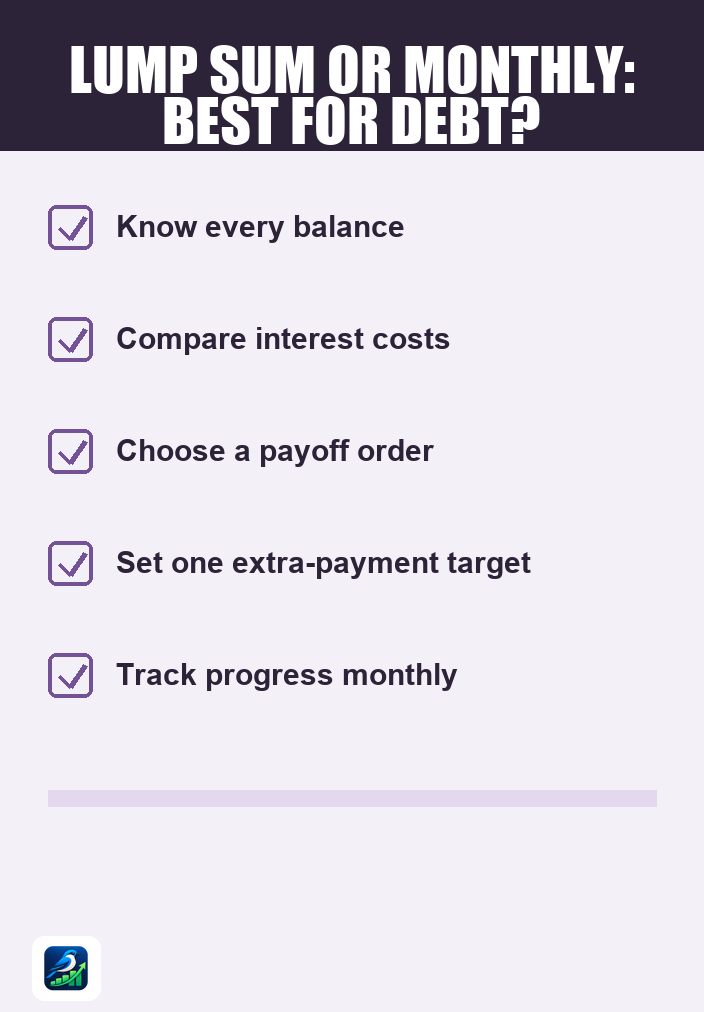
Regardless of which method you choose, creating a plan and sticking to it is crucial. Here are some practical steps you can take:
- Assess your total debt and interest rates to determine the most effective strategy.
- Consider speaking with a financial advisor for personalized guidance based on your individual circumstances.
- Stay disciplined, whether making lump sum payments or contributing monthly, to ensure you stick to your plan.
- Revisit your budget regularly to see if you can increase contributions or make additional lump sum payments.
Ultimately, the goal is to find a balance that helps you efficiently manage your debt while maintaining your overall financial health. By carefully evaluating your options and making a plan, you can take significant strides toward becoming debt-free.



















