
Understanding Fixed vs. Variable Debt Consolidation Rates
When dealing with consumer debt, you may encounter various strategies to manage and reduce what you owe. One popular method is debt consolidation, which combines multiple debts into one single loan, ideally with a lower interest rate. A crucial decision in this process is whether to choose a fixed or variable debt consolidation rate. Understanding the trade-offs between these two options is essential for making an informed decision that aligns with your financial situation.
What is Debt Consolidation?
Before diving into the specifics of fixed and variable rates, it’s essential to understand what debt consolidation entails. Debt consolidation involves taking out a new loan to pay off existing debts, such as credit card balances, personal loans, or medical bills. This can simplify your payments and potentially reduce the overall interest you pay.
It’s important to distinguish debt consolidation from other debt relief strategies:
- Debt Management: Involves working with a credit counseling organization to create a plan to pay off debts without taking out a new loan.
- Debt Settlement: Involves negotiating with creditors to pay less than what you owe, which can impact your credit score.
- Bankruptcy: A legal process that discharges some debts but has long-term consequences on your credit.
Fixed Debt Consolidation Rates: Pros and Cons
A fixed debt consolidation rate means that the interest rate on your loan remains the same for its entire term. This offers predictability and stability in your monthly payments, which can be beneficial for budgeting.
Advantages of Fixed Rates
- Predictability: Your monthly payment remains constant, making it easier to plan your finances.
- Protection Against Rate Increases: Even if market interest rates rise, your rate will not change.
- Long-term Planning: Fixed rates are typically easier to understand, which can help you manage your financial goals effectively.
Disadvantages of Fixed Rates
- Higher Initial Rates: Fixed rates may start out higher than variable rates, leading to higher initial payments.
- Less Flexibility: If interest rates fall, you won’t benefit from lower rates unless you refinance.
Variable Debt Consolidation Rates: Pros and Cons
Variable debt consolidation rates fluctuate based on market conditions. This means your interest rate can change over time, which can lead to lower initial payments but also potential increases in the future.
Advantages of Variable Rates
- Lower Initial Rates: Variable rates are often lower at the outset, which can reduce your initial monthly payments.
- Potential Savings: If market interest rates decrease, your payments may also go down, saving you money over time.
Disadvantages of Variable Rates
- Risk of Rate Increases: If interest rates rise, your payments may increase, potentially straining your finances.
Which Option Best Suits Your Needs?
The choice between fixed and variable rates ultimately depends on your financial situation, risk tolerance, and long-term goals. Here are some factors to consider:
Your Financial Stability
If you have a steady income and a solid budget, you might feel comfortable with the uncertainty of a variable rate. However, if your income is inconsistent or you want to avoid surprises, a fixed rate may be the better option.
Your Time Horizon
Consider how long you plan to hold the debt. If you expect to pay off the consolidation loan quickly, a variable rate might save you money. Conversely, if you’re looking at a longer repayment term, a fixed rate could provide peace of mind.
Your Risk Tolerance
Evaluate how comfortable you are with financial risk. If you prefer predictability and are wary of fluctuating payments, a fixed rate provides security. If you’re willing to take some risks for potential savings, a variable rate might be suitable.
Next Steps: Making Your Decision
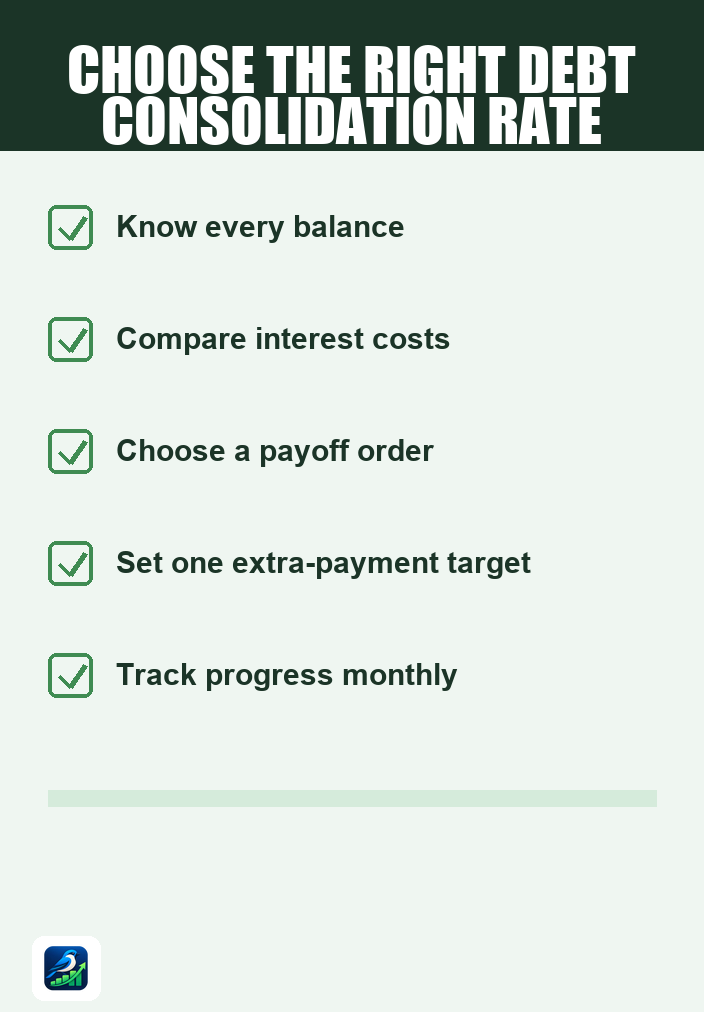
Choosing between fixed and variable debt consolidation rates requires careful consideration of your unique financial circumstances. Here are some actionable steps to help you make an informed decision:
- Assess Your Financial Situation: Take a close look at your income, expenses, and existing debts.
- Research Your Options: Gather quotes from various lenders to compare fixed and variable rates.
- Consult a Financial Advisor: If you’re unsure, consider speaking with a professional who can help you understand your options and their implications.
- Review Your Decision Periodically: Whether you choose fixed or variable rates, revisit your decision as your financial situation changes.
Ultimately, the choice between fixed and variable rates in debt consolidation is an important one that should align with your financial goals and comfort level. By carefully weighing the pros and cons and considering your personal situation, you can make a decision that best suits your needs.



















