
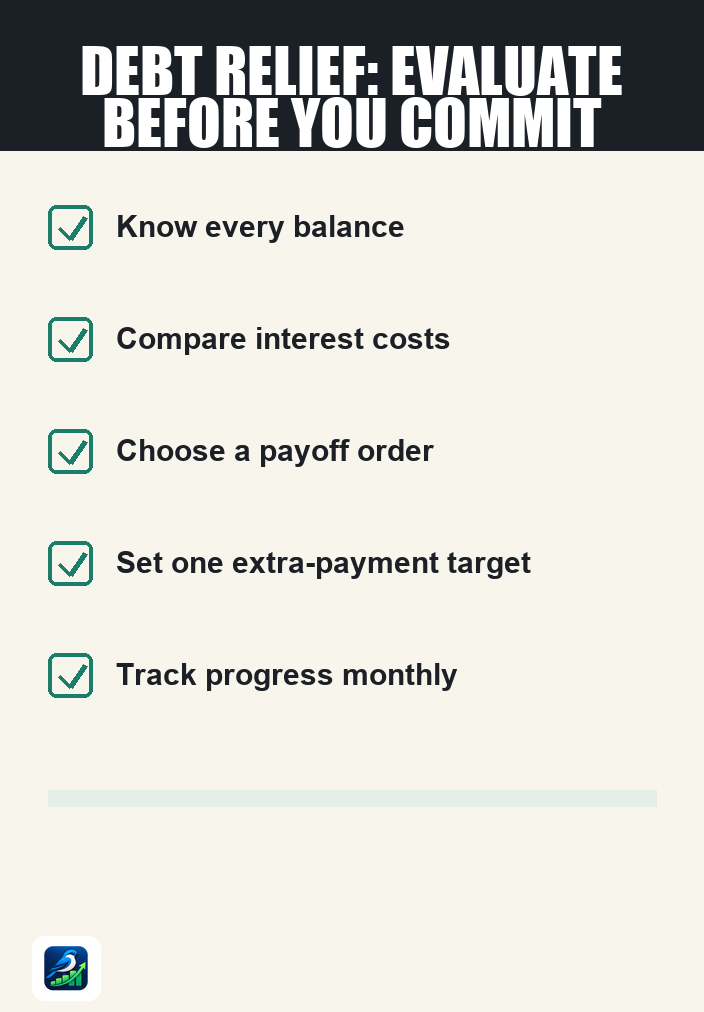
Understanding Debt Relief Options
When considering a debt relief company, it’s essential to first grasp the various options available to you. Debt relief strategies can include debt consolidation, debt management, debt settlement, and bankruptcy. Each option comes with its own set of pros and cons, and understanding these can help you make informed decisions.
Debt Consolidation
This method involves combining multiple debts into a single loan, ideally with a lower interest rate. It can simplify payments and potentially reduce monthly obligations. However, it may not address the underlying issues that led to debt accumulation.
- Pros: Simplifies payments, potentially lowers interest rates.
- Cons: May require collateral, doesn’t eliminate debt, and can lead to more borrowing if spending habits don’t change.
Debt Management
Debt management plans involve working with a credit counseling agency to negotiate terms with creditors. This might lead to lower interest rates or waived fees. The agency will help you create a budget to ensure timely payments.
- Pros: Structured plan, professional support, and potential savings on interest and fees.
- Cons: Requires a commitment, may take time to see results, and could affect your credit score during the process.
Debt Settlement
Debt settlement involves negotiating with creditors to pay less than what you owe. This can result in significant savings, but it’s a complex and risky option. Not all creditors accept settlements, and this method can severely impact your credit score.
- Pros: Can reduce the total debt amount.
- Cons: Significant credit score damage, potential tax implications on forgiven debt, and no guarantees of acceptance by creditors.
Bankruptcy
Bankruptcy is a legal process that can provide relief from debts, but it’s often a last resort. It can eliminate unsecured debts, but it will also remain on your credit report for several years, affecting future borrowing.
- Pros: Provides a fresh start, and can eliminate most unsecured debts.
- Cons: Long-lasting effects on credit, potential loss of assets, and public record.
Key Considerations When Evaluating a Debt Relief Company
Once you’ve familiarized yourself with the options, it’s time to evaluate potential debt relief companies. Here are crucial factors to consider:
1. Reputation and Reviews
Research the company’s reputation. Look for online reviews and testimonials. Check with the Better Business Bureau or similar organizations for any complaints. A good track record can indicate reliability.
2. Transparency of Fees
Understand the fee structure before engaging with a debt relief company. Are there upfront fees, or are they only charged once a settlement is achieved? Make sure you know what you will be paying for and when.
3. Qualifications and Certifications
Verify if the company has certified professionals. Look for credentials that indicate they adhere to industry standards. Nonprofit credit counseling agencies are often more reputable as they are held to strict guidelines.
4. Communication and Support
Effective communication is key. Assess how responsive and supportive the company is during your initial inquiries. You’ll want a company that provides clear answers to your questions and offers guidance throughout the process.
5. Customized Solutions
Every financial situation is unique. Ensure the company is willing to tailor its approach to your specific needs rather than offering a one-size-fits-all solution. This may involve a thorough assessment of your financial situation and crafting a personalized plan.
6. Avoiding Scams
Unfortunately, the debt relief industry has its share of scams. Be wary of companies that promise immediate results or require large upfront fees. Legitimate companies will not guarantee results or pressure you into signing contracts.
Understanding the Trade-offs
While debt relief can provide necessary assistance, it’s essential to weigh the trade-offs involved. For instance, while debt settlement may reduce your overall debt, it can also result in a significant drop in your credit score, making future borrowing more difficult.
Similarly, opting for a debt management plan may help you avoid bankruptcy, but it requires diligence and a commitment to budgeting. Understanding these trade-offs can help you choose the right path based on your financial situation and goals.
Next Steps
As you move forward, take the following steps:
- Research and list potential debt relief companies.
- Schedule consultations to discuss your situation and gather information.
- Ask questions about fees, services, and their approach to debt relief.
- Compare your options and choose a company that aligns with your financial goals.
Debt relief can be a viable option, but it requires careful consideration and due diligence. By weighing your choices and understanding the implications, you can make an informed decision that paves the way for a healthier financial future.



















