
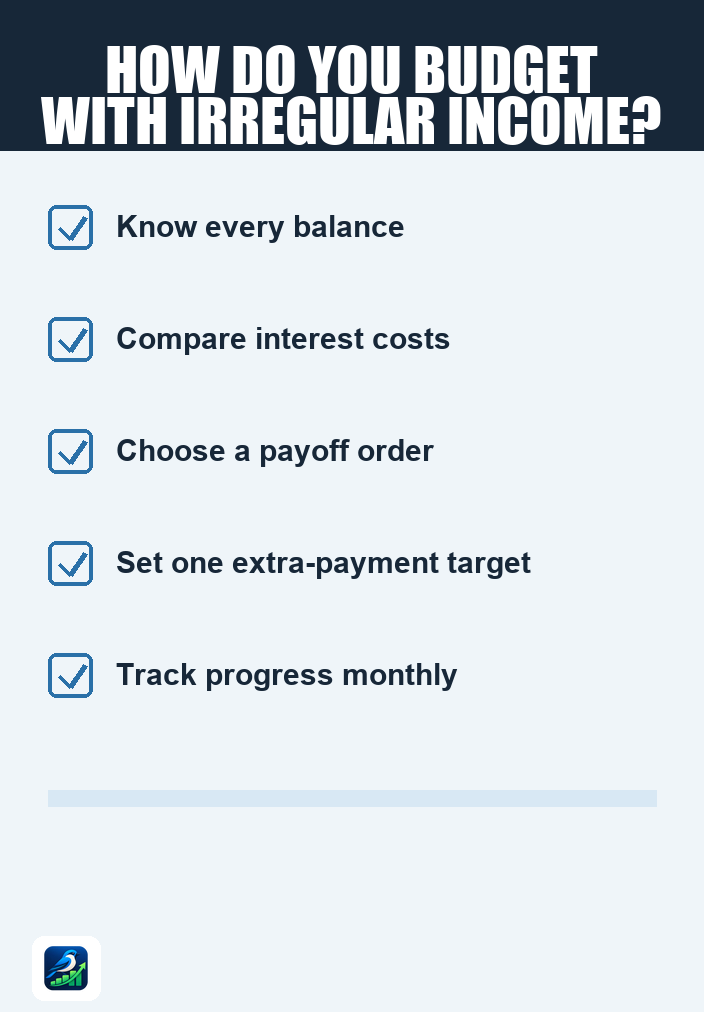
Understanding the Challenges of Irregular Income Budgeting
Budgeting with irregular income can feel like navigating a financial minefield. Unlike a steady paycheck, irregular income—such as freelance work, commissions, or seasonal jobs—can make it difficult to predict your cash flow. This unpredictability can lead to stress and, if not managed properly, debt accumulation. However, mastering this type of budgeting is crucial for achieving financial stability, especially if you’re working to organize or reduce consumer debt.
Your Essential Decision Checklist
To effectively manage your finances with irregular income, consider the following checklist. Each item will guide you through the steps necessary to create a sustainable budgeting strategy.
1. Assess Your Income Streams
- Identify Sources: List all your income sources and categorize them based on reliability. For example, freelance projects might be irregular, while part-time work may provide a more stable income.
- Track Variability: Use a few months of past income data to identify patterns. This will help you forecast future earnings more accurately.
2. Calculate Your Average Monthly Income
To create a budget, you need a solid understanding of your average monthly income. Here’s how:
- Gather Data: Review your income for the past six to twelve months.
- Calculate Averages: Add your total income for the period and divide by the number of months to find your average monthly income.
For example, if you earned $5,000 in one month, $3,000 in another, and so on, your total for six months might be $25,000, leading to an average of about $4,167 per month.
3. Establish a Minimum Income Threshold
Determine the minimum amount you need to cover your essential expenses each month. This is crucial for prioritizing your spending during leaner months.
- List Essential Expenses: Include rent, utilities, groceries, transportation, and minimum debt payments.
- Set a Minimum Threshold: Your minimum income threshold should be the total of your essential expenses. If your average income falls below this threshold, consider strategies to either increase income or reduce expenses.
4. Create a Flexible Spending Plan
Once you have a grasp on your income, it’s time to create a spending plan that can adapt to fluctuations in your earnings.
- Allocate Fixed vs. Variable Expenses: Separate your expenses into fixed (essential bills) and variable (discretionary spending). This will help you see where you can cut back if necessary.
- Use the 50/30/20 Rule: A common guideline is to allocate 50% of your income to needs, 30% to wants, and 20% to savings or debt repayment. Adjust these percentages based on your irregular income situation.
5. Build an Emergency Fund
An emergency fund acts as a financial buffer during periods of low income. Aim to save at least three to six months’ worth of essential expenses. This will reduce the financial stress of unexpected drops in income.
6. Prioritize Debt Payments
If you’re working to recover from consumer debt, prioritize your payments based on interest rates and minimum requirements:
- List Debts: Write down all your debts, including interest rates and minimum payments.
- Focus on High-Interest Debt: If possible, allocate any extra funds toward debts with the highest interest rates first (often referred to as the “avalanche” method).
- Consider Debt Consolidation: If you have multiple debts, consolidating them could simplify your payments. However, weigh the pros and cons, as this might not be the best solution for everyone.
7. Review and Adjust Regularly
Irregular income requires regular review and adjustment of your budget. Set a monthly date to review your finances:
- Track Income and Spending: Keep track of your income and compare it to your budget. This helps you identify patterns and make informed adjustments.
- Adjust for Changes: If you notice changes in your income—whether an increase in freelance work or a decrease in commissions—adjust your budget and spending plan accordingly.
Common Pitfalls to Avoid
When budgeting with irregular income, there are several pitfalls to be aware of:
- Ignoring Low Months: Many people tend to overspend during high-income months, leading to difficulties when income drops.
- Neglecting Savings: It’s easy to forget to save during busy periods. Ensure that saving is a priority, even if it’s just a small amount.
- Failing to Plan for Taxes: If you’re self-employed or receive 1099 income, set aside a portion of your earnings for taxes to avoid surprises at tax time.
Practical Next Steps
Mastering budgeting with irregular income is a journey that requires patience and discipline. Start by assessing your income and laying out a budgeting plan that accommodates your financial situation. Build an emergency fund, prioritize debt payments, and regularly review your progress. Remember, the goal isn’t perfection but rather creating a sustainable plan that allows you to navigate your financial life with confidence.



















