
Understanding Debt Relief Scams
When money gets tight and debts pile up, it can be tempting to look for quick solutions. Unfortunately, the debt relief industry is fraught with scams that prey on vulnerable individuals. Recognizing these scams is crucial to protecting your financial future, especially if you’re already struggling with debt. Here’s how to identify debt relief scams and make informed choices about legitimate options.
Common Signs of Debt Relief Scams
Many scams may look appealing at first glance, but there are several warning signs to watch for:
- Promises of Immediate Relief: Be wary of any service that guarantees immediate debt reduction or settlement. Legitimate services typically involve time and effort, and results will vary.
- Upfront Fees: Scammers often require payment before providing any service. In many cases, legitimate companies charge fees only after they have successfully negotiated a settlement.
- Pressure Tactics: Scammers may pressure you to act quickly or make hasty decisions. A reputable service will give you the time you need to consider your options.
- Lack of Transparency: If a company is not clear about its services, fees, or processes, it’s a red flag. Always ask for detailed information in writing.
- Unlicensed or Unregulated Operations: Check if the company is licensed to operate in your state and regulated by relevant financial authorities.
- Promises to Eliminate Debt Completely: Be cautious of any service that claims it can eliminate all your debt. This is often unrealistic and misleading.
Understanding Legitimate Debt Relief Options
While there are scams in the debt relief space, there are also legitimate options. Understanding these can help you make better choices:
1. Debt Consolidation
Debt consolidation involves combining multiple debts into a single loan, often with a lower interest rate. This can make payments more manageable and simplify your finances. However, keep in mind:
- Consolidation doesn’t erase your debt; it combines it into one payment.
- If you use a secured loan (like a home equity loan), you risk losing your asset if you can’t keep up with payments.
- Improper budgeting after consolidation can lead to accumulating new debt.
2. Debt Management Plans (DMPs)
With a DMP, a credit counseling agency negotiates with your creditors on your behalf to lower interest rates and create a manageable payment plan. Important points include:
- Most DMPs require a monthly fee for the service.
- You must stick to the agreed-upon payment plan, which can take several years to complete.
- Using a DMP may affect your credit score initially, but it can improve over time with consistent payments.
3. Debt Settlement
Debt settlement involves negotiating with creditors to settle for less than what you owe. While it can reduce the total debt amount, it comes with significant drawbacks:
- Settling debts can severely impact your credit score.
- Creditors may not agree to settle, and you might still owe the full amount.
- Some companies charge high fees and may not deliver results.
4. Bankruptcy
As a last resort, bankruptcy can provide relief from overwhelming debt. It’s a legal process that can discharge certain debts. However, consider the implications:
- Bankruptcy can stay on your credit report for several years.
- Not all debts can be discharged (e.g., student loans, child support).
- Consulting with a bankruptcy attorney is essential to understanding the process and consequences.
Steps to Protect Yourself from Scams
To avoid falling victim to scams, take the following proactive steps:
- Research: Look up reviews and testimonials of debt relief companies. Check with the Better Business Bureau for complaints.
- Ask Questions: Inquire about their process, fees, and what you can realistically expect. A reputable company will be open to discussion.
- Get Everything in Writing: Ensure that any agreement or contract is documented and that you understand all terms before signing anything.
- Consult a Professional: Consider speaking with a certified credit counselor or financial advisor, especially for complex situations.
Next Steps for Managing Your Debt
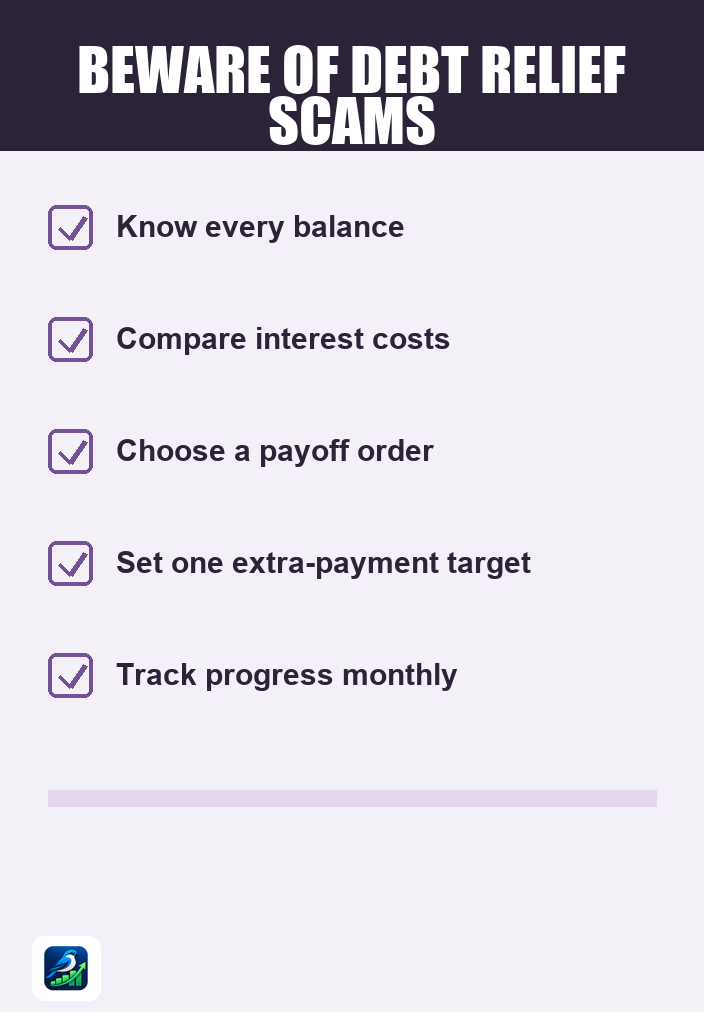
Recognizing debt relief scams is essential for anyone dealing with financial stress. By being aware of the warning signs and understanding legitimate options, you can protect yourself from further financial harm. Here are practical next steps:
- Assess your current debt situation and budget.
- Research and compare different debt relief options.
- Contact a trusted credit counseling agency for a free consultation.
- Stay informed about your rights and the resources available to you.
By taking these steps, you can navigate your financial challenges with greater confidence and reduce the risk of falling victim to scams. Remember, while the road may be tough, informed choices can lead you to a more secure financial future.



















