
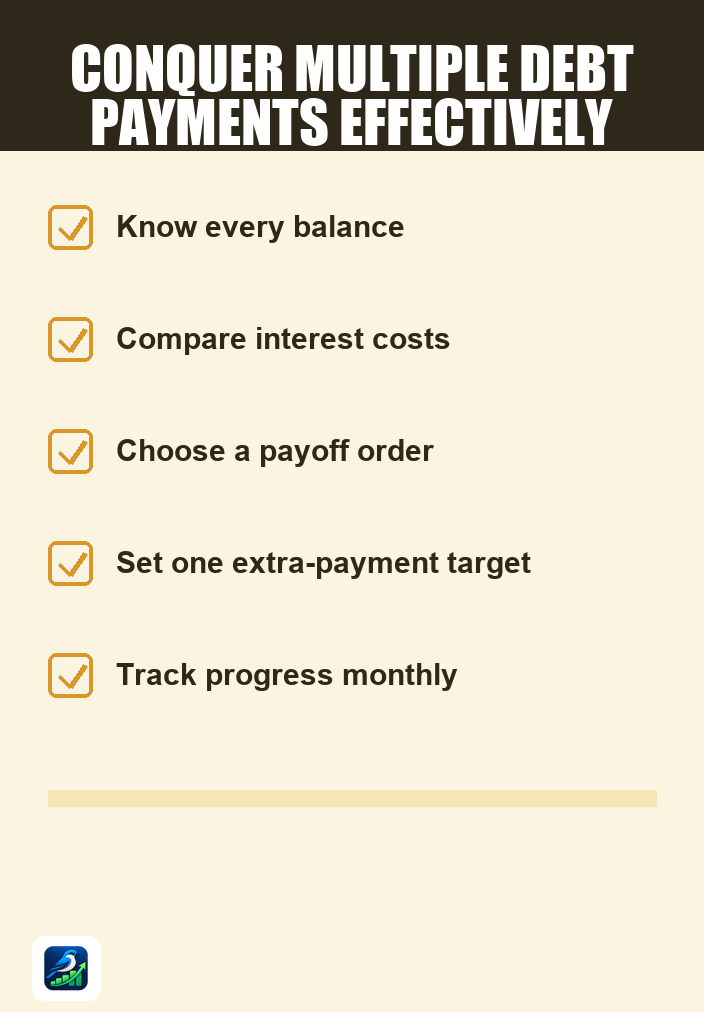
Understanding Your Weekly Spending Plan Checklist
Managing multiple debt scenarios can feel overwhelming, but a structured weekly spending plan can bring clarity and control. This checklist will guide you through essential steps to help you organize your finances, prioritize payments, and make informed decisions about your debt strategy. Remember, while this approach can help you manage your debt, always consider seeking professional advice for specific circumstances.
Step 1: Assess Your Financial Situation
The first step in organizing your finances is understanding where you stand. This involves taking a comprehensive look at your income, expenses, and debts.
Gather Your Financial Information
- Income: List all sources of income, including salaries, side jobs, or any passive income streams.
- Expenses: Track your monthly expenses, categorizing them into fixed (rent, utilities) and variable (groceries, entertainment).
- Debt Inventory: Make a list of all your debts, including credit cards, personal loans, and any other obligations. Note the balances, interest rates, and minimum payments.
Calculate Your Monthly Cash Flow
Subtract your total expenses from your total income to determine your monthly cash flow. This will help you understand how much money you have available to allocate towards debt repayment.
Step 2: Prioritize Your Debts
With a clear picture of your financial situation, it’s time to prioritize your debts. Not all debts are created equal, and how you handle them can significantly impact your financial health.
Identify High-Interest Debts
Focus on debts with the highest interest rates first, as these will cost you the most over time. Consider using the avalanche method, where you allocate extra funds to these debts while making minimum payments on others.
Consider the Snowball Method
Alternatively, the snowball method suggests paying off the smallest debts first to build momentum and motivation. This can be particularly effective for those who need encouragement to tackle their debts.
Step 3: Create Your Weekly Budget
Once you know your debts and priorities, it’s time to create a weekly budget that aligns with your goals.
Set Aside Money for Debt Payments
Based on your cash flow calculations, allocate a portion of your income each week specifically for debt repayments. Ensure this amount is realistic and sustainable.
Include Essential Expenses
Your budget should also cover essential expenses. Be sure to account for:
- Housing costs (rent/mortgage)
- Utilities (electricity, water, internet)
- Groceries
- Transportation (gas, public transit)
Plan for Variable Expenses
Don’t forget to include potential variable expenses. Setting aside some funds for unexpected costs can prevent you from derailing your budget.
Step 4: Monitor and Adjust Your Plan Weekly
A budget is a living document; it requires regular monitoring and adjustments to stay relevant to your financial situation.
Review Your Spending
At the end of each week, review your spending against your budget. This helps you identify areas where you may need to cut back or where you’ve overspent.
Adjust Debt Payments if Necessary
If you find you have extra funds, consider applying them to your prioritized debts. Conversely, if you’re falling short, revisit your variable expenses for potential cuts.
Step 5: Explore Debt Management Strategies
Being proactive about your debt management can open up new avenues for relief. Here are some options to consider:
Debt Consolidation
This involves combining multiple debts into a single loan, often at a lower interest rate. While this can simplify payments, be mindful of fees and the risk of accumulating new debt if not managed wisely.
Debt Management Plans
Working with a credit counseling agency to create a debt management plan can help you negotiate better terms with creditors. However, this may require closing credit accounts and could impact your credit score.
Debt Settlement
This involves negotiating with creditors to pay a reduced amount. It’s important to note that this option can have long-term consequences on your credit score and may not be suitable for everyone.
Bankruptcy
As a last resort, bankruptcy can relieve you of certain debts. However, it has serious implications for your credit and financial future. Consult with a legal professional to understand the ramifications fully.
Next Steps: Implementing Your Checklist
Now that you have a structured approach to managing your multiple debt scenarios, it’s time to put your checklist into action:
- Gather all your financial information.
- Prioritize your debts based on interest rates or balances.
- Create a weekly budget that includes debt payments and essential expenses.
- Monitor your spending and adjust your plan as needed.
- Consider exploring debt management strategies if required.
By following this checklist, you’ll be taking crucial steps toward organizing and managing your debt effectively. Remember, staying informed and proactive is key to regaining control over your financial life.



















