
Understanding Your Debt: Prioritizing Extra Payments
When faced with multiple debts, deciding where to put your extra payments can feel overwhelming. Each debt may have different interest rates, minimum payments, and terms, which complicates the decision-making process. However, prioritizing effectively can help you reduce your debt faster and save money on interest. This article will explore key factors to consider when making extra payments on your debt, providing you with practical steps to help guide your decision.
Assess Your Debt Landscape
The first step in prioritizing your extra payments is to take a comprehensive look at your debts. Gather all relevant information, including:
- Type of debt (credit card, personal loan, student loan, etc.)
- Outstanding balance
- Interest rates
- Minimum monthly payments
- Payment due dates
Having this information at hand will give you a clearer picture of your financial obligations and help you make informed decisions about where to allocate extra funds.
Choose a Payment Strategy
Once you have a clear understanding of your debts, you can decide which payment strategy to use. Here are two common approaches:
The Snowball Method
The snowball method involves focusing on the smallest debts first. You make minimum payments on all debts except the smallest one, to which you apply any extra funds. Once that debt is paid off, you move onto the next smallest debt, creating a “snowball” effect as you gain momentum. This method can be motivating for those who appreciate quick wins.
The Avalanche Method
Alternatively, the avalanche method prioritizes debts based on interest rates. You focus on the debt with the highest interest rate first, while making minimum payments on the others. This approach can save you more money in interest over time, as high-interest debts can accumulate costs quickly.
Consider the Type of Debt
Different types of debt may require different approaches. For example:
- Secured Debt: These debts, such as mortgages or auto loans, are backed by collateral. Missing payments can result in losing the asset, so maintaining minimum payments is essential.
- Unsecured Debt: Credit cards and personal loans fall into this category. While they may affect your credit score, they generally don’t have immediate consequences like secured debt.
- Student Loans: Federal student loans often have different repayment options, including income-driven repayment plans. Check if your loans qualify for any forgiveness programs or deferment options.
Understanding these differences can influence your prioritization. For example, you may want to focus more on unsecured debts first if they are causing significant stress or have high interest rates.
Evaluate Your Financial Situation
Your current financial situation also plays a crucial role in how you prioritize debt payments. Consider the following:
- Income Stability: If your income is stable, you may feel more comfortable tackling higher-interest debts. If your income fluctuates, you might want to focus on debts that provide more immediate relief.
- Emergency Fund: Before aggressively paying down debt, ensure you have some savings set aside for emergencies. This can prevent you from needing to rely on credit cards in case of unexpected expenses.
- Monthly Budget: Review your monthly budget to see how much extra money you can realistically commit to debt repayments. Avoid overextending yourself, as this can lead to additional financial stress.
Factor in Fees and Penalties
It’s essential to be aware of any fees associated with your debts. Some debts may have prepayment penalties or late fees that could impact your overall strategy. For example:
- Credit Cards: Many credit cards charge high-interest rates, but paying them off early can save money on interest.
- Personal Loans: Some lenders may impose fees for early repayment. Check the terms before deciding where to direct extra payments.
- Student Loans: Federal student loans generally do not have prepayment penalties, making them more flexible in how you prioritize payments.
Commit to a Plan
Once you’ve assessed your debts, chosen a payment strategy, and considered your financial situation and any fees, it’s time to commit to a plan. Here are a few steps to help you stay on track:
- Set Clear Goals: Define what you want to achieve with your extra payments—whether it’s paying off a specific debt, or reducing your overall debt load.
- Automate Payments: If possible, automate your extra payments to ensure consistency and avoid missing deadlines.
- Monitor Progress: Regularly review your debts and track your progress. Celebrate small victories to stay motivated.
- Adjust as Needed: Life circumstances change, so be open to revisiting your strategy if you encounter new challenges or opportunities.
Seek Professional Guidance When Necessary
If you find your situation becoming too complex or overwhelming, it may be beneficial to seek professional guidance. Financial advisors or credit counselors can provide personalized strategies tailored to your unique circumstances. Keep in mind that there are various debt relief options available:
- Debt Consolidation: This involves combining multiple debts into a single loan with a potentially lower interest rate.
- Debt Management: A professional can help you create a plan to manage your debts and may negotiate with creditors on your behalf.
- Debt Settlement: This involves negotiating a reduced payoff amount with creditors. However, this option can have drawbacks and may not be suitable for everyone.
- Bankruptcy: As a last resort, bankruptcy can provide relief, but it comes with significant long-term consequences.
Practical Next Steps
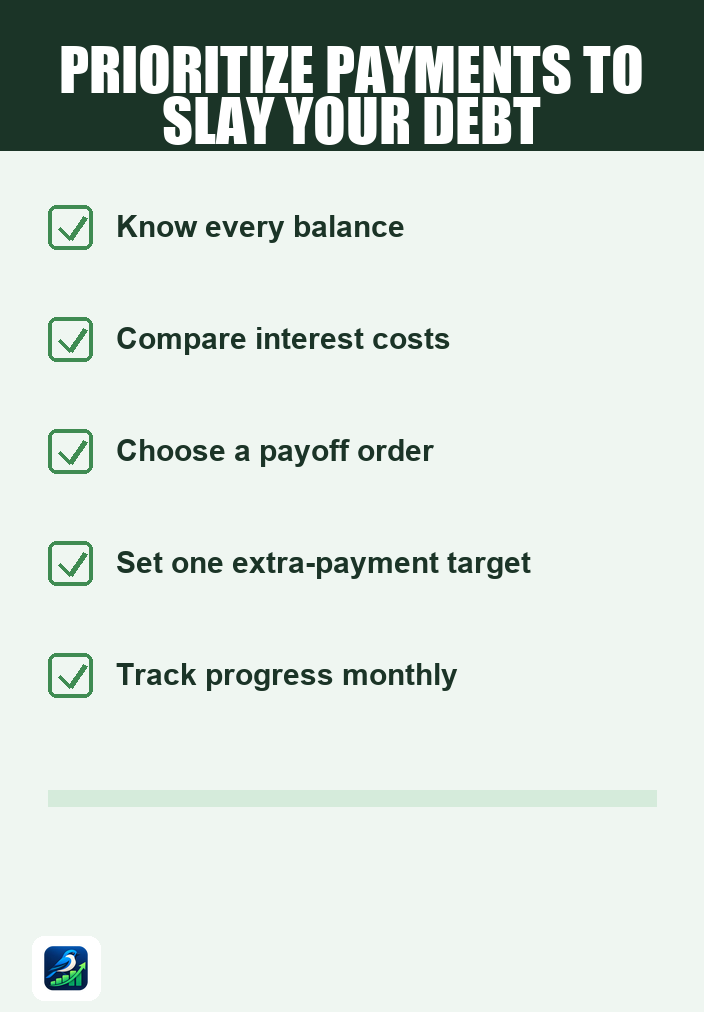
To effectively prioritize your extra payments on debt, start by assessing your financial situation and understanding your debts. Choose a payment strategy that resonates with you and consider the type of debts you have. Factor in any fees, and commit to a plan that includes setting clear goals and monitoring your progress.
If you find yourself struggling, remember that professional help is available to guide you through your options. The path to debt relief can be challenging, but with the right approach, you can take meaningful steps toward financial stability.



















