
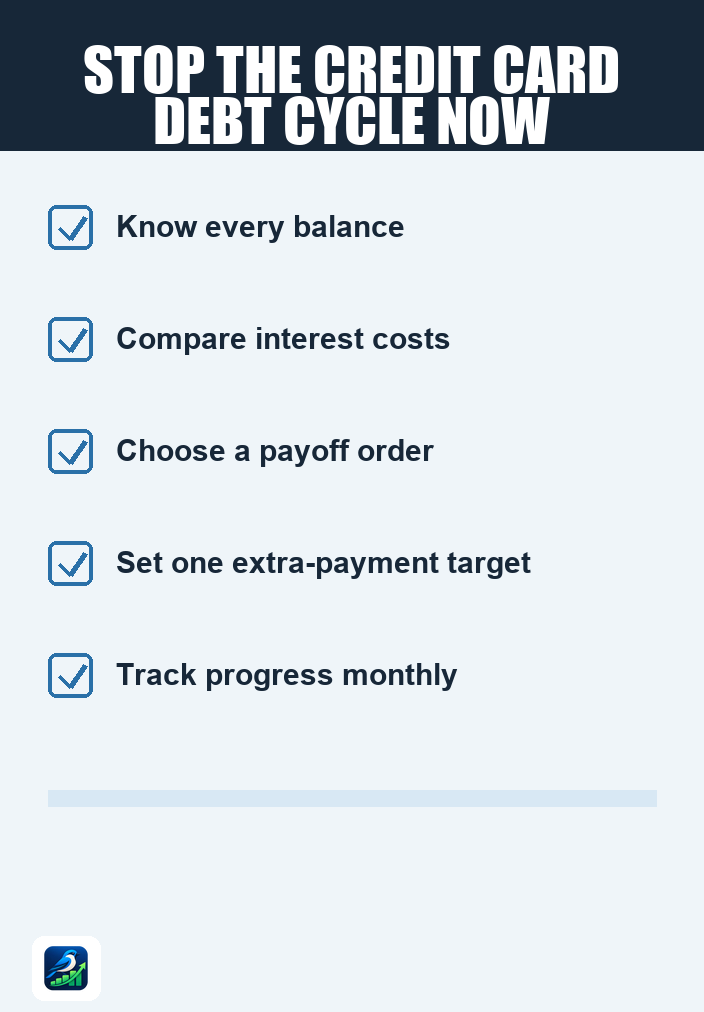
Understanding the Cycle of Credit Card Debt
Many people find themselves trapped in a cycle of accumulating new credit card debt, often without realizing how they got there. This cycle can lead to significant stress and financial instability. Breaking free requires a clear understanding of your relationship with credit and a commitment to change. Here’s how to take those first steps.
Recognize the Root Causes of Debt Accumulation
The first step in breaking the cycle of credit card debt is identifying the underlying reasons for its accumulation. Here are some common causes:
- Impulse Spending: Emotional or spontaneous purchases can quickly add up, leading to debt.
- Living Beyond Your Means: Spending more than your income can create a reliance on credit cards.
- Lack of a Budget: Without a budget, it’s easy to lose track of where your money goes.
- Unexpected Expenses: Medical bills or car repairs can force you to rely on credit.
- Low Financial Literacy: Not understanding how interest rates and fees work can lead to poor financial decisions.
Create a Realistic Budget
Once you’ve identified the root causes, the next step is to create a realistic budget. A budget allows you to see how much money you earn, what expenses you have, and where you can cut back. Here’s how to get started:
- Track Your Expenses: For at least a month, keep a record of all your spending. Categorize your expenses into needs (like housing and groceries) and wants (like dining out and entertainment).
- Set Spending Limits: Based on your tracked expenses, determine how much you can allocate to each category. Be realistic and ensure your needs are met first.
- Prioritize Debt Repayment: Allocate a portion of your monthly income specifically for paying down credit card debt. Aim to pay more than the minimum payment when possible.
Consider Debt Management Options
If you’re already in significant credit card debt, it may be time to explore debt management options. These can help you organize your debt and make repayment more manageable:
Debt Consolidation
This involves combining multiple debts into a single loan or line of credit, often with a lower interest rate. While this can simplify payments, it’s important to understand that:
- Consolidation doesn’t eliminate debt—it merely restructures it.
- There may be fees associated with consolidating loans.
- It’s crucial to avoid accumulating new debt while repaying the consolidated amount.
Debt Management Plans
A debt management plan (DMP) involves working with a credit counseling agency to create a structured repayment plan. Benefits include:
- A single monthly payment to the agency, which then distributes funds to your creditors.
- Potentially lower interest rates and waived fees.
However, be aware that:
- It may take several years to complete a DMP.
- Your credit score may be affected while in a DMP.
Debt Settlement
Debt settlement involves negotiating with creditors to pay less than what you owe. This can have serious consequences, including:
- A significant impact on your credit score.
- Potential legal issues if creditors pursue collection actions.
Debt settlement is not suitable for everyone and should be considered carefully.
Implement Smart Spending Habits
Changing your spending habits is crucial in breaking the cycle of debt. Here are some strategies to adopt:
- Use Cash or Debit: Consider using cash or a debit card for purchases. This can help you stick to your budget and avoid unnecessary credit card use.
- Wait Before Purchasing: Before making a non-essential purchase, wait 24 hours. This cooling-off period helps you evaluate whether the purchase is necessary.
- Set Savings Goals: Create a savings fund for unexpected expenses. This reduces the need to rely on credit cards in emergencies.
- Limit Credit Card Usage: Consider leaving your credit cards at home or using them only for emergencies or planned expenses.
Build an Emergency Fund
An emergency fund is a financial safety net that can help you avoid reliance on credit cards during unexpected situations. Here’s how to start building one:
- Set a Savings Goal: Aim for a small, manageable goal first—perhaps $500 or $1,000.
- Automate Savings: Set up automatic transfers from your checking account to a separate savings account each month.
- Use Windfalls: Consider using any bonuses, tax refunds, or unexpected income to bolster your emergency fund.
Seek Professional Guidance When Necessary
If you find yourself overwhelmed or unsure of the best path forward, seeking professional guidance can be beneficial. Credit counseling services can provide you with insights tailored to your situation. Keep in mind:
- Not all credit counseling agencies are the same. Research to find a reputable one.
- Prepare to ask questions about their fees, services, and the potential impact on your credit.
Next Steps to Break the Cycle
Breaking the cycle of accumulating new credit card debt is a process that requires dedication and proactive measures. Here’s a quick recap of practical steps you can take:
- Identify the root causes of your debt.
- Create a budget and prioritize debt repayment.
- Explore debt management options if necessary.
- Implement smart spending habits.
- Build an emergency fund to prepare for unexpected expenses.
- Seek professional guidance if needed.
Taking control of your finances is a journey. With commitment and careful planning, you can break free from the cycle of credit card debt.



















