
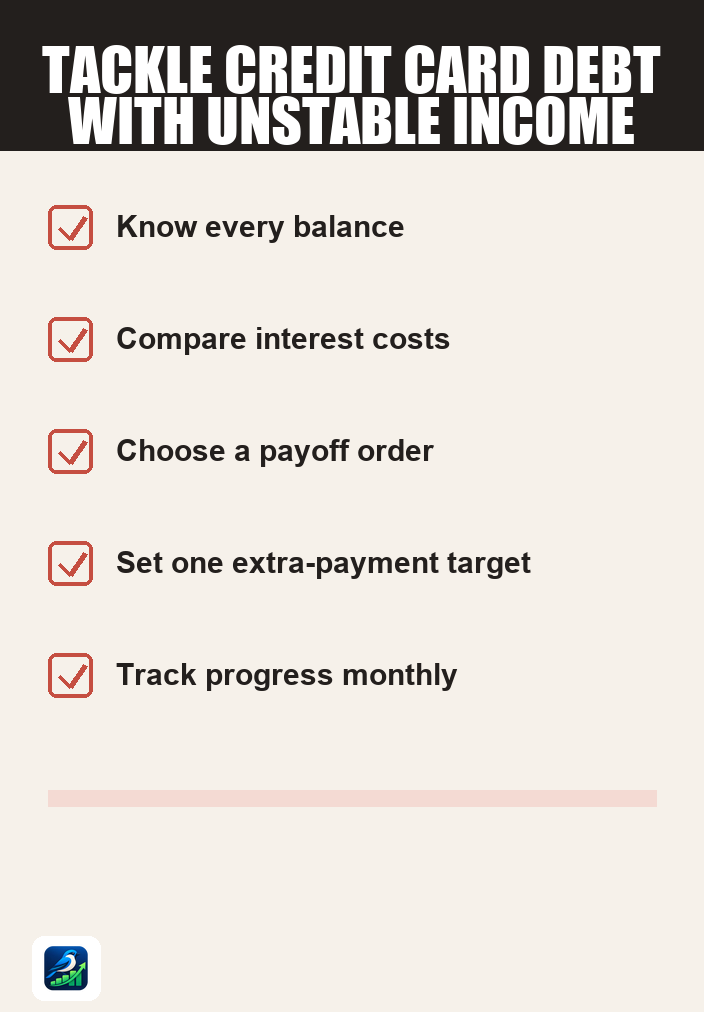
Understanding the Challenge of Irregular Income
Managing credit card debt can be especially challenging when your income isn’t regular. Many people face fluctuating earnings due to freelancing, seasonal work, or other non-traditional employment arrangements. This variability can make it difficult to plan your finances and stay on top of debt payments. However, with a practical approach, you can navigate this situation effectively.
Assess Your Financial Situation
The first step in managing credit card debt with irregular income is to get a clear picture of your financial landscape. Consider the following:
- Calculate Your Average Income: Track your income for several months to understand your average earnings. This will help you create a budget that reflects your financial reality.
- List Your Expenses: Write down all your monthly expenses. Include fixed costs like rent and utilities and variable costs like groceries and entertainment.
- Document Your Debt: Make a list of all your credit card debts, including balances, interest rates, and minimum payments.
By gathering this information, you can identify how much of your income is available for debt repayment and where adjustments may be necessary.
Creating a Flexible Budget
With a clearer understanding of your finances, you can create a budget that accommodates your irregular income. Here’s how:
- Prioritize Essential Expenses: Ensure that your basic needs are covered first. These include housing, utilities, food, and transportation.
- Allocate for Debt Payments: Set aside a portion of your income for credit card payments. During times of higher earnings, consider making larger payments to reduce your debt more quickly.
- Adjust Based on Earnings: Be prepared to adjust your budget based on your income fluctuations. If you have a low month, reduce discretionary spending rather than forgoing debt payments.
Consider using a budgeting method that allows for flexibility, such as the envelope system or a zero-sum budget, where every dollar is assigned a job.
Strategies for Managing Credit Card Payments
When your income isn’t regular, you might explore various strategies to manage your credit card payments effectively:
1. Pay More Than the Minimum
Whenever possible, try to pay more than the minimum payment. This will decrease your principal balance faster and reduce the amount of interest you’ll pay over time. Even small extra payments can make a significant difference.
2. Use Windfalls Wisely
If you receive unexpected income—like a bonus or a tax refund—consider putting a portion towards your credit card debt. This can accelerate your progress and reduce stress during lean months.
3. Focus on High-Interest Debt
Identify which of your credit cards has the highest interest rate and prioritize paying that down first. This strategy, known as the avalanche method, can save you money on interest in the long run.
4. Negotiate with Creditors
Sometimes, reaching out to your creditors can lead to more manageable payment terms. Explain your situation and see if they can offer lower interest rates, defer payments, or set up a payment plan tailored to your income fluctuations.
Exploring Debt Relief Options
If your credit card debt becomes overwhelming, you might consider exploring debt relief options. Here are a few common approaches, along with their advantages and disadvantages:
1. Debt Consolidation
Debt consolidation involves combining multiple debts into a single loan, ideally with a lower interest rate. This can simplify payments and potentially reduce your overall interest costs. However, it often requires good credit to secure favorable terms, and some options may involve fees.
2. Debt Management Plan
A debt management plan (DMP) involves working with a credit counseling agency to create a structured repayment plan. While this can help you manage payments and potentially lower interest rates, it may require closing credit card accounts and can affect your credit score.
3. Debt Settlement
Debt settlement involves negotiating with creditors to pay a reduced amount. While this can lead to lower payments, it can also impact your credit score significantly and may not be suitable for everyone.
4. Bankruptcy
Bankruptcy can provide a fresh start, but it’s a serious option with long-term consequences for your credit. It’s essential to consult a qualified professional before considering this route, as the rules vary based on location and individual circumstances.
Maintaining a Healthy Credit Score
Managing credit card debt while dealing with irregular income can impact your credit score. Here are some tips to maintain or improve your credit health:
- Make Payments on Time: Late payments can severely impact your credit score. Set reminders or automate payments to avoid missing due dates.
- Keep Credit Utilization Low: Aim to use less than 30% of your available credit. If you can pay down your balances, do so to improve your utilization ratio.
- Review Your Credit Report: Regularly check your credit report for errors and dispute any inaccuracies that could negatively affect your score.
Next Steps: Take Control of Your Finances
Managing credit card debt with irregular income may seem daunting, but it’s entirely possible with a structured approach. Start by assessing your finances, creating a flexible budget, and exploring various payment strategies. If your situation becomes overwhelming, consider seeking professional guidance. Remember, the key is to stay proactive and adapt your plan as your income fluctuates.



















