
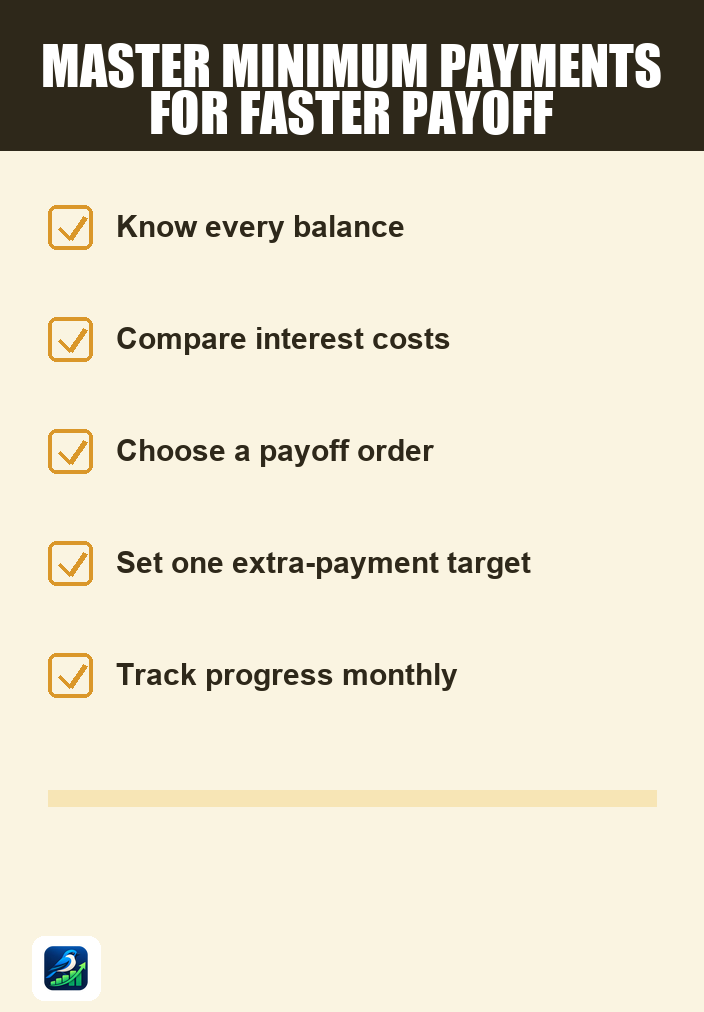
Understanding Minimum Payments and Payoff Time on Credit Card Debt
Credit card debt can seem overwhelming, especially when it comes to understanding minimum payments and how long it will take to pay off what you owe. If you’re trying to manage your finances, it’s crucial to grasp these concepts to make informed decisions. Here are 11 essential strategies to help you understand minimum payments and payoff time effectively.
1. Know What Minimum Payments Are
Minimum payments are the smallest amount you can pay on your credit card balance each month without incurring late fees or penalties. This amount typically includes a percentage of your total balance plus any new interest charges. Understanding this can help you see how much you’re really paying towards your debt each month.
2. Calculate Your Minimum Payment
Most credit cards have a minimum payment calculation that generally includes:
- A flat dollar amount (for example, $25)
- A percentage of your outstanding balance (commonly between 1% and 3%)
- Any past due amounts or fees
For example, if your balance is $1,000 and your card’s minimum payment is 2%, your minimum payment would be $20. However, if your balance is higher, the minimum payment will also increase.
3. Understand How Interest Affects Payments
Credit cards typically have high-interest rates. If you only make minimum payments, most of your payment may go toward interest rather than reducing your principal balance. This means you could be in debt much longer than anticipated.
4. Use Online Calculators for Payoff Time
Online debt payoff calculators can help you estimate how long it will take to pay off your credit card debt based on your balance, interest rate, and monthly payment amount. Input your figures to get a clearer picture of your debt repayment timeline.
5. Consider Making More Than the Minimum Payment
If your budget allows, making payments above the minimum can significantly reduce your payoff time and the total interest paid. Even small increases in your monthly payment can lead to substantial savings in the long run. For instance, if you owe $5,000 at an interest rate of 18% and pay $200 a month instead of $100, you could save years on your payoff timeline.
6. Explore the Snowball and Avalanche Methods
When tackling multiple debts, consider using the snowball or avalanche methods:
- Snowball Method: Focus on paying off your smallest debt first while making minimum payments on larger debts. Once the smallest is paid off, move to the next smallest.
- Avalanche Method: Pay off the debt with the highest interest rate first, which often saves more money in interest payments over time.
7. Review Your Credit Card Terms Regularly
Credit card terms can change, including interest rates, fees, and minimum payment calculations. Regularly reviewing your credit card statements and terms can help you stay informed and adjust your payment strategy if necessary.
8. Understand the Impact of Late Payments
Missing a minimum payment can lead to late fees, increased interest rates, and negative impacts on your credit score. Set reminders for payment due dates, or consider setting up automatic payments to avoid this pitfall.
9. Investigate Balance Transfers
Some credit cards offer promotional balance transfer rates. This could allow you to transfer your existing balances to a new card with a lower interest rate for a specific period. Be aware of transfer fees and the terms once the promotional period ends to ensure this is a beneficial strategy.
10. Look Into Debt Management Plans
If managing your credit card debt feels unmanageable, consider a debt management plan (DMP). This involves working with a credit counseling agency to create a plan that consolidates your debts into a single monthly payment, often at a reduced interest rate. However, be cautious—this can impact your credit score and may require closing existing accounts.
11. Know When to Seek Professional Help
If you’re feeling overwhelmed by credit card debt, it may be time to seek professional assistance. Financial advisors can provide tailored advice based on your individual situation, which can be particularly helpful when navigating complex issues like consolidation or settlement. Just remember that the rules vary by state and situation, so always do your homework before making a decision.
Next Steps
Understanding minimum payments and payoff times is crucial for managing credit card debt effectively. Start by calculating your minimum payments, explore your options for paying more, and consider using methods like snowball or avalanche. Regularly review your financial situation and don’t hesitate to seek professional guidance if needed. Taking control of your credit card debt can pave the way for improved financial health.



















