
Understanding Fixed and Variable Rates for Debt Consolidation
When you’re looking to consolidate debt, one of the key decisions you’ll face is whether to opt for a fixed or variable interest rate. Each option has its own advantages and disadvantages, and understanding these can help you make an informed choice that aligns with your financial goals. In this article, we’ll unpack the differences between fixed and variable rates, the trade-offs involved, and the factors you should consider as you navigate your debt consolidation journey.
What is Debt Consolidation?
Before diving into interest rates, it’s important to clarify what debt consolidation means. Debt consolidation is the process of combining multiple debts into a single loan, allowing you to manage your payments more easily. This can involve personal loans, balance transfer credit cards, or home equity loans. The primary goal is to simplify payments and potentially reduce interest rates, making it easier to pay down debt.
Fixed Rates: Stability and Predictability
A fixed interest rate remains constant throughout the life of the loan. This means your monthly payments won’t change, providing stability in your financial planning.
Advantages of Fixed Rates
- Budgeting Ease: Knowing exactly how much you’ll pay each month can make budgeting simpler.
- Protection Against Rate Increases: If market rates rise, your fixed rate will not be affected.
- Long-Term Planning: With a stable payment, it’s easier to plan for the future without worrying about fluctuating costs.
Disadvantages of Fixed Rates
- Potential for Higher Initial Rates: Fixed rates can be higher than the initial rates on variable loans.
- Less Flexibility: If market rates decrease, you won’t benefit unless you refinance your loan.
Variable Rates: Flexibility with Risk
Variable interest rates fluctuate based on market conditions, typically tied to an index. This means your monthly payments can change over time, which can be both an advantage and a disadvantage.
Advantages of Variable Rates
- Lower Initial Rates: Variable rates often start lower than fixed rates, which can lead to lower initial payments.
- Potential for Decreasing Payments: If interest rates fall, your payments may decrease as well.
Disadvantages of Variable Rates
- Uncertainty: Your monthly payments can increase, making budgeting more challenging.
- Risk of Higher Costs: If market rates rise significantly, you could end up paying more over time.
Choosing the Right Option for You
Your choice between fixed and variable rates should depend on your financial situation, risk tolerance, and long-term goals. Here are some factors to consider:
1. Financial Stability
If you have a stable income and can comfortably handle potential increases in payments, a variable rate might work. However, if you prefer predictability, a fixed rate would be a better fit.
2. Time Horizon
Consider how long you plan to hold onto the loan. If you expect to pay off the debt quickly, a variable rate might save you money. Conversely, for longer-term loans, a fixed rate could provide peace of mind.
3. Current Market Conditions
Look at the current interest rate environment. If rates are low and expected to rise, locking in a fixed rate now could be beneficial. If rates are high and likely to decrease, a variable rate might be more advantageous.
4. Personal Preference
Some people are more comfortable with risk than others. If the idea of fluctuating payments makes you anxious, a fixed rate might be the way to go, even if it comes with higher initial costs.
Calculating Potential Costs
When considering whether to choose a fixed or variable rate, it’s helpful to run some numbers. Here’s a simple way to compare:
- Determine Your Loan Amount: How much debt will you consolidate?
- Estimate Interest Rates: Research what fixed and variable rates are currently available.
- Calculate Monthly Payments: Use a loan calculator to determine monthly payments for both options.
- Consider Potential Changes: For variable rates, consider potential scenarios for interest rate changes over time.
By comparing the total costs over the expected life of the loan, you can make a more informed decision regarding which rate type to choose.
Alternatives to Debt Consolidation
While debt consolidation can be a helpful tool, it’s not the only option available. Here are a few alternatives:
- Debt Management Plans: Work with a credit counseling agency to create a plan to pay off debt over time, often with negotiated lower interest rates.
- Debt Settlement: Negotiate with creditors to settle debts for less than owed. This can adversely affect credit scores and isn’t suitable for everyone.
- Bankruptcy: A legal process that can discharge debts but has long-term impacts on your credit and financial life. Always consult a professional before pursuing this option.
Next Steps
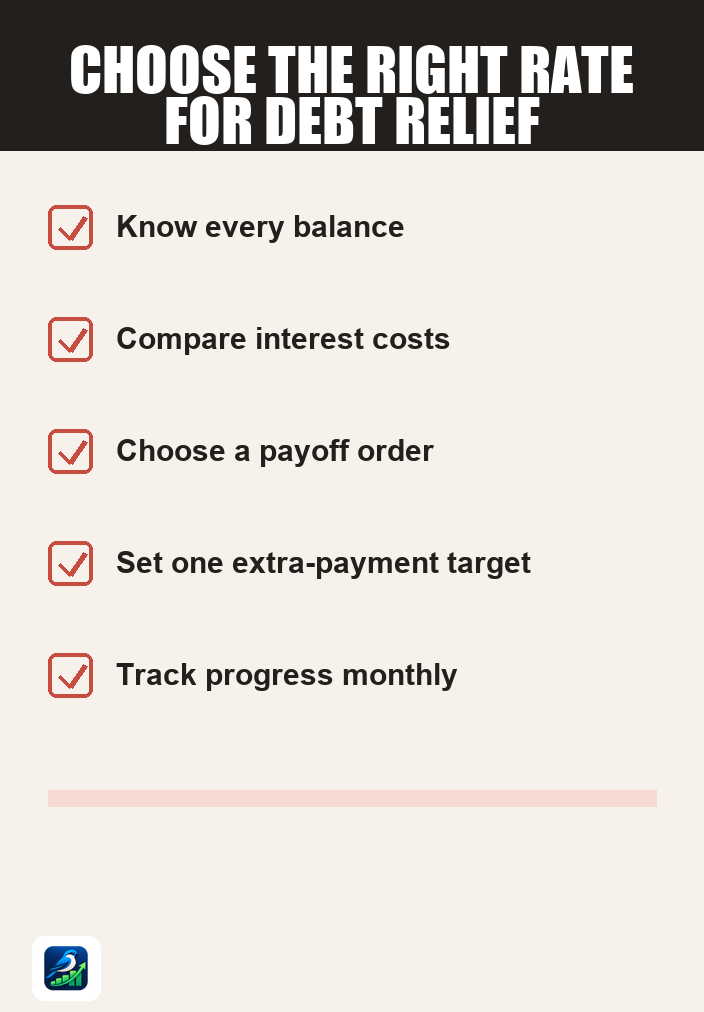
Choosing between fixed and variable rates for debt consolidation is a significant decision that deserves careful consideration. Here are some practical next steps:
- Assess your financial situation and determine your risk tolerance.
- Research current interest rates and loan options available to you.
- Use loan calculators to estimate your payments for both fixed and variable rates.
- Consider consulting with a financial professional for personalized guidance tailored to your circumstances.
By taking the time to understand your options and weighing the pros and cons of fixed versus variable rates, you can make a choice that supports your journey to financial stability.



















