
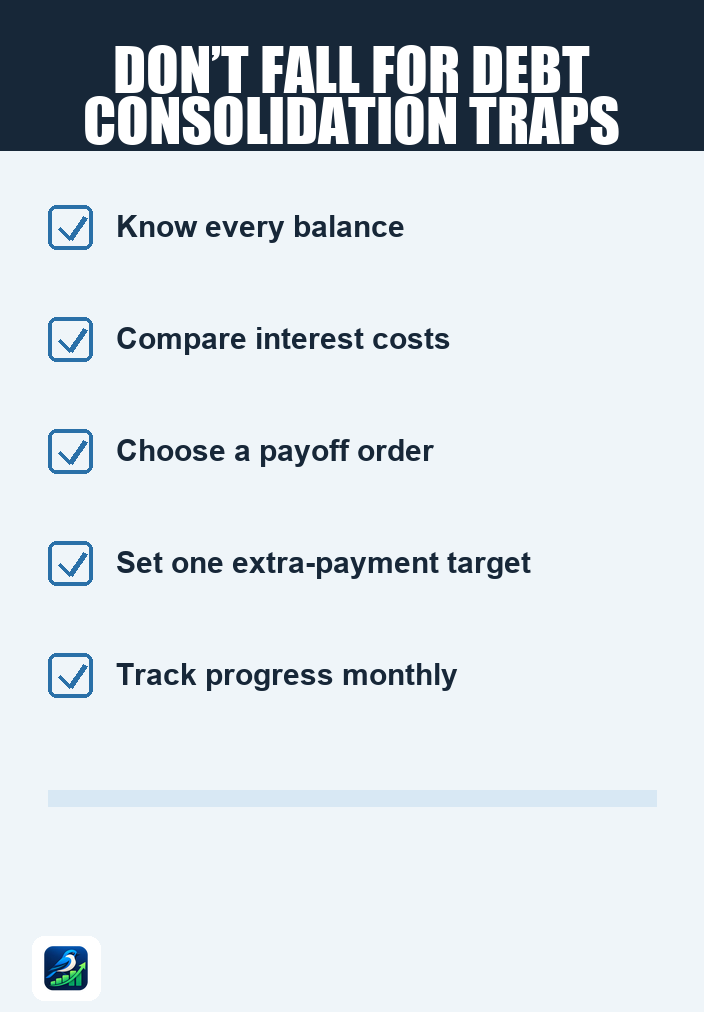
Understanding Debt Consolidation Loans
Debt consolidation loans can be a useful tool for managing multiple debts by combining them into a single loan with a potentially lower interest rate. However, applying for one without proper preparation can lead to pitfalls that could worsen your financial situation. This checklist aims to guide you through the key considerations and steps necessary to navigate the debt consolidation process effectively.
Know Your Debt Situation
Before applying for a debt consolidation loan, it’s essential to assess your current financial situation comprehensively.
Gather Your Financial Information
- List Your Debts: Make a detailed list of all your debts, including outstanding balances, interest rates, and monthly payments.
- Calculate Your Total Debt: Sum up all your debts to understand the overall amount you need to consolidate.
- Check Your Credit Report: Obtain a free copy of your credit report to know your credit score and identify any discrepancies.
Evaluate Your Budget
Take a close look at your monthly income and expenses. Determine how much you can afford to pay towards a new loan each month. This evaluation will help you identify suitable consolidation options.
Research Your Options
There are several pathways for debt consolidation, each with its own advantages and disadvantages. Understanding these options can prevent costly mistakes.
Types of Debt Consolidation Loans
- Personal Loans: Unsecured personal loans can be a good option, but they often come with higher interest rates compared to secured loans.
- Home Equity Loans: If you own a home, you can tap into your equity for a lower interest rate. However, this puts your home at risk if you fail to repay.
- Balance Transfer Credit Cards: These cards can offer 0% interest for an introductory period, but they often have high fees and variable rates thereafter.
Consider Alternative Solutions
In addition to loans, explore alternatives such as debt management plans or debt settlement, each with its own set of implications. Make sure to weigh the potential drawbacks, such as long-term credit score impacts or fees associated with these options.
Understand the Costs Involved
Debt consolidation isn’t free, and understanding the costs involved is crucial to avoid surprises later.
Identify All Fees
- Origination Fees: Many lenders charge a fee for processing the loan.
- Closing Costs: If securing a home equity loan, be aware of potential closing costs.
- Prepayment Penalties: Some loans may impose penalties if you pay them off early.
Calculate Interest Rates
Compare the interest rates of the consolidation loan with the rates of your existing debts. A lower rate can lead to savings, while a higher rate can cost you more in the long run.
Check Lender Reputation and Terms
Not all lenders are created equal. Taking time to research potential lenders can safeguard you from predatory practices.
Read Reviews and Ratings
Look for reviews and ratings from other consumers. Websites that aggregate customer feedback can offer insights into the lender’s reliability and customer service quality.
Examine Loan Terms Carefully
- Loan Amount: Ensure the loan amount covers all your debts.
- Repayment Period: Understand how long you will need to repay the loan. Longer terms may lower monthly payments but increase total interest paid.
- Variable vs. Fixed Rates: Know whether your interest rate is fixed or variable, as variable rates can change over time, impacting your payments.
Prepare for the Application Process
Once you’ve done your homework, it’s time to prepare for the application process.
Gather Necessary Documentation
Lenders often require documentation to assess your financial situation. Common documents include:
- Recent pay stubs or proof of income
- Bank statements
- Tax returns
- A list of your debts
Know Your Credit Score
Your credit score will significantly influence your loan options. If your score is lower than you’d like, consider improving it before applying. Ways to boost your score include paying down existing debts and correcting any inaccuracies on your credit report.
Be Cautious of the Fine Print
Before signing any loan documents, take the time to read the fine print carefully.
Understand Terms and Conditions
Look for any clauses that could lead to unexpected costs or unfavorable terms. Pay attention to:
- Late payment penalties
- Interest rate changes
- Conditions for loan default
Ask Questions
If anything is unclear, don’t hesitate to ask the lender for clarification. It’s essential to fully understand the obligations you’re taking on.
Next Steps After Approval
Once approved for a debt consolidation loan, follow these steps to maximize its effectiveness:
- Pay Off Existing Debts: Use the loan funds to pay off your debts immediately to avoid accumulating further interest.
- Stick to Your Budget: Adhere to the budget you created earlier to ensure you can make the new loan payments comfortably.
- Avoid New Debt: Focus on paying down your new loan rather than taking on additional debt.
Conclusion
Debt consolidation can be a viable option for managing debt, but it requires careful consideration and planning. By following this checklist, you can avoid common pitfalls and make informed decisions. Always remember to evaluate your unique situation, consider all options, and seek professional guidance if needed.
As you move forward, take proactive steps to maintain financial health and prevent falling back into debt. Establish a budget, build an emergency fund, and continuously educate yourself on personal finance.



















