
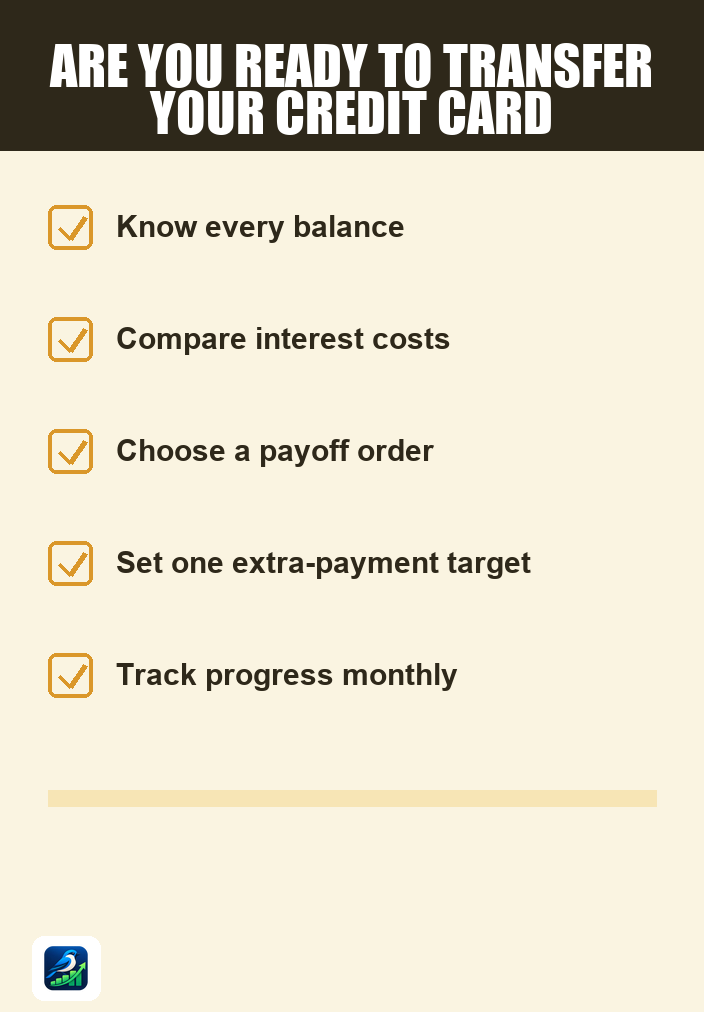
Understanding Balance Transfers: The Basics
A balance transfer can be a valuable tool for managing credit card debt. It allows you to move your outstanding debt from one credit card to another, often with a lower interest rate. However, it’s crucial to approach this strategy with care. Before diving in, you should evaluate your situation and ensure a balance transfer is the right choice for you.
Step 1: Assess Your Current Debt Situation
Begin by taking a close look at your existing debt. This assessment includes understanding how much you owe, the interest rates on your current accounts, and your payment history. Here are some factors to consider:
- Total Debt Amount: Calculate the total amount you owe across all credit cards.
- Interest Rates: Note the interest rates for each card. Identify which card has the highest rate, as this is often your target for a transfer.
- Payment History: Review your payment patterns. Consistently missing payments can affect your eligibility for new credit options.
Step 2: Understand Balance Transfer Offers
Once you have a clear picture of your debt, research balance transfer offers. Not all offers are created equal, and understanding the terms is vital. Pay attention to the following:
- Introductory Rate: Many balance transfer cards offer a low or 0% introductory interest rate. Determine how long this rate lasts and what the standard rate will be afterward.
- Transfer Fees: Most cards charge a fee for transferring a balance, typically a percentage of the amount transferred. Calculate how this fee impacts your overall savings.
- Credit Limit: Ensure the credit limit on the new card can accommodate your existing debt. If your debt exceeds the limit, the transfer may not be possible.
Step 3: Calculate the Potential Savings
Before making a decision, perform a simple calculation to understand potential savings. Here’s how:
- Determine Total Interest Paid: For your current card, calculate how much interest you pay monthly and annually.
- Estimate New Interest: Using the introductory rate of the new card, estimate how much interest you’ll pay during the promotional period.
- Account for Transfer Fees: Add any transfer fees to the total cost of the new card for a complete picture.
- Compare: Subtract the total costs of the new card from the total costs of your current debt to see if you’ll save money.
Step 4: Consider Your Payment Strategy
A balance transfer can only help if you have a solid repayment plan. Consider the following:
- Monthly Payments: Calculate how much you can afford to pay each month. Aim to pay off the balance before the introductory period ends to avoid high interest.
- Automatic Payments: Setting up automatic payments can help ensure you never miss a due date, keeping you in good standing with your new card.
- Budgeting: Adjust your monthly budget to prioritize paying down the transferred balance. This can help prevent you from accruing more debt on the original card.
Step 5: Evaluate Your Credit Score Impact
Understand how a balance transfer may impact your credit score. Here are some points to consider:
- Hard Inquiries: Applying for a new credit card typically results in a hard inquiry on your credit report, which may temporarily lower your score.
- Credit Utilization: Transferring a balance to a new card may initially increase your available credit, which can improve your credit utilization ratio if managed well.
- Payment History: Timely payments on your new card will positively impact your credit score over time.
Step 6: Know the Risks and Drawbacks
While balance transfers can be beneficial, they come with risks. Here are some potential drawbacks:
- Temptation to Accumulate More Debt: Having available credit on your old card may lead to more spending. Resist the urge to rack up new charges.
- Limited Time Offers: If you don’t pay off your balance during the introductory rate, you may be hit with high-interest rates afterward.
- Fees: Transfer fees can eat into your savings, so ensure these are factored into your calculations.
Step 7: Explore Alternatives
If a balance transfer doesn’t seem like the best option, consider other debt management strategies:
- Debt Consolidation Loans: These loans can combine multiple debts into one payment, potentially at a lower interest rate.
- Debt Management Plans: Working with a credit counseling agency can help you create a structured repayment plan.
- Debt Settlement: This involves negotiating with creditors to settle for less than the full amount owed, but it can impact your credit score.
- Bankruptcy: As a last resort, bankruptcy can provide relief but comes with significant long-term consequences.
Step 8: Make Your Decision
After evaluating your current situation, potential savings, and risks, you’re now ready to make an informed decision. Here’s a quick recap of the steps involved:
- Assess your current debt situation.
- Research balance transfer offers.
- Calculate potential savings.
- Develop a payment strategy.
- Evaluate the impact on your credit score.
- Understand the risks.
- Consider alternatives.
Next Steps: Take Action Wisely
Once you’ve decided on the best course of action, take the necessary steps to execute your plan. If you choose to proceed with a balance transfer, ensure you read the fine print and understand all terms before signing up. If your decision leads you to explore other options, consider reaching out to a financial advisor or credit counselor for tailored advice.



















