
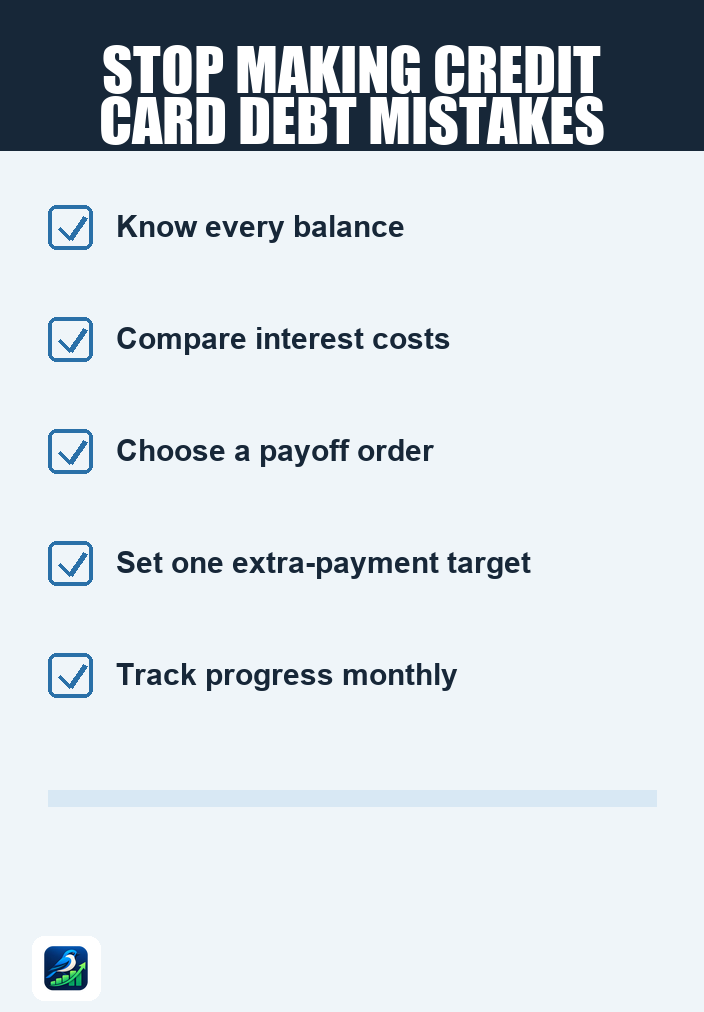
Understanding the Pitfalls of Credit Card Debt
Credit card debt can quickly spiral out of control if you’re not careful. Many adults find themselves facing unexpected financial burdens due to common mistakes that lead to accumulating debt. By understanding these pitfalls, you can better navigate your spending habits and financial choices.
Recognizing the Importance of Budgeting
One of the most significant mistakes leading to credit card debt is the failure to establish a budget. A budget is your roadmap to financial health, allowing you to track your income, expenses, and savings goals. Without it, you may overspend, leading to reliance on credit cards.
Steps to Create a Practical Budget
- List Your Income: Include all sources of income, such as salary, freelance work, and any other earnings.
- Track Your Expenses: Monitor fixed expenses (like rent and utilities) and variable expenses (like dining out or entertainment) for at least a month.
- Set Spending Limits: Allocate a specific amount for each category. Make sure your total expenses don’t exceed your income.
- Review and Adjust: Regularly revisit your budget, especially if your financial situation changes.
By sticking to your budget, you can avoid unnecessary credit card use and the potential for accumulating debt.
Using Credit Responsibly
Another common mistake is using credit cards indiscriminately. It’s easy to swipe a card for convenience, but this can lead to overspending and an imbalance between your income and expenses.
Strategies for Responsible Credit Card Use
- Limit Card Usage: Only use credit cards for planned purchases or emergencies.
- Pay More Than the Minimum: Whenever possible, pay more than the minimum payment to reduce interest costs and tackle debt faster.
- Monitor Your Statements: Regularly check your credit card statements to track spending and ensure there are no unauthorized charges.
- Choose the Right Card: Select cards that fit your spending habits, such as those offering rewards on categories you frequently use.
Responsible credit use can help you manage your finances and prevent accumulating debt.
Avoiding Lifestyle Inflation
As income increases, many people fall into the trap of lifestyle inflation—spending more as they earn more. This can lead to unnecessary debt if you begin using credit cards to maintain a lifestyle that exceeds your means.
Combatting Lifestyle Inflation
- Focus on Needs vs. Wants: Prioritize essential expenses and be mindful of discretionary spending.
- Set Savings Goals: Allocate a portion of any income increases to savings or debt repayment instead of immediate spending.
- Practice Gratitude: Recognize and appreciate what you have instead of constantly seeking more.
By managing lifestyle inflation, you can keep your spending in check and reduce the likelihood of incurring credit card debt.
Understanding Interest Rates and Fees
Many individuals overlook the impact of interest rates and fees on their credit card balances. High-interest rates can significantly increase the total amount owed if payments are not managed properly.
Ways to Mitigate Interest Costs
- Pay on Time: Always make payments on or before the due date to avoid late fees and increased interest rates.
- Consider Balance Transfers: If you have high-interest debt, transferring the balance to a card with a lower interest rate can save money, but be aware of any transfer fees.
- Understand Your Card’s Terms: Familiarize yourself with your card’s interest rates, fees, and how interest is calculated to make informed decisions.
Being aware of these financial aspects can help you manage credit card debt more effectively.
Recognizing the Risks of Debt Consolidation
While debt consolidation can be a helpful strategy for some, it’s essential to understand the risks involved. Combining multiple debts into one can simplify payments, but it may also lead to higher overall costs if not managed properly.
Evaluating Debt Consolidation
- Research Options: Look into various consolidation methods, including personal loans, balance transfers, and credit counseling services.
- Understand the Terms: Be aware of interest rates, fees, and repayment terms associated with each option.
- Consider Your Financial Habits: If you tend to overspend, consolidation without behavioral changes may not lead to improved financial health.
Debt consolidation isn’t a one-size-fits-all solution, and understanding its drawbacks is crucial before committing.
Seeking Professional Guidance
If you’re overwhelmed by credit card debt, seeking help from a professional can be beneficial. Financial advisors, credit counselors, and debt settlement companies can provide insights tailored to your situation. However, it’s vital to do your research and choose reputable services.
When to Seek Help
- Constantly Struggling to Make Payments: If you find it challenging to meet minimum payments, professional help may be necessary.
- Uncertain About Your Financial Options: If you’re unsure whether to consolidate, manage, or settle your debt, a professional can clarify your options.
- Facing Harassment from Creditors: If your creditors are pursuing you, it may be time to seek help.
Choosing the right time to seek help can make a significant difference in your financial recovery.
Practical Next Steps
To avoid falling into the trap of credit card debt, start with these practical steps:
- Create a detailed budget and stick to it.
- Limit credit card use and monitor spending.
- Avoid lifestyle inflation by reassessing your needs and wants.
- Educate yourself about interest rates and fees.
- Consider the risks of debt consolidation before proceeding.
- Seek professional guidance if you feel overwhelmed.
By implementing these strategies, you can take control of your finances and avoid the common mistakes that lead to new credit card debt.



















