
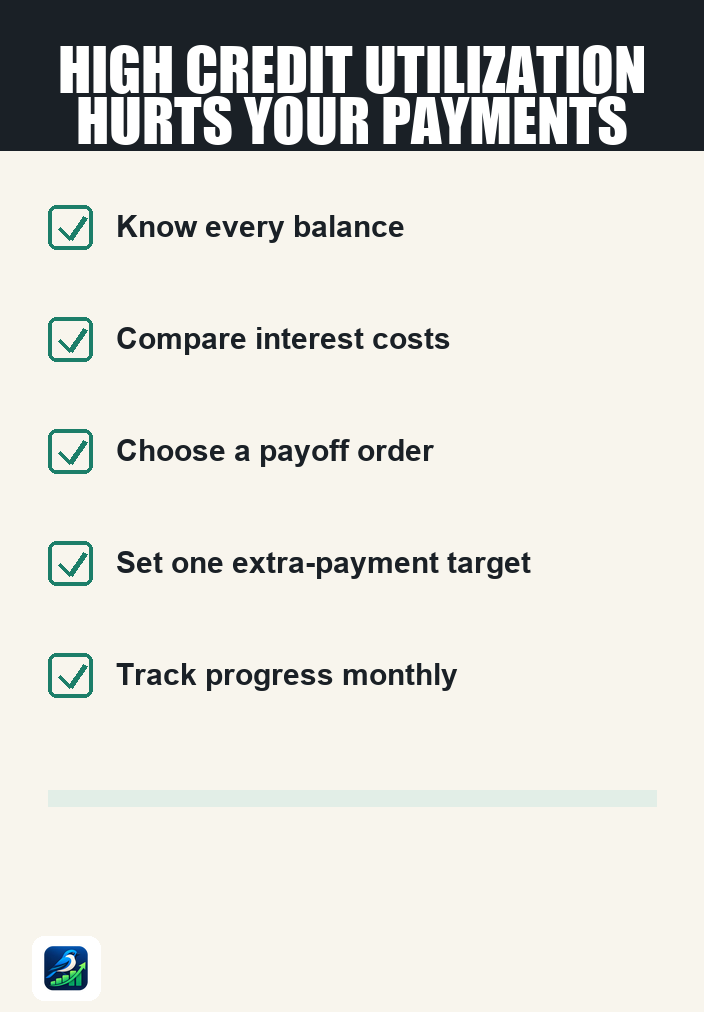
Understanding High Credit Utilization and Its Impact
High credit utilization occurs when you use a large percentage of your available credit limits. For example, if you have a total credit limit of $10,000 and your current balance is $8,000, your credit utilization ratio is 80%. This ratio is a key factor in determining your credit score, and high utilization can negatively impact your score.
Managing credit utilization is crucial, especially when tackling credit card debt. Avoiding common mistakes can help you improve your financial situation and work toward paying off your debt more effectively.
Recognizing Common High Credit Utilization Mistakes
Understanding the pitfalls associated with high credit utilization is the first step in avoiding them. Here are some common mistakes:
- Ignoring the Utilization Ratio: Many individuals don’t track their credit utilization, leading to high balances that can hurt their scores.
- Maxing Out Cards: Using credit cards to their limit can lead to high utilization and potential fees.
- Closing Old Accounts: Closing unused credit accounts can reduce your overall credit limit, increasing your utilization ratio.
- Not Paying on Time: Late payments can result in higher interest rates and fees, further complicating your debt situation.
- Only Making Minimum Payments: Paying only the minimum can keep you in debt longer and keep your utilization high.
Strategies for Managing Credit Utilization Effectively
To tackle credit card debt while managing your credit utilization, consider these practical strategies:
1. Monitor Your Credit Utilization
Regularly check your credit utilization ratio. Aim to keep it below 30%, and ideally below 10%. Use budgeting apps or financial tools to track your spending and available credit. This will help you stay informed about your utilization and adjust your spending habits accordingly.
2. Pay Off Balances Strategically
Prioritize paying down high-balance cards first. Consider the debt avalanche method, where you focus on paying off the highest interest debt first while making minimum payments on others. This can help reduce your total interest paid over time, and as you lower balances, your utilization will improve.
3. Increase Your Credit Limit
If you have a good payment history, consider requesting a credit limit increase. This can lower your utilization ratio without changing your spending habits. However, be cautious not to increase your spending just because you have more available credit. Maintain discipline to avoid falling deeper into debt.
4. Use Multiple Payments
Instead of waiting until the end of the month to pay off your credit card, consider making multiple smaller payments throughout the month. This strategy can help keep your balances lower and your credit utilization ratio in check.
5. Avoid New Debt
While tackling existing credit card debt, resist the temptation to open new credit accounts. New accounts can increase your overall credit limit, but they may also lead to higher utilization if you accumulate more debt. Focus on paying down what you owe before considering new credit options.
Exploring Debt Relief Options
If your credit card debt is overwhelming, exploring debt relief options may be necessary. Here are some common methods, along with their potential drawbacks:
Debt Consolidation
This involves combining multiple debts into a single loan, often with a lower interest rate. While it can simplify payments, it may lead to a longer repayment term, and you could end up paying more in interest over time if not managed properly.
Debt Management Plans
These plans are set up through credit counseling agencies and can help you restructure your payments. While they can reduce monthly payments and interest rates, they may require you to close accounts and limit new credit usage during the repayment period.
Debt Settlement
Debt settlement involves negotiating with creditors to pay less than what you owe. While it can lead to lower debt amounts, it can also significantly impact your credit score and may have tax implications. Not all creditors agree to settlements, and this option may not be suitable for everyone.
Bankruptcy
Bankruptcy offers a legal way to eliminate or restructure debt, but it comes with long-term consequences for your credit. This should generally be a last resort after exploring other options.
Maintaining Healthy Credit Habits
Once you’ve made progress in managing your credit utilization and tackling debt, it’s important to maintain healthy financial habits:
- Create a Budget: Develop a monthly budget to manage your expenses and allocate funds towards debt repayment.
- Automate Payments: Set up automatic payments to ensure bills are paid on time, reducing the risk of late fees and negative credit impacts.
- Educate Yourself: Continue to learn about personal finance and credit management to make informed decisions in the future.
- Use Credit Responsibly: If you choose to use credit cards after paying down debt, do so responsibly to avoid falling back into high utilization patterns.
Next Steps for Managing Credit Card Debt
Addressing high credit utilization while managing credit card debt requires a proactive approach. Start by monitoring your credit utilization closely and implementing strategies to pay down your debt effectively. Explore debt relief options if necessary, but be aware of the potential drawbacks. Finally, maintain healthy credit habits to ensure you remain on track. By taking these steps, you can work toward a more stable financial future without the burden of high credit utilization.



















