
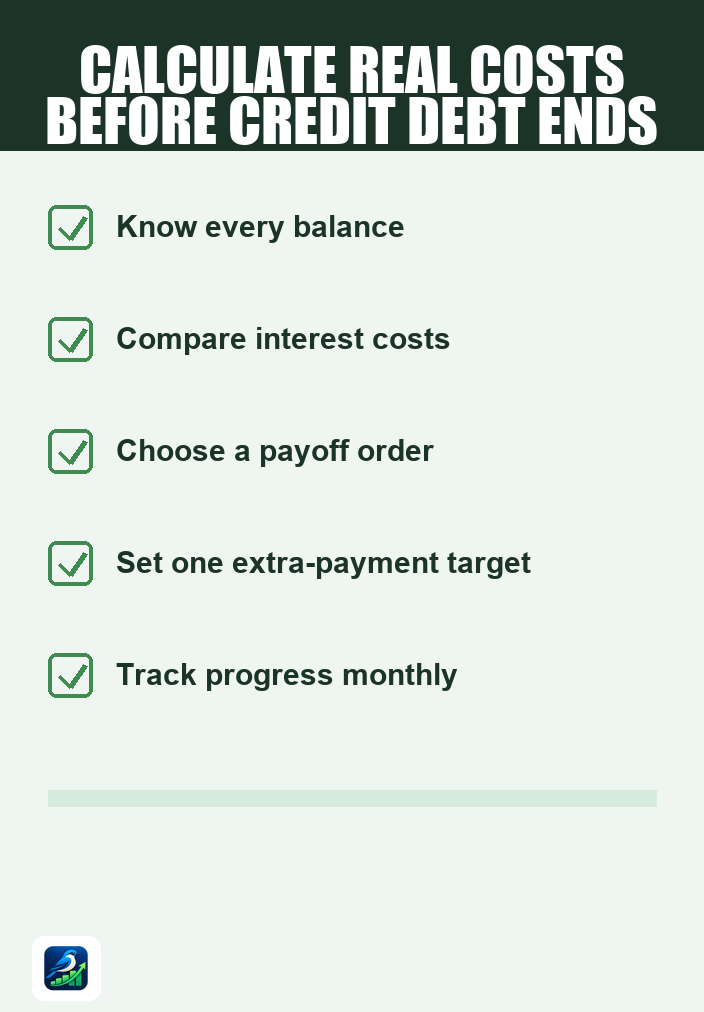
Understanding the Costs of New Credit Card Debt
Before you decide to stop taking on new credit card debt, it’s essential to evaluate the costs associated with your current situation. This checklist will help you examine your financial landscape, allowing you to make informed decisions about your credit card usage and potential debt management strategies.
Assess Your Current Debt Situation
Start by taking a comprehensive look at your existing credit card debt. Understanding the full scope of your financial obligations is a crucial first step.
- List Your Credit Cards: Write down each card, the balance owed, interest rates, and minimum monthly payments. This will give you a clear picture of your total debt.
- Calculate Your Total Debt: Add up the balances from all your cards. This total will help you understand the magnitude of your situation.
- Review Your Payment History: Check for missed payments or late fees. This can impact your credit score and add to your overall debt burden.
Evaluate Interest Rates and Fees
Interest rates and fees can significantly affect the cost of your debt. Assessing these factors is vital when considering stopping further debt accumulation.
- Identify High-Interest Cards: Look for cards with high-interest rates. Prioritize paying these off first to reduce the amount of interest you pay over time.
- Examine Fees: Take note of annual fees, late payment fees, and over-the-limit fees. These can add up quickly and increase your overall debt.
- Check for Promotional Rates: Some cards offer introductory rates that can change significantly after a promotional period. Be aware of when these rates expire.
Consider Your Income and Expenses
Your income and expenses play a crucial role in managing debt. Understanding these elements will provide insights into your ability to pay off existing debt and whether it’s wise to take on more.
- Assess Your Monthly Income: Calculate your net income after taxes and other deductions. This will help you determine how much you can allocate toward debt repayment.
- Track Your Monthly Expenses: Create a budget that includes all your necessary living expenses. Determine how much discretionary income you have left over for debt payments.
- Identify Areas for Reducing Expenses: Look for non-essential expenses that you can cut back on to free up more money for debt repayment.
Understand the Impact on Your Credit Score
Before making any decisions about stopping new credit card debt, consider how your choices affect your credit score and overall financial health.
- Credit Utilization Ratio: A high credit utilization ratio (the amount of credit you’re using compared to your total available credit) can negatively impact your credit score. Aim to keep this ratio below 30%.
- Payment History: Your payment history accounts for a significant portion of your credit score. Late payments can severely damage your score, making it harder to obtain credit in the future.
- Length of Credit History: The age of your credit accounts also affects your score. Closing older accounts can shorten your credit history and potentially lower your score.
Explore Debt Management Options
If you’ve evaluated your situation and decided to stop accruing new credit card debt, consider the following debt management options. Each comes with its own set of trade-offs.
Debt Consolidation
This involves combining multiple debts into a single loan, often with a lower interest rate. While this can simplify payments, it may extend the repayment period and come with fees.
Debt Management Plans
Working with a credit counseling agency, you can create a structured plan to repay your debts. This might lead to lower interest rates, but be prepared for potential fees and the requirement to close credit accounts.
Debt Settlement
Debt settlement negotiates with creditors to reduce the total amount owed. While this can lead to lower payments, it can severely impact your credit score and may have tax implications on forgiven debt.
Bankruptcy
As a last resort, bankruptcy can eliminate certain debts, but it has long-lasting effects on your credit score and may involve the loss of assets. It’s crucial to seek legal advice before pursuing this option.
Make an Action Plan
Once you’ve gathered all your information and considered your options, it’s time to create an action plan. This plan should focus on managing your current debt effectively while preventing new debt from accumulating.
- Set Specific Goals: Define clear, achievable goals for debt repayment. This might include paying off a certain amount within a specific timeframe.
- Prioritize Payments: Focus on paying off high-interest debts first to minimize interest costs. Use any extra funds to tackle these accounts.
- Monitor Your Progress: Regularly review your budget and debt repayment plan. Adjust as necessary based on changes in income or expenses.
Next Steps
Evaluating the costs associated with stopping new credit card debt is crucial for making informed financial decisions. Start with a complete assessment of your current debt, interest rates, and personal finances. Explore various debt management options while understanding their trade-offs. Finally, create a solid action plan to tackle your debt effectively.
By being proactive and organized, you can take control of your financial future and work toward a debt-free life.



















