
Understanding Debt Relief Options
When facing mounting consumer debt, the journey to financial stability can feel overwhelming. Deciding on the right debt relief option is crucial, as each path has its advantages, drawbacks, and implications. This guide will help you navigate the various options available, empowering you to make informed decisions that align with your financial situation.
Debt Consolidation: Merging Your Debts
Debt consolidation involves combining multiple debts into a single loan, often with a lower interest rate. This can make your payments more manageable and simplify your monthly budgeting. Here are key aspects to consider:
- How it Works: You take out a new loan to pay off existing debts, leaving you with one payment to manage.
- Types of Consolidation: Options include personal loans, home equity loans, or balance transfer credit cards.
- Pros: Simplifies payments, can lower interest rates, and may improve credit utilization.
- Cons: Fees may apply, potential for higher total interest costs over time, and it doesn’t address underlying spending issues.
Debt Management Plans: Structured Support
A debt management plan (DMP) is a structured repayment plan set up through a credit counseling agency. With a DMP, you make one monthly payment to the agency, which then distributes the funds to your creditors.
- How it Works: After a thorough review of your financial situation, a credit counselor will negotiate with creditors to potentially lower interest rates and fees.
- Pros: Simplifies payments, professional support, potential for lower interest rates, and educational resources.
- Cons: Monthly fees for the service, may require closing credit accounts, and it can take several years to complete.
Debt Settlement: Negotiating for Less
Debt settlement involves negotiating with creditors to reduce the total amount owed. This option is often pursued when debts are seriously overdue, and the creditor is more willing to settle for a lesser amount.
- How it Works: Typically, you’ll stop making payments and save that money to offer a lump-sum payment to creditors.
- Pros: Potential for significant reduction in total debt and quick resolution compared to other options.
- Cons: Can severely impact your credit score, requires significant savings, and creditors are not obligated to negotiate.
When Debt Settlement Might Be Appropriate
Debt settlement may be suitable for individuals facing severe financial stress who can no longer afford to make minimum payments. However, it isn’t the right choice for everyone. Be sure to weigh the potential credit score impacts and the possibility of being pursued for the remaining balance if the settlement is not reached.
Bankruptcy: A Last Resort
Bankruptcy is a legal process that allows individuals to either eliminate or repay a portion of their debts under court supervision. It’s generally considered a last resort when other options have failed.
- Types of Bankruptcy: Chapter 7 (liquidation) and Chapter 13 (reorganization) are the most common for individuals.
- Pros: Can eliminate most unsecured debts and provide a fresh start.
- Cons: Long-term impact on credit, public record, potential loss of assets, and complicated legal process.
Understanding the Consequences of Bankruptcy
Filing for bankruptcy can provide relief, but it’s essential to understand the long-term consequences. This includes the impact on your credit report and the possibility of being viewed unfavorably by lenders in the future.
Choosing the Right Option for You
Choosing the right debt relief option involves assessing your financial situation, understanding your goals, and considering the implications of each choice. Here are some steps to guide your decision-making process:
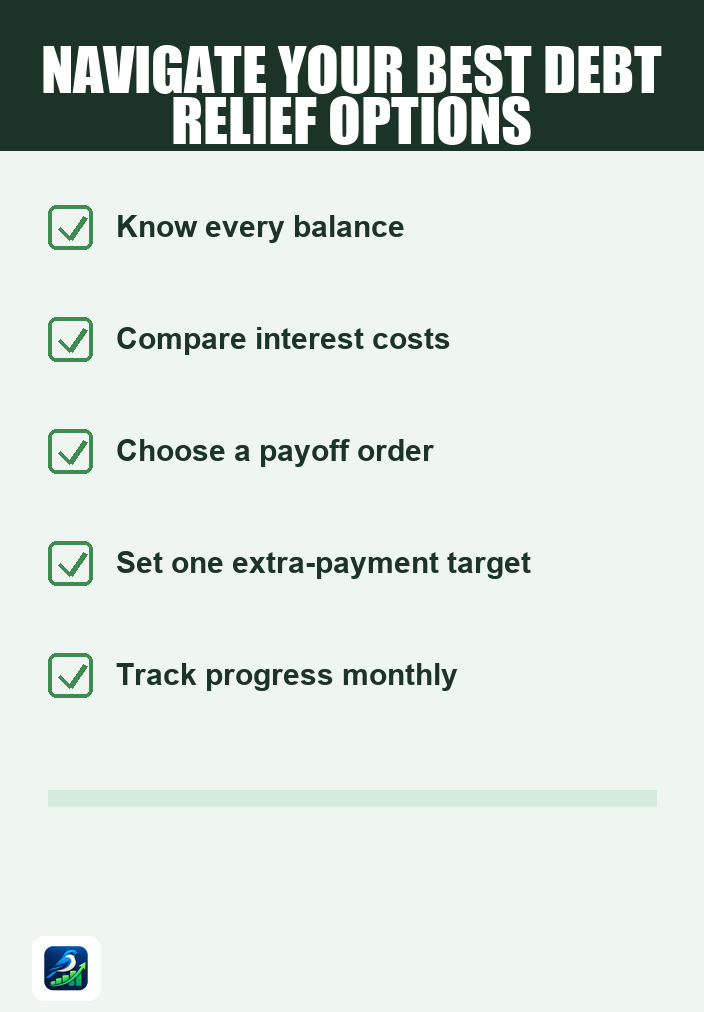
- Assess Your Financial Situation: List all debts, interest rates, monthly payments, and total income. This will help clarify your financial position.
- Define Your Goals: Are you looking for a quick solution, or can you commit to a longer-term plan? Understanding your priorities will guide your choice.
- Research Options: Look into various debt relief options, comparing pros and cons, and consider seeking professional guidance.
- Consult with Professionals: A financial advisor or credit counselor can provide insights tailored to your situation, helping you understand the legal and financial implications of each option.
Next Steps
Facing consumer debt can be daunting, but the right debt relief option is within reach. Take the time to evaluate your options carefully, consider your goals, and seek professional advice if needed. By taking control of your financial situation, you can work towards a path of recovery, stability, and ultimately, financial freedom.



















