
Understanding Credit Card Hardship Options
Credit card debt can feel overwhelming, especially if you’re facing financial hardships. Many people look for ways to relieve this burden, and various options exist, ranging from debt relief programs to more drastic measures like bankruptcy. However, it’s essential to recognize that debt relief may not always be the best choice for everyone. Understanding your options, their trade-offs, and the potential long-term effects on your financial health is crucial.
What Are Credit Card Hardship Options?
When facing difficulty making credit card payments, hardship options are designed to provide temporary relief. These options include:
- Debt consolidation
- Debt management plans
- Debt settlement
- Bankruptcy
Each of these approaches has its pros and cons, and not all may be suitable for your situation. This article will delve deeper into each option and the potential pitfalls of pursuing debt relief.
Debt Consolidation: A Double-Edged Sword
Debt consolidation involves combining multiple debts into a single payment, often at a lower interest rate. This can simplify your payments and potentially reduce the total interest you pay over time.
Benefits of Debt Consolidation
- Single monthly payment: You only have to keep track of one payment instead of multiple.
- Lower interest rate: If you qualify, you could pay less in interest overall.
- Improved budgeting: It can make it easier to manage your finances.
Drawbacks of Debt Consolidation
- Potential fees: Some consolidation loans come with fees that could offset your savings.
- Longer repayment terms: Extending the loan period may reduce your monthly payments but increase the total interest paid.
- Risk of accumulating more debt: If you don’t change your spending habits, you may find yourself in a worse situation.
Before pursuing debt consolidation, assess your spending habits and ensure you have a plan to avoid future debt accumulation.
Debt Management Plans: Professional Guidance
Debt management plans (DMPs) involve working with a credit counseling agency to create a structured plan to pay off your debts over time. The agency may negotiate lower interest rates or fees with your creditors.
Benefits of Debt Management Plans
- Professional help: Credit counselors can provide valuable financial advice.
- Negotiated terms: You may get better rates or waived fees through negotiation.
- Structured plan: A clear timeline for paying off your debts can provide motivation.
Drawbacks of Debt Management Plans
- Fees: Some credit counseling agencies charge fees for their services, which can add to your debt.
- Impact on credit score: Enrolling in a DMP may be noted on your credit report, which could affect your credit score.
- Limited flexibility: You may have to follow strict spending guidelines that might not suit your lifestyle.
Before enrolling in a DMP, research reputable credit counseling agencies and understand all potential costs involved.
Debt Settlement: A Risky Proposition
Debt settlement involves negotiating with creditors to settle your debt for less than the full amount owed. While it may sound appealing, this option carries significant risks.
Benefits of Debt Settlement
- Potentially lower total payments: If successful, you could pay less than what you owe.
- Faster resolution: Debt settlement can sometimes lead to quicker resolutions compared to other options.
Drawbacks of Debt Settlement
- Credit score impact: Settling debts can severely impact your credit score.
- Tax implications: The IRS may consider forgiven debt as taxable income.
- No guarantees: Creditors are not obligated to settle, and you may end up paying more in the long run.
Debt settlement may not be the right choice for those with a stable income and the ability to pay off debts over time. Consider other options before pursuing this route.
Bankruptcy: The Last Resort
Bankruptcy is a legal process that can discharge certain debts, offering a fresh start. However, it should be considered a last resort due to its long-term consequences.
Benefits of Bankruptcy
- Immediate relief: Filing for bankruptcy can halt creditor actions, including lawsuits and wage garnishments.
- Discharge of debts: Certain debts can be completely eliminated.
Drawbacks of Bankruptcy
- Severe credit impact: Bankruptcy can remain on your credit report for up to ten years.
- Loss of assets: You may lose property or assets, depending on the type of bankruptcy filed.
- Not all debts are dischargeable: Certain obligations, like student loans, may not be eliminated.
Before considering bankruptcy, consult with a legal professional to understand the implications for your specific situation.
Why Debt Relief May Not Be Your Best Bet
While debt relief options can provide immediate relief, they often come with significant trade-offs. Many people find that the consequences—such as damaged credit scores, long-term financial repercussions, or the potential for accumulating new debt—can outweigh the short-term benefits.
Moreover, if you pursue a strategy that doesn’t align with your financial situation or behavior, you may find yourself in a cycle of debt, which is counterproductive. It’s essential to evaluate your circumstances honestly and consider alternatives that promote healthy financial habits.
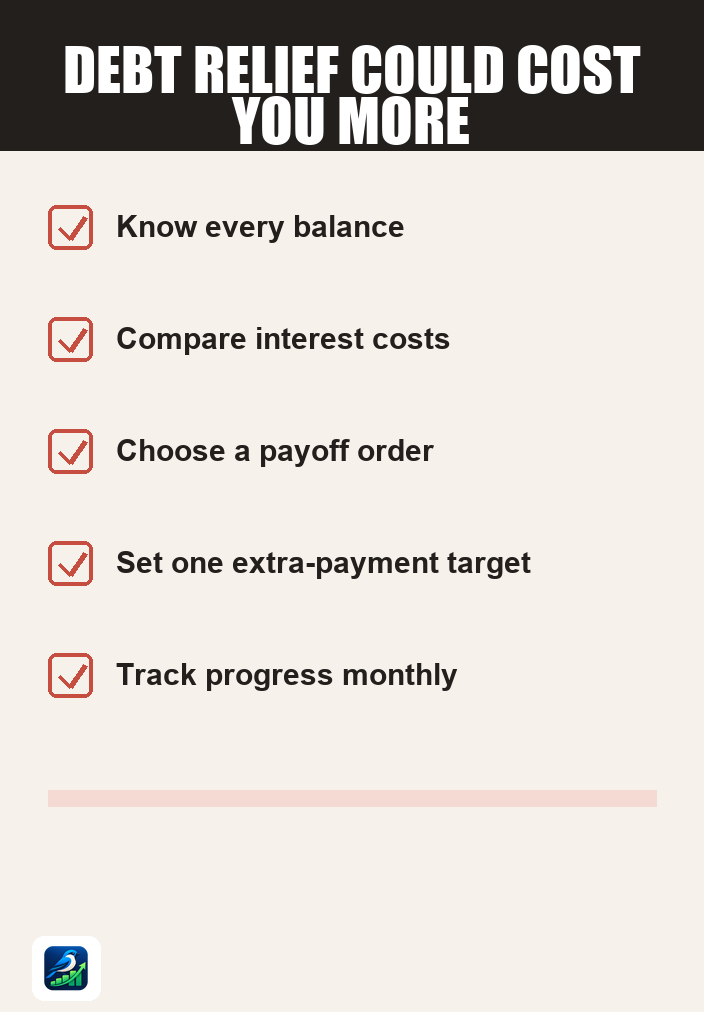
Practical Steps Forward
If you’re struggling with credit card debt, here are some practical next steps:
- Assess your financial situation: Create a budget that outlines your income, expenses, and debts.
- Explore alternatives: Consider options like creating a repayment plan, negotiating directly with creditors, or increasing income through side jobs.
- Educate yourself: Learn about financial literacy to better manage your finances moving forward.
- Seek professional help if needed: Consult a financial advisor or credit counselor to explore your options.
Understanding your options is crucial to making informed decisions about your financial future. While debt relief may seem appealing, weighing the pros and cons is essential to finding the best path forward.



















