
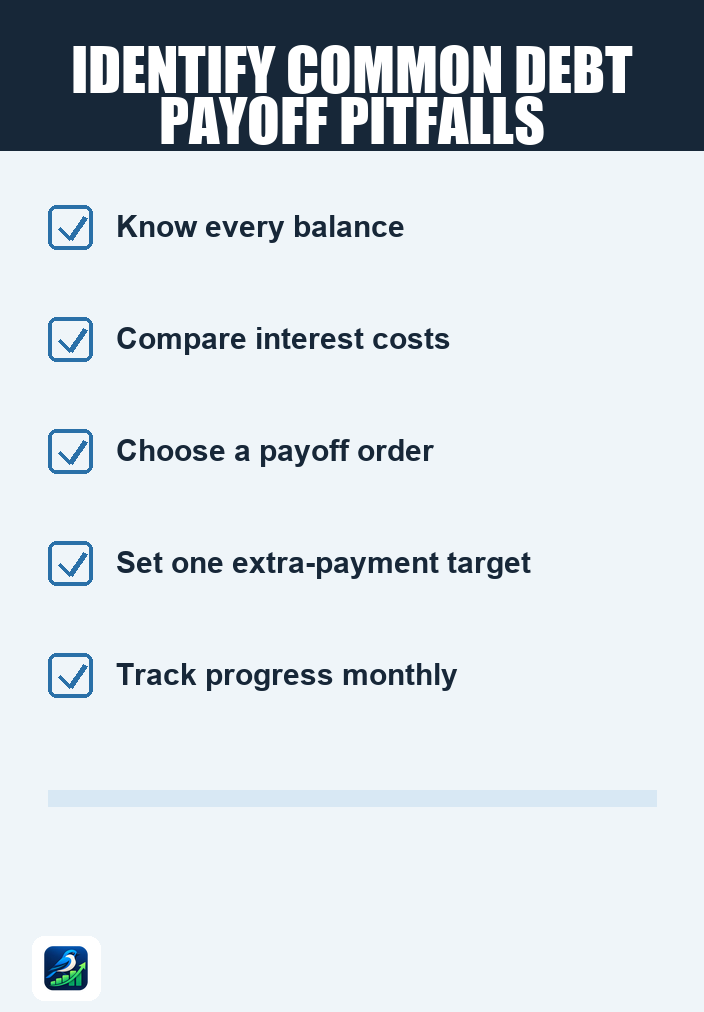
Understanding Common Debt Payoff Missteps
When it comes to managing consumer debt, many adults find themselves grappling with confusion and uncertainty. It’s easy to make mistakes that can prolong your financial struggles. By evaluating common debt payoff missteps, you can arm yourself with better strategies to confront your debt. Here’s a practical guide to help you navigate this challenging landscape.
1. Ignoring the Total Cost of Debt
One of the most significant missteps is failing to understand the total cost of your debt. Most people focus solely on the monthly payment rather than the interest rate or the total amount paid over time. This can lead to a false sense of security and poor financial decisions.
Example of Total Cost Misunderstanding
Consider two loans: Loan A has a balance of $5,000 at a 15% interest rate, while Loan B has a balance of $6,000 at a 10% interest rate. If you only look at the monthly payments, you might choose Loan B, but Loan A will ultimately cost you less in interest paid over time.
2. Neglecting to Create a Budget
Another common misstep is not having a budget. Without a clear understanding of your income and expenses, it’s challenging to know how much you can allocate toward debt repayment. A budget helps you identify areas where you can cut back and redirect those funds toward your debt.
Steps to Create a Budget
- List all sources of income.
- Identify fixed and variable expenses.
- Determine how much you can afford to allocate to debt repayment.
- Review and adjust regularly based on changes in your financial situation.
3. Focusing on Minimum Payments
Many people make the mistake of only paying the minimum on their debts. While this may seem manageable, it can lead to an extended repayment period and increased interest costs. Prioritizing higher payments can reduce your debt more efficiently.
How to Prioritize Payments
- Debt Snowball Method: Focus on paying off the smallest debts first for quick wins.
- Debt Avalanche Method: Pay off debts with the highest interest rates first to reduce overall costs.
4. Overlooking the Importance of an Emergency Fund
While it might seem counterintuitive to save while in debt, neglecting an emergency fund can be a costly mistake. Without a safety net, unexpected expenses may force you to rely on credit cards, exacerbating your debt situation.
Building an Emergency Fund
Aim to save at least three to six months’ worth of living expenses. Start small if necessary, and contribute regularly to build your fund over time.
5. Assuming All Debt is Created Equal
Not all debt is the same. High-interest debt, like credit card debt, can be significantly more damaging than lower-interest loans, such as mortgages or student loans. Understanding the differences can inform your payoff strategy.
Evaluating Your Debt
List your debts by interest rate and consider prioritizing payments toward those with the highest rates. This approach can save you money in the long run.
6. Relying Solely on Debt Consolidation
Debt consolidation can be a useful tool, but it is not a one-size-fits-all solution. Many individuals mistakenly believe that consolidating their debt will automatically solve their financial problems. However, it often comes with trade-offs, such as longer repayment terms and the potential for higher overall interest costs.
Understanding Debt Consolidation
When considering debt consolidation, evaluate the following:
- What are the terms of the new loan?
- Will it lower your monthly payments or total interest paid?
- Are there any fees associated with consolidation?
7. Ignoring Alternatives Like Debt Settlement or Bankruptcy
Some individuals avoid considering debt settlement or bankruptcy due to the stigma attached. While these options are not right for everyone, they can be effective for certain situations. Ignoring them could mean missing out on a viable path to financial recovery.
When to Consider Alternatives
Assess your situation carefully. If your debt is unmanageable and you’re facing financial hardship, it might be worth exploring these options:
- Debt Settlement: Negotiating with creditors to settle for less than owed.
- Bankruptcy: A legal process that can provide relief from debts but has significant long-term consequences.
8. Failing to Seek Professional Guidance
Many individuals attempt to navigate their debt on their own without seeking help. Financial advisors or credit counseling services can provide valuable insights tailored to your situation. Ignoring this resource can lead to poor decisions.
Finding Professional Help
Look for certified financial counselors or reputable debt management programs. Ensure they are accredited and have transparent practices.
Next Steps: Take Control of Your Financial Future
Understanding and avoiding these common debt payoff missteps can set you on a clearer path toward financial freedom. Here are some practical next steps:
- Create a budget and track your spending.
- Prioritize your debts based on interest rates and balances.
- Consider building an emergency fund, even while repaying debt.
- Research debt consolidation, settlement, or bankruptcy if necessary.
- Seek professional guidance to tailor a plan to your needs.
By taking a proactive approach and avoiding these pitfalls, you can make informed decisions that lead to a healthier financial future.



















