Understanding Your Credit Report: The Importance of Spotting Errors
Your credit report is a crucial document that influences your financial life. It impacts your ability to secure loans, obtain credit cards, and even affects your insurance premiums and employment opportunities. However, many people are unaware that errors can be present in their reports, which can lead to unfavorable financial outcomes. Therefore, spotting and resolving these errors is essential for maintaining a healthy financial profile.
How to Obtain Your Credit Report
The first step in identifying errors is to obtain your credit report. Under federal law, you’re entitled to one free credit report from each of the three major credit bureaus every year. Here’s how to get yours:
- Visit the official website designated for free credit reports.
- Fill out the necessary information, including your name, address, Social Security number, and date of birth.
- Select which bureau’s report you wish to obtain (Experian, TransUnion, or Equifax).
- Review your report for accuracy.
Common Errors to Look for in Your Credit Report
Once you have your credit report, you need to know what to look for. Here are some common errors that can appear:
- Incorrect Personal Information: Check for any misspellings or outdated addresses that don’t belong to you.
- Account Status Errors: Ensure that accounts are reported accurately, especially whether they are open, closed, or in collections.
- Duplicate Accounts: Sometimes, the same account may be reported more than once, which can negatively affect your credit utilization ratio.
- Fraudulent Accounts: Look for accounts you don’t recognize; these could be signs of identity theft.
- Incorrect Payment History: Review your payment history to ensure it reflects your actual payment behavior.
Steps to Spot Errors in Your Credit Report
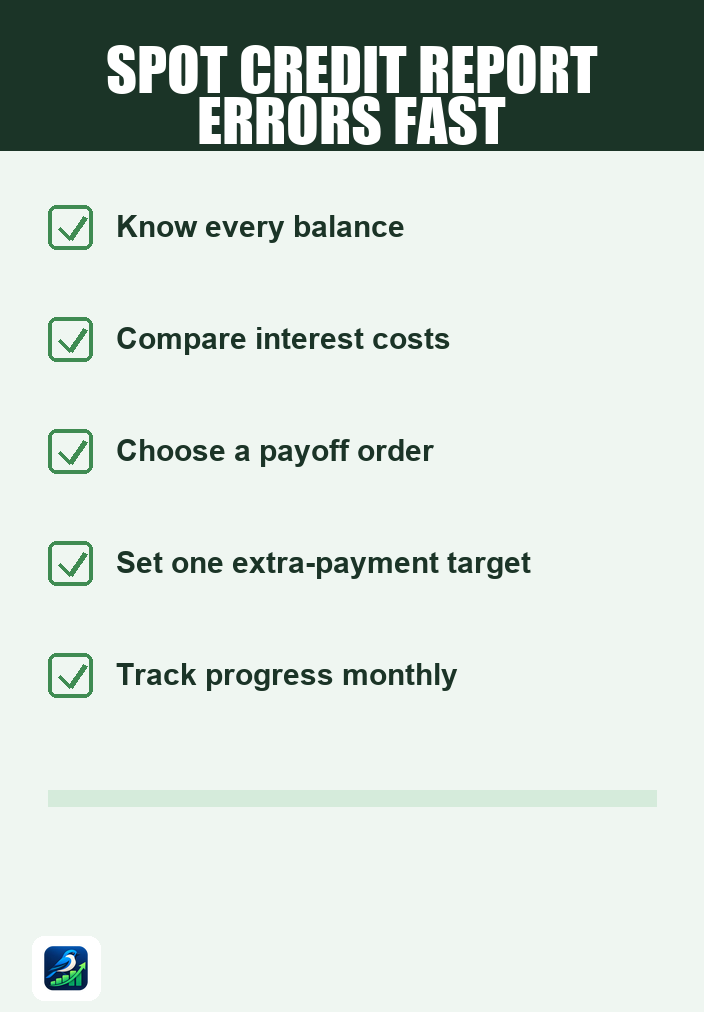
Now that you know what to look for, here’s a practical checklist to help you spot errors:
- Verify Personal Information: Confirm that your name, address, and other personal details are correct.
- Review Account Information: Check each account for accuracy in terms of balances, payment history, and status.
- Identify Unfamiliar Accounts: Flag any accounts that you do not recognize.
- Examine Credit Inquiries: Look for hard inquiries that you did not authorize.
- Cross-Reference With Other Financial Records: Compare your credit report with bank statements and other financial documents to ensure consistency.
How to Resolve Errors in Your Credit Report
If you find errors in your credit report, it’s crucial to take action promptly. Here’s how to resolve them:
- Gather Documentation: Collect any evidence that supports your claim, such as bank statements or payment confirmations.
- Contact the Credit Bureau: Reach out to the bureau that issued the report. You can do this through their website, by mail, or by phone. Clearly explain the error and provide your supporting documentation.
- Follow Up: After submitting your dispute, keep track of the status. Most bureaus have 30 days to investigate unless they consider your dispute frivolous.
- Monitor Your Credit Report: After the investigation, review your credit report again to ensure the error has been corrected.
- Contact the Creditor: If the error pertains to a specific account, contact the creditor directly to resolve any discrepancies.
What to Do If Errors Persist
In some cases, you may encounter difficulties in resolving errors. Here are some steps to consider if your disputes are unsuccessful:
- Request a Statement of Dispute: You have the right to include a statement of dispute in your credit report, explaining your position regarding the error.
- Seek Professional Help: Consider consulting a credit repair service or a financial advisor for assistance, especially if your disputes are complex.
- Consider Filing a Complaint: If you believe your dispute is being unfairly dismissed, you can file a complaint with the Consumer Financial Protection Bureau.
Preventing Future Errors
Once you’ve successfully resolved any issues in your credit report, it’s wise to take steps to prevent future errors:
- Check Your Credit Report Regularly: Regularly review your credit report to catch errors early.
- Use a Credit Monitoring Service: Consider enrolling in a credit monitoring service for real-time alerts about changes to your credit report.
- Secure Your Personal Information: Protect your personal data to prevent identity theft, which can lead to reporting errors.
Next Steps to Take
Understanding how to spot and resolve errors in your credit report is vital for maintaining your financial health. If you haven’t already, obtain your credit report and start reviewing it for accuracy today. Follow the checklist provided, and take immediate action if you find any errors. Staying proactive about your credit report will help you avoid future complications and ensure that you are presenting the best financial image possible.