
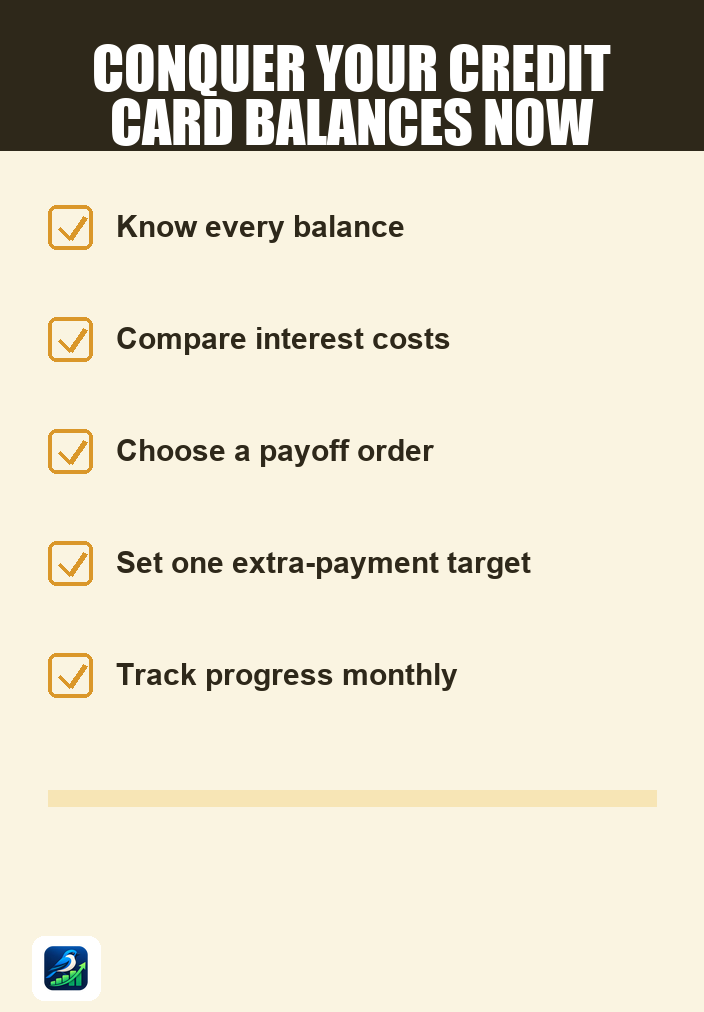
Understanding the Challenge of Multiple Credit Card Balances
Managing multiple credit card balances can feel overwhelming. With each card carrying its own interest rate, payment due date, and minimum payment amount, it’s easy to lose track of where your money is going. Whether you’re trying to organize your finances, reduce your debt, or recover from past overspending, developing a clear strategy is crucial.
Assessing Your Current Situation
The first step in overcoming credit card debt is to gain a clear understanding of your current financial situation. This involves listing out all your credit cards along with their balances, interest rates, and minimum payments. Here’s how you can do this:
- Gather Information: Collect your credit card statements or log into your online accounts to get accurate figures.
- Create a Debt Inventory: Make a spreadsheet or a simple list that includes the card issuer, balance, interest rate, and minimum payment for each card.
- Calculate Total Debt: Add up all your balances to understand the total amount you owe.
For example, if you have three credit cards with balances of $1,000, $2,500, and $3,000, you’ll want to note the respective interest rates and minimum payments. This will provide you with a clearer picture of your obligations.
Choosing the Right Strategy for You
Once you have assessed your situation, you can explore various strategies to manage and reduce your credit card debt. Here are some effective approaches:
1. Snowball Method
The snowball method involves focusing on paying off your smallest balance first while making minimum payments on the others. This can help build momentum as you pay off each card.
- Identify the smallest balance: Using the earlier example, if you have a $1,000 balance on one card, that’s your target.
- Make extra payments: Allocate any extra funds you can toward that balance until it’s paid off.
- Move to the next card: Once the first card is paid off, take the amount you were paying on that card and add it to the minimum payment of the next smallest balance.
2. Avalanche Method
The avalanche method focuses on paying off high-interest debt first, which can save you more money in interest payments over time.
- Identify the highest interest rate: Find the card with the highest interest rate.
- Pay minimums on others: Make sure to pay at least the minimums on your other cards.
- Allocate extra funds to the highest rate: Direct any extra payments towards the card with the highest interest until it is eliminated.
3. Debt Consolidation
Debt consolidation involves combining multiple debts into a single loan, ideally at a lower interest rate. This can simplify payments but comes with its own set of considerations:
- Types of Consolidation: Look into personal loans, balance transfer credit cards, or home equity loans.
- Understand the trade-offs: While consolidating can lower interest rates, it may come with fees or require you to put your home at risk if you choose a home equity loan.
- Assess your financial habits: Ensure you’re ready to change your spending habits if you opt for consolidation to avoid accumulating new debt.
4. Debt Management Plan
A debt management plan (DMP) is typically facilitated by a credit counseling agency. They negotiate with creditors on your behalf for lower interest rates and create a structured repayment plan. Consider the following:
- Find a reputable agency: Research local or online credit counseling services.
- Understand the costs: Some agencies charge fees, so ensure you’re clear on the cost structure before enrolling.
- Commit to the process: A DMP requires discipline; you’ll need to stick to the budget and avoid new debt.
5. Debt Settlement
Debt settlement involves negotiating with creditors to settle your debt for less than the full amount owed. While this might sound appealing, it’s essential to understand the potential drawbacks:
- Credit impact: Settled debts can negatively impact your credit score.
- Tax implications: The IRS may consider forgiven debt as taxable income.
- Not guaranteed: There’s no guarantee that creditors will agree to settle, and it could take time.
Creating a Budget and Sticking to It
Regardless of the strategy you choose, creating and adhering to a budget is crucial. Here’s how to get started:
- Track your spending: For at least a month, keep a record of all your expenses to identify areas where you can cut back.
- Set a realistic budget: Allocate funds for necessities, debt payments, and savings, while identifying discretionary spending you can reduce.
- Monitor your progress: Regularly review your budget and adjust as needed to ensure you remain on track.
Next Steps
Overcoming multiple credit card balances is a journey that requires planning and commitment. Start by assessing your debt situation, choose a strategy that aligns with your financial goals, and create a budget to guide your spending. Remember, it’s essential to remain disciplined and seek professional guidance if needed, especially regarding debt management or settlement options. Taking these steps can help you regain control over your finances and work towards a more secure financial future.



















