
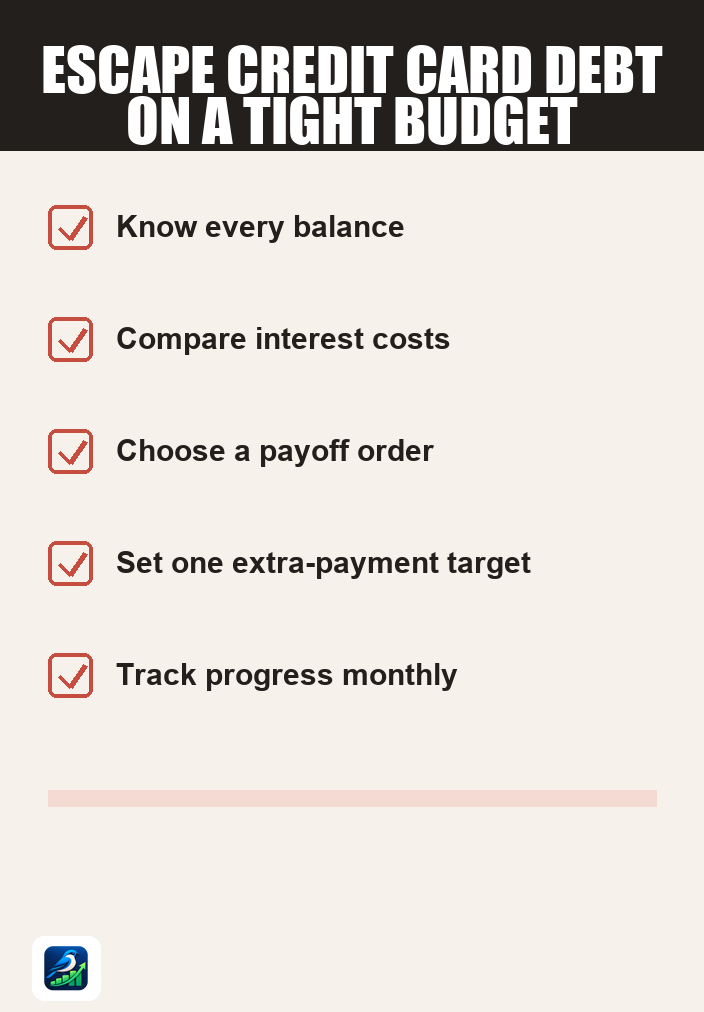
Understanding the Challenge of Credit Card Debt
Living paycheck to paycheck can be a daunting reality, especially when credit card debt looms over your finances. The struggle to pay bills while trying to chip away at debt can feel overwhelming. However, with a structured approach, you can develop a plan to pay off credit card debt even when your income is tight.
Assessing Your Current Financial Situation
Before embarking on a repayment journey, it’s crucial to understand your financial landscape. Start by gathering all relevant information:
- List Your Debts: Document each credit card, its balance, interest rate, and minimum monthly payment.
- Income Overview: Calculate your total monthly income after taxes. Consider all sources, including side gigs or freelance work.
- Monthly Expenses: Track your essential expenses such as rent, utilities, groceries, and transportation. Be honest about what is necessary.
Creating a Budget that Works for You
Once you have a clear picture of your finances, creating a budget is the next step. A simple budget can help you manage your money and allocate funds toward debt repayment.
Steps to Create Your Budget
- Identify Fixed vs. Variable Expenses: Fixed expenses remain constant, while variable expenses can fluctuate. Prioritize fixed expenses to ensure they are covered first.
- Set Aside Money for Savings: Even small amounts can accumulate over time. Try to save a little each month for emergencies.
- Allocate Funds for Debt Repayment: Decide how much of your income can realistically go toward credit card payments after covering necessary expenses.
Choosing a Debt Repayment Strategy
With your budget in hand, it’s time to choose a repayment strategy. There are several approaches, each with its pros and cons.
Debt Snowball Method
This method focuses on paying off the smallest debts first. Here’s how it works:
- Make minimum payments on all debts except the smallest one.
- Put any extra funds toward the smallest debt until it’s paid off.
- Once the smallest debt is eliminated, move on to the next smallest debt.
This method can provide psychological benefits as you celebrate small wins, motivating you to continue.
Debt Avalanche Method
The avalanche method targets debts with the highest interest rates first:
- Make minimum payments on all debts except the one with the highest interest.
- Put any extra money toward the highest-interest debt until it is paid off.
- Once that debt is cleared, move to the next highest interest debt.
This approach can save money on interest in the long run but may take longer to see progress, which can be discouraging.
Exploring Additional Options for Debt Relief
If your financial situation feels insurmountable, consider exploring additional options:
Debt Consolidation
This involves combining multiple debts into a single loan, typically with a lower interest rate. While it can simplify payments, it’s important to consider:
- Fees associated with consolidation loans.
- The impact on your credit score.
- The risk of accumulating more debt if spending habits don’t change.
Debt Management Plans
Working with a credit counseling agency can help you create a structured repayment plan. These organizations can negotiate lower interest rates and monthly payments with creditors. However, keep in mind:
- You may need to close credit accounts, impacting your credit utilization ratio.
- There may be fees for the service.
- It requires a commitment to a strict budget.
Debt Settlement
This approach involves negotiating with creditors to settle your debts for less than what you owe. It can be a viable option, but there are significant drawbacks:
- Debt settlement can severely impact your credit score.
- Creditors may refuse to negotiate.
- It often requires a lump-sum payment, which can be challenging to gather.
Bankruptcy
As a last resort, bankruptcy can provide relief from overwhelming debt. However, it has long-term repercussions:
- It can stay on your credit report for up to 10 years.
- Not all debts can be discharged, such as student loans or tax debts.
- Consultation with a legal professional is essential to navigate the complexities.
Staying Motivated and On Track
Paying off credit card debt while living paycheck to paycheck requires persistence. Here are some tips to maintain your motivation:
- Track Your Progress: Regularly review your budget and debt repayment progress to see how far you’ve come.
- Celebrate Small Wins: Treat yourself to small rewards when you reach milestones, like paying off a debt.
- Stay Educated: Learn about personal finance to empower yourself and make informed decisions.
Next Steps to Take Control of Your Debt
Begin by assessing your financial situation, creating a budget, and selecting a repayment strategy that suits your lifestyle. If necessary, explore additional options like debt consolidation or management plans. Remember, tackling credit card debt is a gradual process, and every step forward counts.
Stay focused, be patient with yourself, and seek professional advice when needed. With determination and a clear plan, you can take control of your financial future.



















