
Understanding Payoff Timelines for Student Loans While on a Tight Budget
Navigating the world of student loans can be overwhelming, especially when you’re managing a tight budget. Understanding your payoff timeline is essential for effectively planning your finances and minimizing stress. In this article, we will explore the factors influencing your student loan payoff timeline, strategies for managing your debt, and the importance of budgeting.
Factors Influencing Payoff Timelines
When it comes to student loans, several factors will affect your payoff timeline:
- Loan Type: Federal loans often have different repayment plans available compared to private loans. Federal loans may offer income-driven repayment plans that can extend your timeline.
- Interest Rates: Higher interest rates can significantly extend your payoff timeline. Understand your loan’s interest rate and how it affects monthly payments.
- Loan Balance: The total amount borrowed will play a crucial role in determining how long it takes to pay off your loans. A larger balance typically means a longer repayment period.
- Repayment Plan: The choice of repayment plan can change your monthly payment amount and total interest paid over time. Options range from standard repayment to income-driven plans.
- Extra Payments: Making additional payments can reduce your principal balance faster, leading to a shorter payoff timeline.
Common Repayment Options
Understanding the different repayment options is vital for managing your loans effectively. Here are some common repayment plans:
- Standard Repayment Plan: Fixed monthly payments over 10 years. This plan saves you money in interest but might be difficult on a tight budget.
- Graduated Repayment Plan: Payments start lower and gradually increase every two years. This plan may be suitable if you expect your income to rise significantly.
- Income-Driven Repayment Plans: Payments are based on your income and family size. These plans can extend your repayment period beyond 10 years, which may be beneficial if you’re struggling financially.
- Extended Repayment Plan: Allows for a longer repayment period (up to 25 years) with lower monthly payments. However, this will increase the total interest paid.
Calculating Your Payoff Timeline
To estimate your payoff timeline, you can use the following formula:
Total Loan Amount / Monthly Payment = Number of Months to Pay Off
This formula gives you a rough estimate of how long it will take to pay off your loans based on your current monthly payment. For example, if you have a loan balance of $20,000 and are making payments of $200 per month, it would take approximately:
$20,000 / $200 = 100 months (or about 8.3 years).
Keep in mind that this is a simplified calculation and does not take interest into account. You can use online calculators to factor in interest rates for a more accurate timeline.
Strategies for Managing Student Loans on a Tight Budget
If you’re on a tight budget, consider these strategies to manage your student loans effectively:
- Create a Budget: Track your income and expenses to understand where your money is going. Allocate funds for loan payments while ensuring you cover essential living expenses.
- Apply for Income-Driven Repayment: If your income is low, applying for an income-driven repayment plan can reduce your monthly payments and make them more manageable.
- Make Extra Payments When Possible: If you find yourself with extra cash, consider making additional payments towards your principal. This will reduce your overall interest and help you pay off the loan faster.
- Consider Loan Forgiveness Programs: If you work in certain fields, you might qualify for loan forgiveness after a set number of payments. Research programs available to you.
- Explore Refinancing Options: If you have a stable income, refinancing your loans to a lower interest rate may help reduce your monthly payments. However, weigh the pros and cons, especially if you have federal loans, as refinancing may forfeit federal benefits.
Drawbacks of Debt Consolidation and Settlement
While debt consolidation or settlement may seem like quick fixes, they come with important trade-offs. Consolidation often extends your repayment timeline, potentially increasing the total interest paid. Debt settlement can negatively impact your credit score and may not be a viable option for everyone. It’s crucial to carefully consider these options and consult a professional if needed.
The Importance of Staying Informed
Staying informed about your loans and any changes in legislation affecting student loans is crucial. Policies can change, affecting repayment options and forgiveness programs. Regularly check for updates and review your repayment strategy to ensure it aligns with your current financial situation.
Practical Next Steps
To effectively manage your student loans while on a tight budget, consider the following steps:
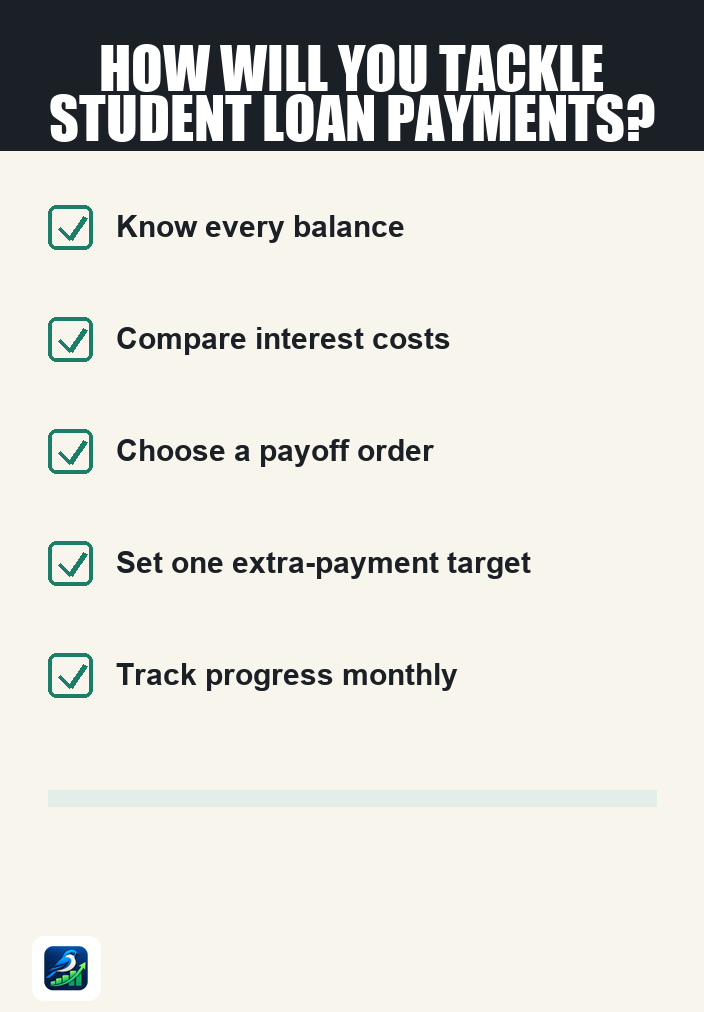
- Assess your current financial situation by creating a detailed budget.
- Research your loan details, including types, interest rates, and repayment options.
- Explore income-driven repayment options if you’re struggling to make monthly payments.
- Look into potential forgiveness programs if you qualify.
- Make a plan for extra payments when feasible to reduce principal faster.
By understanding your loans, exploring repayment options, and managing your budget wisely, you can navigate your student loan payments more effectively, even on a tight budget.



















