Understanding Your Credit Report
Your credit report is a vital document that tracks your credit history and financial behavior. It can impact your ability to secure loans, rent apartments, or even land a job. Therefore, ensuring that your credit report is accurate is essential. Spotting errors in your credit report is the first step toward maintaining a healthy credit profile.
Why Spotting Errors Matters
Errors in your credit report can lead to negative consequences, including a lower credit score and reduced chances of obtaining credit. A single mistake could cost you money when applying for loans or result in higher interest rates. Moreover, identity theft can manifest as inaccuracies in your report. Understanding how to identify these errors empowers you to take control of your financial future.
How to Obtain Your Credit Report
The first step in spotting errors is to obtain your credit report. You are entitled to a free copy of your credit report from each of the major credit bureaus once a year. Here’s how to get yours:
- Visit the official website for obtaining credit reports.
- Fill out the necessary information, which typically includes your name, address, Social Security number, and date of birth.
- Select the credit bureaus from which you wish to receive reports.
- Review the reports carefully once you receive them.
Common Errors to Look For
When reviewing your credit report, keep an eye out for the following common errors:
- Incorrect Personal Information: Ensure your name, address, and Social Security number are correct. Mistakes in this information could indicate a mix-up with someone else’s report.
- Account Information Errors: Check that all accounts listed belong to you and that the details, such as payment history, balances, and account status, are accurate.
- Duplicate Accounts: Sometimes, creditors report the same account multiple times, which can unfairly affect your credit utilization ratio.
- Negative Information: Verify that negative marks, such as late payments or charge-offs, are accurate and not outdated. Most negative information should drop off your report after seven years.
- Inquiries: Review the list of inquiries to ensure that you recognize all the requests for your credit report. Unfamiliar inquiries may suggest unauthorized access to your credit information.
Steps to Spot Errors
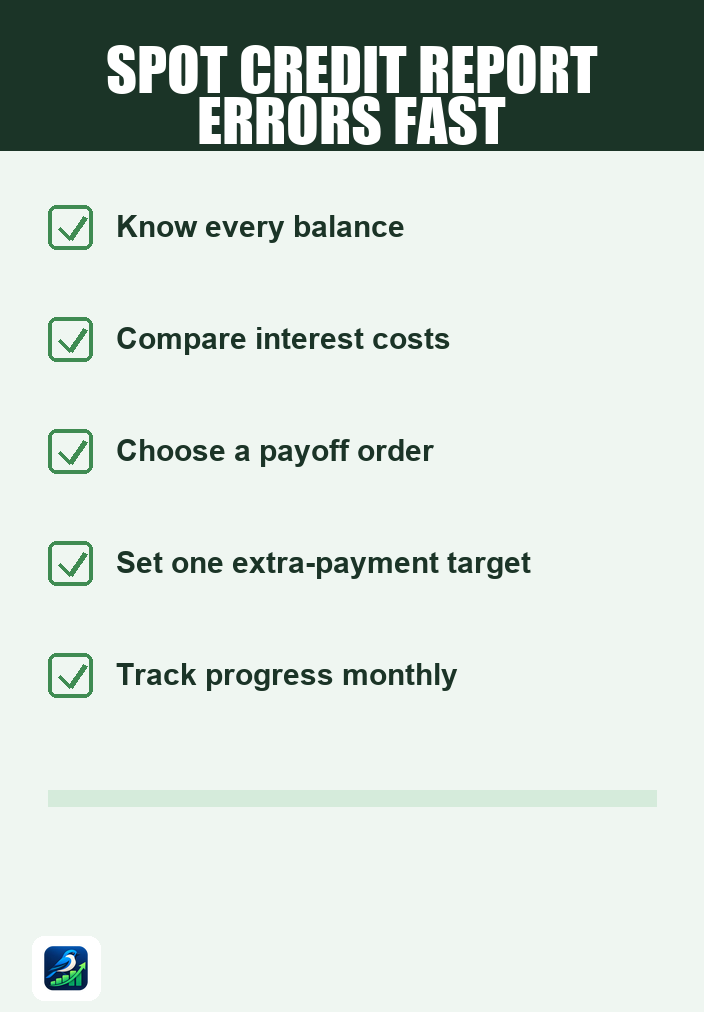
Here’s a step-by-step guide to help you effectively review and spot errors in your credit report:
- Read Your Report Thoroughly: Take your time to read through each section of your report. Look for any discrepancies or unfamiliar accounts.
- Take Notes: As you review your report, jot down any errors or concerns you come across. This will help you stay organized when addressing issues later.
- Cross-Check Information: If you notice discrepancies, cross-check them against your financial records, such as bank statements and past credit agreements.
- Gather Supporting Documentation: Collect any relevant documents that support your claims regarding inaccuracies in your report.
How to Dispute Errors
If you find errors in your credit report, you can dispute them. Here’s how:
- Contact the Credit Bureau: Reach out to the credit bureau that issued the report. This can usually be done online, via phone, or through the mail.
- Provide Details: Clearly explain the error, and provide any necessary documentation to support your claim.
- Follow Up: Credit bureaus typically have 30 days to investigate your dispute. Follow up if you do not hear back within that timeframe.
- Check Updates: Once the investigation is complete, review your updated credit report to ensure that the errors have been corrected.
When to Seek Help
In some cases, spotting and disputing errors can become overwhelming. If you find yourself struggling or if the errors are complicated, consider seeking professional help. Credit counseling agencies can offer guidance, but be cautious and ensure that any agency you choose is reputable. Discussing your situation with a financial advisor or a legal professional may also be beneficial if you encounter persistent issues.
Understanding the Trade-offs
While keeping your credit report error-free is crucial, it’s also important to manage your expectations. Correcting errors may not immediately lead to significant credit score improvements. Moreover, disputing errors may temporarily lower your score if it involves a complicated account. Be prepared for these trade-offs as you work toward maintaining a solid credit report.
Next Steps
Now that you have a clearer understanding of how to spot and dispute errors in your credit report, take action:
- Obtain your free credit reports.
- Review your reports carefully for any discrepancies.
- Document any errors you find and prepare to dispute them.
- Consider seeking help if needed.
By taking these steps, you can ensure your credit report is an accurate reflection of your financial behavior, ultimately helping you in your journey towards financial well-being.