
Understanding Hard Inquiries and Their Impact on Your Credit Score
When you apply for new credit, lenders often conduct a hard inquiry on your credit report to evaluate your creditworthiness. While a single hard inquiry may only cause a minor dip in your credit score, multiple inquiries can accumulate and have a more significant impact. If you’ve recently applied for new credit and are concerned about how to improve your credit score without accumulating more debt, there are several proactive steps you can take.
Assessing Your Current Credit Situation
The first step to improving your credit score after hard inquiries is to get a clear picture of your current credit situation. This involves obtaining a copy of your credit report from all three major credit bureaus. You can do this for free once a year. Review your report for the following:
- Hard inquiries: Check how many hard inquiries are listed, and ensure they are accurate.
- Payment history: Look for any missed or late payments that can negatively affect your score.
- Credit utilization: Assess how much of your available credit you are using compared to your total credit limit.
- Account age: Consider the average age of your credit accounts, as older accounts generally boost your score.
Understanding these factors will give you a baseline from which to improve your credit score.
Strategies to Improve Your Credit Score
Improving your credit score after hard inquiries doesn’t mean you have to take on new debt. Here are some practical strategies that focus on managing your existing credit responsibly:
1. Maintain Timely Payments
Your payment history is one of the most significant factors affecting your credit score. To improve your score, ensure that you make all your payments on time. Consider setting up automatic payments or reminders to help you stay on track.
2. Reduce Your Credit Utilization Ratio
Credit utilization, which is the ratio of your current credit card balances to your credit limits, is another critical factor. Aim to keep your utilization below 30%. Here’s how you can do that:
- Pay down balances: If possible, pay off existing balances rather than only making minimum payments.
- Request a credit limit increase: If you have a good payment history, ask your credit card issuer for a higher limit. This increases your total available credit and may lower your utilization ratio.
3. Avoid New Hard Inquiries
While you’re working to improve your score, avoid applying for new credit. Each hard inquiry can affect your score, so hold off on loan or credit card applications until your score improves.
4. Review and Dispute Errors
Errors on your credit report can drag your score down. If you find any inaccuracies, such as incorrect account information or missed payments that were made on time, dispute them with the credit bureau. Clearing up inaccuracies can lead to a quick boost in your credit score.
5. Consider Becoming an Authorized User
If you have a trusted family member or friend with a good credit history, consider asking them if you can become an authorized user on their credit card. This allows you to benefit from their positive payment history without having to take on additional debt. Just be sure they maintain low balances and pay their bills on time, as this can impact your score as well.
6. Use a Secured Credit Card
If you’re looking to rebuild your credit, a secured credit card can be a good option. With a secured card, you make a cash deposit that serves as your credit limit. Use the card responsibly, pay off the balance in full each month, and you can slowly build your credit score without incurring debt.
7. Monitor Your Credit Regularly
Keep an eye on your credit score and report regularly. You can do this through free services or credit monitoring tools. Monitoring allows you to track your progress and identify any new issues that may arise.
Understanding Alternatives to Managing Debt
If you find that debt is becoming unmanageable, understanding your options can help you make informed decisions. Here’s a brief overview:
- Debt Consolidation: This involves combining multiple debts into one loan with a potentially lower interest rate. However, it may require taking on more debt initially.
- Debt Management: A debt management plan may involve working with a credit counseling agency to negotiate lower interest rates and monthly payments with creditors.
- Debt Settlement: This involves negotiating with creditors to pay less than you owe. Keep in mind that this can negatively impact your credit score.
- Bankruptcy: This is a legal process that can help eliminate or reorganize debt but should be considered a last resort due to its long-term impact on your credit score.
Next Steps: Taking Control of Your Credit
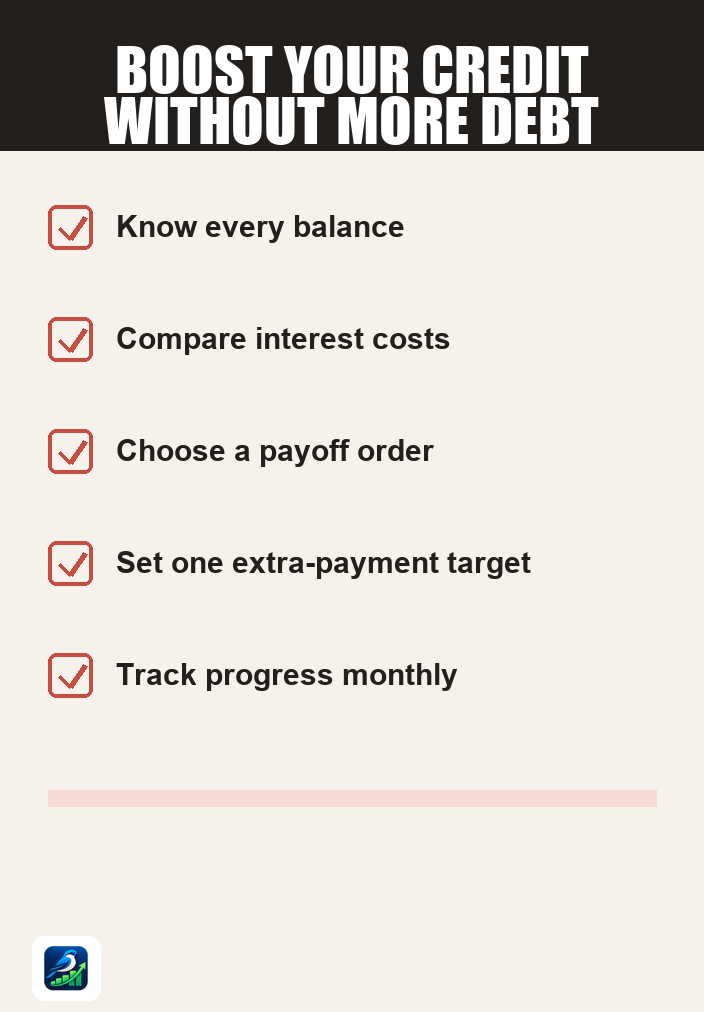
Improving your credit score after hard inquiries doesn’t have to involve racking up more debt. By maintaining timely payments, reducing credit utilization, disputing errors, and monitoring your credit, you can take important steps towards better credit health.
Consider setting specific, achievable goals for each month, such as making a payment plan or reducing utilization. Remember, there are no quick fixes, but consistent, responsible management of your credit will yield results over time.



















